PUC Certificate - Check Vehicle PUC Status Online


Explore Everything About Your Vehicle





What is a PUC Certificate?
A Pollution Under Control (PUC) Certificate, commonly referred to as a PUCC or vehicle pollution certificate, is an official document that certifies your vehicle's compliance with the government-prescribed emission control standards. It is mandatory to curb air pollution across the nation.
Every motor vehicle owner in India is legally required to carry a valid pollution under control certificate at all times while driving. The PUC certificate contains key details, including your vehicle's registration information, the date of issue, the PUC expiry date, and the results of the vehicle emission test.
State governments are responsible for ensuring that authorised PUC testing centres are widely available, that testing equipment is well-maintained, and that vehicle owners are adhering to the applicable rules Further, the absence of a valid PUCC is punishable under the law and will attract a challan.
Why is the PUCC important?
You might be wondering, "It's just a piece of paper - how important can a PUC certificate really be? Quite important, as it turns out.
Here's why:
Legal requirement: Every vehicle owner in India must carry a valid PUCC to legally operate their vehicle on public roads. Driving without a valid pollution under control certificate can attract heavy fines and, in some states, even imprisonment.
Reflects your vehicle's health: The vehicle emission test doesn't just check for pollution; it also gives you a useful snapshot of how well your engine and exhaust systems are functioning. A failing PUC test is often an early warning sign of mechanical issues that need attention.
Essential for vehicle insurance: Motor insurance providers typically require a valid pollution certificate before they will issue or renew your vehicle insurance policy.
For a healthy environment: India is among the world's most polluted countries, and vehicular emissions are a major contributor. Keeping your vehicle's emissions within the permissible limits outlined by Bharat Stage norms is your personal contribution to cleaner air for everyone.
Laws relating to the PUC certificate in India
The Pollution Under Control Certificate (PUCC) is a mandatory document under the Motor Vehicles Act, 1988 and it works as per the regulations, limits and rules determined under the Central Motor Vehicles Act, 1989.
However, in addition to this, there are several other laws as well that play a vital role in PUCC and they are: Section 110 of the Motor Vehicles Act, 1988: Empowers the Central Government to make rules regulating the construction, equipment, and maintenance of motor vehicles and trailers.
Section 190(2) of the Motor Vehicles Act, 1988: Fines and penalties for not having a PUCC.
Rule 115 of the Central Motor Vehicles Rules, 1989: Defines the limits of the vehicle emissions for the vehicles.
Rule 115(7) of the Central Motor Vehicles Rules, 1989: Mandates all new vehicles to have a valid PUCC issued by an agency authorised by the State Government, after a year from the date of registration.
Rule 116 of the Central Motor Vehicles Rules, 1989: Grants traffic officers the power to demand a PUCC. Further, it also empowers them to demand a re-test of the vehicles within 7 days, in case they believe the vehicle is not adhering to the vehicle emissions limits.
Rule 116(1) of the Central Motor Vehicles Rules, 1989: The validity of the PUCC.
Standardised Format (G.S.R. 410(E) - 2021): The Ministry of Road Transport and Highways (MoRTH) defined a standardized format for the Pollution Under Control form, aiming for ‘One Nation, One PUC’.
G.S.R. 527(E): Linkage of PUC data with VAHAN database.
How to get a PUC certificate offline?
Getting a pollution certificate is straightforward. You simply need to take your vehicle to an authorised PUC emission testing centre for examination.
There are two ways to obtain your Pollution Under Control Certificate.
Through the PUC testing centre
To get a vehicle pollution certificate, you have to visit a testing centre. The steps to follow are:
- Locate an official PUC testing centre in your area.
- Take your vehicle to the centre and request a vehicle pollution test.
- Authorised technicians will examine your vehicle's exhaust and measure its emission levels using specialised equipment.
- Based on the vehicle emission test results, the centre will issue you a PUC certificate.
Through petrol pumps and garages
Beyond dedicated PUC testing centres, many petrol pumps and garages across India have been equipped with computerised vehicle emission testing facilities.
If you spot one near you, you can get your vehicle pollution test done there, provided the facility is officially authorised to issue PUC certificates. Always verify authorisation before trusting the test results.
How to get a pollution certificate online?
PUC can be obtained online by visiting the Parivahan PUC website. For this, you must first get the emission test done at any of the authorised centres. Once it is done, you can initiate pollution certificate download pdf process
PUC Certificate Download pdf Online?
Lost your pollution certificate or just prefer going digital? You can perform a pollution check online and easily download the certificate.
The steps to follow are:
- Visit the Parivahan PUCC website .
- Click on 'PUC Certificate'.
- Enter your vehicle's registration number and chassis number (last 5 character).
- Type in the captcha code for quick verification.
- Click 'PUC Details' to download the certificate.
You can even process an old PUC certificate download online through Parivahan.
Document required to get a PUCC
To get a Pollution Under Control Certificate (PUCC), the vehicle owners must have their ‘Vehicle Registration Certificate’.
A vehicle R.C is an official document issued by the RTO reflecting that the vehicle is registered as per the law and is authorised to move across the roads in the country.
Details mentioned on PUC certificate
The key details printed on a pollution certificate are:
Vehicle details: The registration number, vehicle, and fuel type.
PUC certificate number: A unique pollution certificate number for status check or PUC certificate validity check.
Date of issuance: The date on which the emission test was performed and the certificate was issued.
Test results: The figures recorded during the vehicle emission test.
Expiry date: The date up to which the certificate is valid.
Details of PUC centre: The name and code of the authorised PUC centre that issued the PUC certificate in India.
Different types of vehicle emissions tests
Not all vehicles undergo the same vehicle emission test. The type of pollution test for vehicles depends on the kind of vehicle and the fuel it uses.
Petrol vehicles Carbon Monoxide (CO), Hydrocarbon (HC) and Carbon dioxide (CO2) emissions are measured to check fuel combustion, engine and air intake efficiency. This helps in determining the impact of vehicles on the environment.
Diesel vehicles These vehicles undergo ‘Smoke Density’ and Carbon Monoxide (CO) tests to calculate the amount of visible smoke released from the exhaust, which is considered the key pollutant.
CNG/LPG vehicles Carbon Monoxide (CO) and Hydrocarbon (HC) emissions are tested in a similar manner as for petrol vehicles. In addition to this, these vehicles also undergo other tests to check for leakages or damage, resulting in additional emissions.
The permissible vehicle emission levels
India follows Bharat Stage (BS) emission norms to determine whether a vehicle passes or fails its PUC test. These vehicle emission standards are set by the Central Pollution Control Board and differ by vehicle type and manufacturing date.
Here is a full breakdown.
Emission levels for the PUC certificate for new cars
For four-wheelers manufactured in compliance with BS-IV or BS-VI norms:
| Type of Test | Petrol Cars | CNG/LPG Cars |
|---|---|---|
| CO Idle Emission (%) | 0.3 | 0.3 |
| CO High Idle Emission (%) | 0.2 | NA |
| HC (n-hexane equivalent) ppm | 200 | 200 |
Emission levels for the PUC certificate for new bikes
To get a PUC certificate in India, the bikes must meet the following emission levels:
| Vehicle Type | CO (%) | HC (n-hexane equivalent) ppm |
|---|---|---|
| BS6 2-wheelers/3-wheelers (CNG/LPG) | 0.5 | 500 |
| BS6 two-wheelers/three-wheelers (Petrol) | 0.5 | 500 |
Bharat Stage norms for diesel vehicle pollution certificates in India
| Vehicle Type | Light Absorption Coefficient | Hartridge Unit |
|---|---|---|
| Pre-Bharat Stage IV vehicles | 2.45 | 65 |
| Bharat Stage IV vehicles | 1.62 | 50 |
| BS-VI four-wheelers | 0.7 | 26 |
| BS-VI two and three-wheelers | 1.5 | 48 |
Pollution certificate for old vehicles (cars, bikes, three-wheelers)
Older vehicles are subject to different, often more lenient, standards, recognising that older technology may not meet the most current norms:
| Vehicle Type | CO (%) | HC (n-hexane equivalent) ppm |
|---|---|---|
| Two-wheelers/four-stroke two/three-wheelers manufactured on or before March 31, 2000 | 4.5 | 9,000 |
| 2-stroke two-wheelers/3-wheelers (manufactured after March 31, 2000) | 3.5 | 6,000 |
| 4-stroke two-wheelers /3-wheelers (manufactured after March 31, 2000) | 3.5 | 4,500 |
| BS3 four-wheelers (Petrol vehicles) | 0.5 | 750 |
| BS2 four-wheelers (Petrol vehicles) | 3 | 1,500 |
Note: The emission levels are subject to change depending on the latest updates.
What is the emission test procedure for PUC certificates India?
Here is a step-by-step look at what happens during the PUC emission test:
Position your vehicle as directed by the technician at an authorised PUC centre.
A probe is inserted into the exhaust pipe of your vehicle to capture emissions data.
You are asked to start your engine and accelerate gently, allowing the device to examine exhaust emissions during operation.
The emission test readings are displayed on a computer screen. If emissions fall within the specified permissible emission limits, the technician photographs your vehicle's number plate and generates your PUC certificate.
Pay the applicable PUC certificate fee and collect your PUCC.
The entire vehicle pollution test process typically takes just a few minutes, far less time than it takes to deal with the consequences of not having one.
What happens if my vehicle fails the PUC test?
If a vehicle fails the PUC test, the testing centre will issue a rejection slip detailing what needs to be fixed. The vehicle owners are advised to address those issues and return for a re-test to get a valid PUC certificate.
What is the PUC certificate validity?
Understanding PUC certificate validity is important to avoid penalties. The validity period is the legally mandated period during which a vehicle can operate on the roads. The PUC validity varies depending on the vehicle age and norms associated with it.
Here is a handy rule of thumb:
New vehicles do not require a PUC certificate for the first year after registration.
After the first year, the pollution certificate must be renewed every 6 months.
However, vehicles complying with BS-IV and BS-VI norms enjoy a longer PUC validity.
Updated regulations for BS-VI and BS-IV vehicles
The Government plans to introduce changes in the PUC validity for BS-IV and BS-VI vehicles.
BS-VI vehicles
The government is planning to extend the PUC validity for BS-VI vehicles.
BS-VI vehicles up to 6 years need not be renewed pollution certificate every year.
Vehicles aged 6 - 10 years will be required to renew PUC every year.
BS-IV vehicles
Owners of BS-IV vehicles are required to renew PUC every 6 months.
BS-IV (commercial vehicles), PUC will be valid up to 2 years.
BS-IV (commercial vehicles), for more than 6 years, need to renew PUC annually.
The changes are expected to be a part of PUC 3.0.
The changes are expected to be a part of PUC 3.0.
How to renew a PUC certificate online?
Unfortunately, no, you cannot complete a PUC certificate renewal entirely online. Since the physical vehicle emission test must be conducted on your actual vehicle, you will always need to visit an authorised PUC centre in person.
That said, the Parivahan portal allows you to locate nearby PUC testing centres and make digital payments, making the PUCC renewal process a little more convenient.
Additionally, Park+ also provides the facility to quickly check the nearest PUCC centers through its mobile app.
How to find PUC centres near me?
Finding nearby pollution check centres is no longer a difficult task. You can quickly check it online in several ways. The simplest and most convenient ways are:
Parivahan
To check the RTO-approved PUC testing centre using the Parivahan website, follow these steps:
- Visit the official PUCC section of the Parivahan website.
- Select the 'PUC Centre List' option.
- Choose your state from the drop-down menu.
- Browse the list of active, authorised PUC centres in your state.
Park+
To check the nearest PUCC centres, perform the following steps:
- Go to the Park+ app.
- Type PUCC in the search box.
- Click on ‘Find PUCC Centres’ from the search results.
- Enter the location where you are looking for a PUCC centre.
- Get a detailed list of nearby PUCC centres.
Google Maps
Another convenient way of finding PUC centres is through Google Maps. The simple steps to follow are:
- Open Google Maps.
- Type ‘PUC centres near me’ in the search box.
- Get the list of the nearby pollution check centres.
PUC certificate fees in India
PUC certificate charges vary depending on the state and the type of vehicle being tested. As a reference, here are the officially confirmed PUC test fees in most of the cities:
Petrol vehicles (2-wheelers and cars): ₹60 - ₹100
CNG/LPG vehicles (4-wheelers, including bi-fuel): ₹80 - ₹120
Diesel vehicles: ₹100 - ₹150
Note: Since PUC certificate charges are determined at the state level, the fees applicable in the state may differ from the figures above. It is always advisable to check with the local transport authority or the Parivahan portal for the most current rates in your region.
How to check PUC Certificate Status Online?
To check your PUC certificate status online through the Parivahan portal in just a few steps:
Step 1. Visit the official Parivahan PUC website. Step 2. Click on ‘Application Slip’ from the options located at the top. Step 3. Enter the ‘Application ID’ and registered mobile number. Step 4. Enter the displayed security code and click 'View Application Details.' Step 5. Check the status of the PUCC.
This is particularly useful if you're buying a used vehicle and want to verify the pollution certificate validity before purchase.
PUC certificate status - ‘Not Found’ - Here’s what to do?
Upon checking the pollution certificate status online, if you find ‘PUC Not Found’ - don’t panic. This usually happens when the PUCC centres have not updated the data or if the emission test has just been done.
Some simple tips can help you fix this issue.
- Re-check the vehicle number.
- If all details are correct, wait for 24 - 48 hours and check again.
- If the issue persists, visit the same PUC centre and ask them for confirmation.
Why is a PUC status check important?
Checking PUC status is very important to avoid penalties by renewing it on time.
The key benefits of regularly performing a PUC status check are:
Ensures proper compliance with laws.
Avoids penalties imposed for not having a valid certificate, like the PUC challan.
Helps avoid insurance-related hassles.
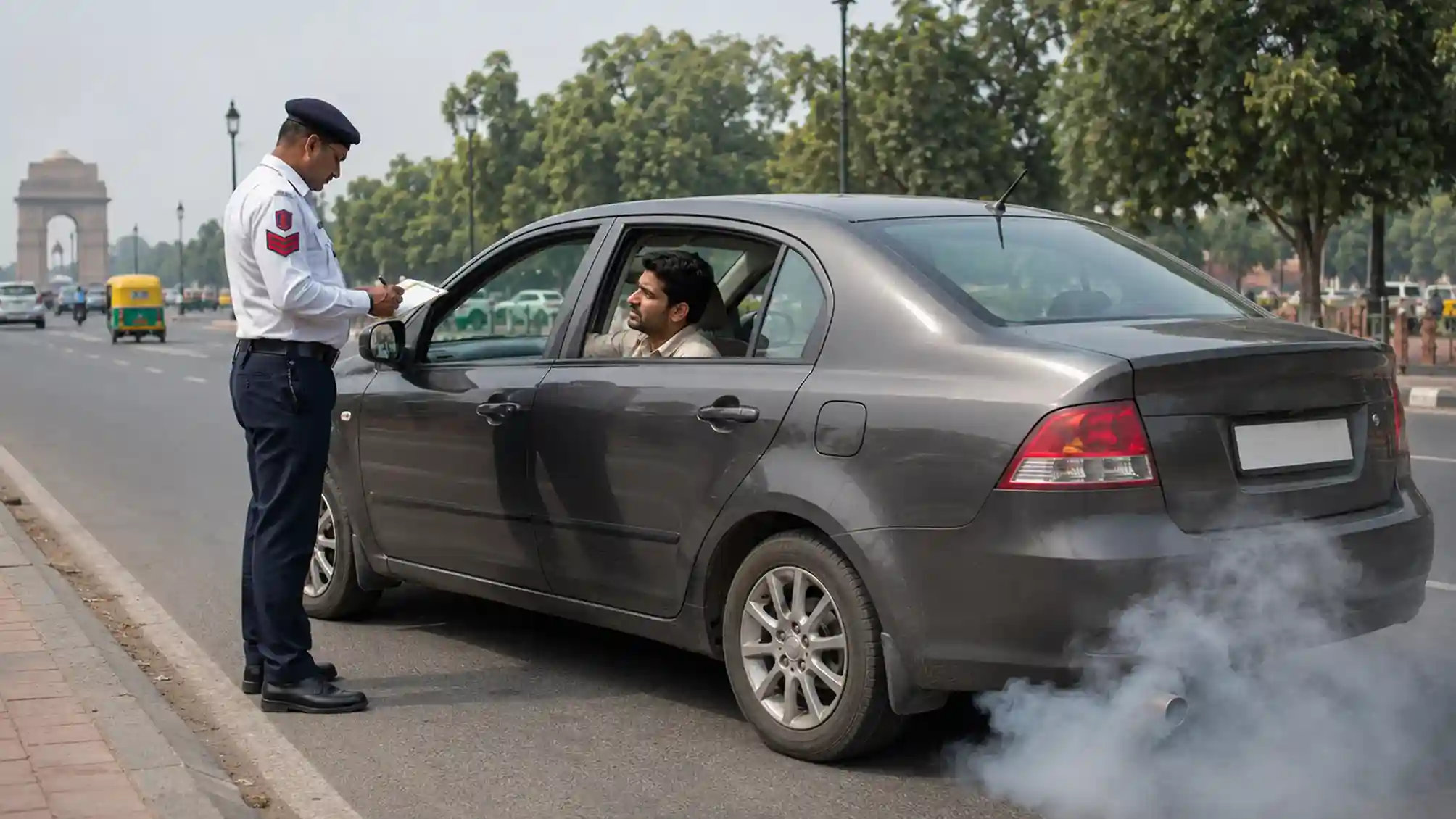
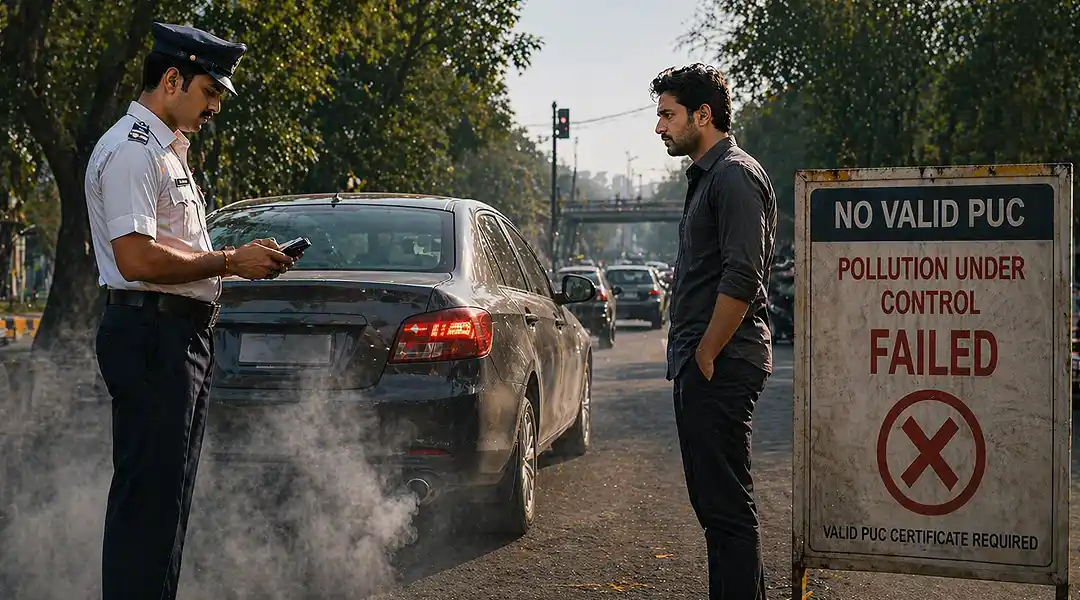
What is the PUC penalty for an expired certificate?
The vehicles without a valid PUC certificate face a penalty of ₹10,000 under existing provisions.
Ignoring your PUC certificate renewal is not worth the risk. In a move that signals the end of seasonal enforcement, the government has made it official that if your vehicle doesn't have a valid Pollution Under Control Certificate, you won't be able to refuel anywhere in the capital.
PUC regulations and enforcements
‘No PUC, No Fuel’ is enforced in most states across the country to ensure proper compliance with the rule.
ANPR cameras are installed at places or stops, which scan the vehicle’s number and verify it across the database to check PUC status. Upon not having a valid certificate, a PUC challan will be issued.
Important points to remember about the PUC certificate
A few final tips to keep the vehicle pollution certificate valid and drive trouble-free:
Always visit authorised PUC centers: Avoid unofficial or unverified emission testing points to steer clear of PUCC scams. Only an authorised center's pollution certificate holds legal validity.
Video verification: In regions such as Delhi, PUC testing centres are now required to record a video of the emission test process and upload it to the VAHAN portal. This ensures full transparency in the PUC certificate process.
PUCC valid across India: You do not need a separate Pollution Under Control Certificate for each state; one valid PUC certificate covers you nationwide.
Keep a digital copy: Pollution certificate download pdf from the Parivahan portal will help you obtain a digital copy of the certificate.
PUC related traffic violations
The traffic violations related to the pollution certificate in India and their penalties are:
| Traffic violation | Traffic fine | HC (n-hexane equivalent) ppm |
|---|---|---|
| Not having a valid PUC certificate | ₹10,000/3-month imprisonment + a possible 3-month Driving License (DL) suspension. | 9,000 |
| Driving with an expired PUC certificate | ₹10,000 and/or up to 3 months imprisonment. | 6,000 |
| Vehicle exceeding prescribed emission limits | ₹10,000 and/or up to 3 months imprisonment. | 4,500 |
| Failure to produce a valid PUC certificate when demanded | Up to ₹10,000 (Treated the same as not holding a valid certificate unless presented digitally via mParivahan/DigiLocker) | 750 |
| Using a fake or tampered PUC certificate | ₹10,000, possible 6-month imprisonment, and immediate vehicle seizure (treated as criminal fraud). | 1,500 |
| Failure to renew the PUC after expiry | Up to ₹10,000, once the vehicle is caught plying on public roads. |
*The PUC fine might vary depending on the state.
A PUC certificate is of much significance in the lives of vehicle owners. The certificate not only prevents a PUC penalty but also helps in understanding the vehicle’s health as well. Driving a vehicle comes with great responsibility and adhering to the rules of the PUCC will save you from adverse situations. Stay updated about the expiry of the PUCC and get it renewed when required to avoid consequences.

Check PUC Certificate Status by City
PUC Certificate Noida
PUC Certificate Kanpur
PUC Certificate Hyderabad
PUC Certificate Ahmedabad
PUC Certificate Bangalore
PUC Certificate Vadodara
PUC Certificate Chennai
PUC Certificate Surat
PUC Certificate Mumbai
PUC Certificate Gurugram
PUC Certificate Chandigarh
PUC Certificate Pune
PUC Certificate Bhubaneswar
PUC Certificate Lucknow
PUC Certificate Jaipur
PUC Certificate Patna
PUC Certificate Kozhikode
PUC Certificate Kolkata
PUC Certificate Coimbatore
PUC Certificate Faridabad
PUC Certificate Rajkot
PUC Certificate Thane
PUC Certificate Bhopal
PUC Certificate Indore
PUC Certificate Nagpur
PUC Certificate Bikaner
PUC Certificate Nashik
PUC Certificate Udaipur
Check PUC Certificate by States
PUC Certificate Andaman and Nicobar Islands
PUC Certificate Andhra Pradesh
PUC Certificate Arunachal Pradesh
PUC Certificate Assam
PUC Certificate Bihar
PUC Certificate Chhattisgarh
PUC Certificate Dadra and Nagar Haveli
PUC Certificate Delhi
PUC Certificate Goa
PUC Certificate Gujarat
PUC Certificate Haryana
PUC Certificate Himachal Pradesh
PUC Certificate Jammu and Kashmir
PUC Certificate Jharkhand
PUC Certificate Karnataka
PUC Certificate Kerala
PUC Certificate Ladakh
PUC Certificate Lakshadweep
PUC Certificate Madhya Pradesh
PUC Certificate Maharashtra
PUC Certificate Manipur
PUC Certificate Meghalaya
PUC Certificate Mizoram
PUC Certificate Nagaland
PUC Certificate Odisha
PUC Certificate Puducherry
PUC Certificate Punjab
PUC Certificate Rajasthan
PUC Certificate Sikkim
PUC Certificate Tamil Nadu
PUC Certificate Telangana
PUC Certificate Tripura
PUC Certificate Uttar Pradesh
PUC Certificate Uttarakhand
PUC Certificate West Bengal
Check Petrol Prices State-Wise
Petrol Price in Andaman Nicobar
Petrol Price in Andhra Pradesh
Petrol Price in Arunachal Pradesh
Petrol Price in Assam
Petrol Price in Bihar
Petrol Price in Chandigarh
Petrol Price in Chhatisgarh
Petrol Price in Dadra Nagarhaveli
Petrol Price in Daman & Diu
Petrol Price in Delhi
Petrol Price in Goa
Petrol Price in Gujarat
Petrol Price in Haryana
Petrol Price in Himachal Pradesh
Petrol Price in Jammu & Kashmir
Petrol Price in Jharkhand
Petrol Price in Karnataka
Petrol Price in Kerala
Petrol Price in Madhya Pradesh
Petrol Price in Maharashtra
Petrol Price in Manipur
Petrol Price in Meghalaya
Petrol Price in Mizoram
Petrol Price in Nagaland
Petrol Price in Odisha
Petrol Price in Pondicherry
Petrol Price in Punjab
Petrol Price in Rajasthan
Petrol Price in Sikkim
Petrol Price in Tamil Nadu
Petrol Price in Telangana
Petrol Price in Tripura
Petrol Price in Uttar Pradesh
Petrol Price in Uttarakhand
Petrol Price in West Bengal
Check Diesel Prices State-Wise
Diesel Price in Andaman Nicobar
Diesel Price in Andhra Pradesh
Diesel Price in Arunachal Pradesh
Diesel Price in Assam
Diesel Price in Bihar
Diesel Price in Chandigarh
Diesel Price in Chhatisgarh
Diesel Price in Dadra Nagarhaveli
Diesel Price in Daman & Diu
Diesel Price in Delhi
Diesel Price in Goa
Diesel Price in Gujarat
Diesel Price in Haryana
Diesel Price in Himachal Pradesh
Diesel Price in Jammu & Kashmir
Diesel Price in Jharkhand
Diesel Price in Karnataka
Diesel Price in Kerala
Diesel Price in Madhya Pradesh
Diesel Price in Maharashtra
Diesel Price in Manipur
Diesel Price in Meghalaya
Diesel Price in Mizoram
Diesel Price in Nagaland
Diesel Price in Odisha
Diesel Price in Pondicherry
Diesel Price in Punjab
Diesel Price in Rajasthan
Diesel Price in Sikkim
Diesel Price in Tamil Nadu
Diesel Price in Telangana
Diesel Price in Tripura
Diesel Price in Uttar Pradesh
Diesel Price in Uttarakhand
Diesel Price in West Bengal
Check CNG Prices State-Wise
CNG Price in Andaman Nicobar
CNG Price in Andhra Pradesh
CNG Price in Arunachal Pradesh
CNG Price in Assam
CNG Price in Bihar
CNG Price in Chandigarh
CNG Price in Chhatisgarh
CNG Price in Dadra Nagarhaveli
CNG Price in Daman & Diu
CNG Price in Delhi
CNG Price in Goa
CNG Price in Gujarat
CNG Price in Haryana
CNG Price in Himachal Pradesh
CNG Price in Jammu & Kashmir
CNG Price in Jharkhand
CNG Price in Karnataka
CNG Price in Kerala
CNG Price in Madhya Pradesh
CNG Price in Maharashtra
CNG Price in Manipur
CNG Price in Meghalaya
CNG Price in Mizoram
CNG Price in Nagaland
CNG Price in Odisha
CNG Price in Pondicherry
CNG Price in Punjab
CNG Price in Rajasthan
CNG Price in Sikkim
CNG Price in Tamil Nadu
CNG Price in Telangana
CNG Price in Tripura
CNG Price in Uttar Pradesh
CNG Price in Uttarakhand
CNG Price in West Bengal
Check & Pay E-Challan by State
E Challan Telangana
E Challan Bihar
E Challan Delhi
E Challan Odisha
E Challan Haryana
E Challan Maharashtra
E Challan Punjab
E Challan Rajasthan
E Challan Karnataka
E Challan Jharkhand
E Challan Kerala
E Challan Goa
E Challan Uttarakhand
E Challan Uttar Pradesh
E Challan Andhra Pradesh
E Challan West Bengal
E Challan Tamil Nadu
E Challan Tripura
E Challan Himachal Pradesh
E Challan Chhattisgarh
E Challan Manipur
E Challan Assam
E Challan Arunachal Pradesh
E Challan Madhya Pradesh
E Challan Sikkim
E Challan Meghalaya
E Challan Nagaland
E Challan Gujarat
E Challan Dadra Nagar Haveli
E Challan Mizoram
E Challan Jammu & Kashmir
E Challan Lakshadweep
E Challan Ladakh
E Challan Andaman and Nicobar
E Challan Daman and Diu
Check & Pay Bike Challan by State
Bike Challan Andaman and Nicobar Islands
Bike Challan Andhra Pradesh
Bike Challan Arunachal Pradesh
Bike Challan Assam
Bike Challan Bihar
Bike Challan Chandigarh
Bike Challan Chhattisgarh
Bike Challan Dadra and Nagar Haveli
Bike Challan Delhi
Bike Challan Goa
Bike Challan Gujarat
Bike Challan Haryana
Bike Challan Himachal Pradesh
Bike Challan Jammu and Kashmir
Bike Challan Jharkhand
Bike Challan Karnataka
Bike Challan Kerala
Bike Challan Ladakh
Bike Challan Lakshadweep
Bike Challan Madhya Pradesh
Bike Challan Maharashtra
Bike Challan Manipur
Bike Challan Meghalaya
Bike Challan Mizoram
Bike Challan Nagaland
Bike Challan Odisha
Bike Challan Puducherry
Bike Challan Punjab
Bike Challan Rajasthan
Bike Challan Sikkim
Bike Challan Tamil Nadu
Bike Challan Telangana
Bike Challan Tripura
Bike Challan Uttar Pradesh
Bike Challan Uttarakhand
Bike Challan West Bengal
Pollution Under Control (PUC) Certificate FAQs
Why is the PUC certificate important?
A PUC certificate (Pollution Under Control Certificate) certifies that your vehicle's emissions comply with government-prescribed pollution limits set by the Central Pollution Control Board.
Can I renew a pollution certificate online?
Is the PUC certificate valid for only 6 months?
For most vehicles, after the first year of registration, the PUC certificate validity is 6 months.
What documents are needed to get a PUCC?
Only your vehicle's Registration Certificate (RC) is required to obtain a pollution under control certificate. No additional paperwork is needed.
Does a brand-new car need a PUCC immediately?
No. New vehicles are exempt from the PUC certificate requirement for the first year from the date of registration.
What happens if my vehicle fails the PUC test?
The PUC testing centre will issue a rejection slip. You'll need to fix the flagged issues and have your vehicle retested before a new pollution certificate can be issued.
Can I get a PUCC in a state other than where my vehicle is registered?
Yes. You can visit any authorised PUC centre in any state and obtain a valid pollution certificate. It will be recognised across India.
What is the penalty for driving without a valid PUCC?
Under the Motor Vehicles Act, the PUC certificate penalty in monetary terms can go up to Rs. 10,000 for a first offence. Subsequent offences attract higher PUCC penalties.
Can I upload my PUC certificate to DigiLocker?
Yes, PUC certificate can be uploaded to DigiLocker.
Can I renew my PUCC anywhere in India?
Does an expired PUC affect my car insurance?
Yes, an expired certificate attracts a PUC challan and thus affects the car insurance renewal process.
Can I get a PUC e-challan only during a police stop?
Not necessarily. CCTV cameras linked to the vehicle database can detect an expired PUC certificate and issue an e-challan automatically.