
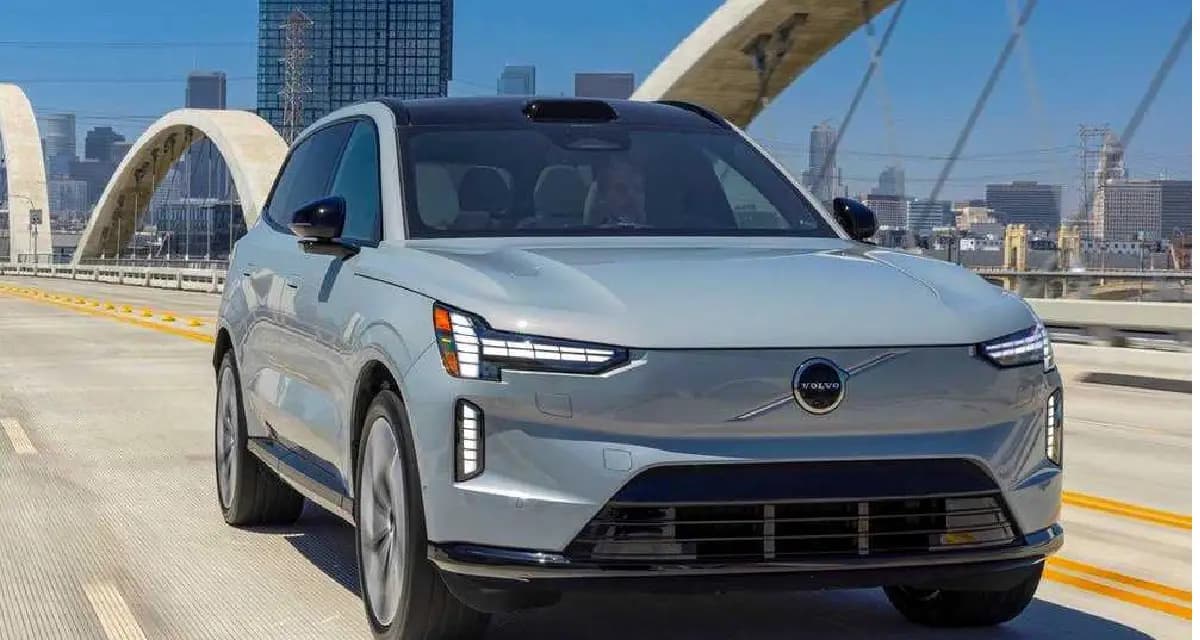
Volvo has also refined the EX90 by fitting it with a new 800V electrical system as opposed to the fully electric version, which has a 400V system. This upgrade will increase the maximum charging capacity from 250kW to 350kW, allowing drivers to add a range of 250km of charge in only 10 minutes.
Besides quicker recharging, the new system shows greater acceleration and an innovative, efficient means of energy consumption, which will also keep the EX90 in pace with the world of EV models.
Nokia Smarter dual Nvidia Chips
Volvo has also brought significant computing upgrades on the software side. Two Nvidia solution Drive AGX Orins have been introduced to replace the older Nvidia Xavier chip with 500 TOPS (trillion operations per second).
As Anders Bell, the Chief Technology and Engineering Officer of Volvo, had explained, this additional computing power is not only serving to improve its overall performance but also helping Volvo be able to fine-tune its safety systems in real time and to grow them as well.
Safety Kit Emergency stop assembly
Safety has been a core part of the Volvo DNA, and what the recent update on the EX90 continues to build on. The SUV has also acquired alerts on pedestrians and cyclists during the night, alerts on the slippery roads and much better accident detection systems. There is also an improvement in the automatic parking capability.
One of the best additions is the Emergency Stop Assist (ESA) system, which may bring the vehicle under emergency control in case the driver gets incapacitated and is connected to emergency call centres through the e-Call.
India Launch Plans
Volvo EX90 should come to India by the end of 2025, after the EX30, which came earlier this year. The EX90 will complement the larger EV core of the brand, thereafter comprising the EX40 and EC40 after it goes on sale.
Being the electric version of the XC90, the EX90 is expected to fetch a premium on top of the existing cost of the latter model of ₹96 lakh -1.05 crore (ex-showroom).
Also Read: