
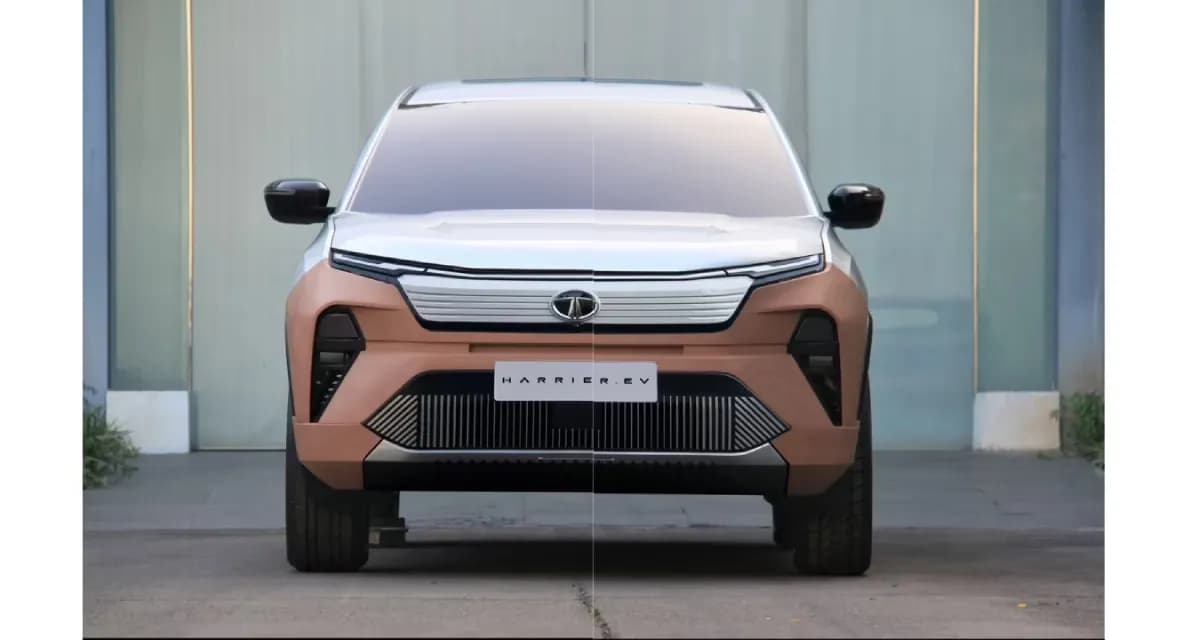
The article examines the anticipated price, engine specifications, and revisions that purchasers can anticipate for the petrol versions of the Tata Harrier and Tata Safari that will be introduced in India tomorrow.
Additionally, it talks about how the new petrol engine fits into Tata Motors' overall strategy and how it might impact the company's ability to compete in the midsize SUV market.
Tata's brand-new 1.5-liter turbocharged direct-injection petrol engine, which is a member of the company's "Hyperion" engine family, will power the petrol models. According to reports, this turbo-petrol engine will offer about 280 Nm of torque between 2,000–3,500 rpm and about 170 horsepower at 5,000 rpm.
This engine will probably be mated to both an automatic transmission and a 6-speed manual gearbox (but specifics, torque converter, or DCT have not yet been confirmed). The device will comply with BS6 Phase II, according to Tata.
The reason for the addition of a petrol engine is obvious: it makes the Harrier and Safari more appealing to both city-dwelling car owners who prefer the smoothness, refinement, and ease of maintenance of petrol over diesel, particularly for daily driving and sporadic long trips, as well as traditional SUV buyers.
Price Expectations and Market Positioning
Tata seems to be making the petrol versions marginally less expensive than the diesel versions. The petrol version of the Harrier is expected to start at about ₹13–14 lakh (ex-showroom). Because of this, consumers seeking a high-end mid-size SUV without the higher diesel charge may find it to be an appealing starting point.
Although the exact price of the Safari hasn't been formally revealed, it is anticipated that the petrol version would start at a competitive price, maybe equal or undercutting some diesel variants. This will help Tata reach buyers who had previously avoided these SUVs since they only offered diesel options.
Features, Design, Safety, and What Stays the Same
All of the current Harrier and Safari diesel models' key features, styles, and designs are anticipated to be carried over into the petrol lineup. This includes the promised safety technologies, elegant interiors, infotainment features, and the same daring SUV stance.
In essence, the petrol versions are more about providing a sophisticated, smooth drivetrain substitute while maintaining the overall SUV appeal than they are about a simplified, cost-effective option.
Tata Motors' Strategic Significance
The introduction of fuel versions of the Harrier and Safari is a big step for Tata. It expands their appeal to include urban families and infrequent drivers who want the convenience of gasoline, in addition to conventional diesel-SUV purchasers.
This innovation could future-proof these premium SUVs and make them more competitive against rivals offering petrol alternatives, given the tightening regulations on diesel usage and the growing desire for gasoline-powered vehicles in many Indian cities.
As December 9 draws near, consumers and car enthusiasts will be eager to see how these gasoline-powered models perform, particularly in terms of ride comfort, refinement, fuel economy, and practical drivability.
Also read: