
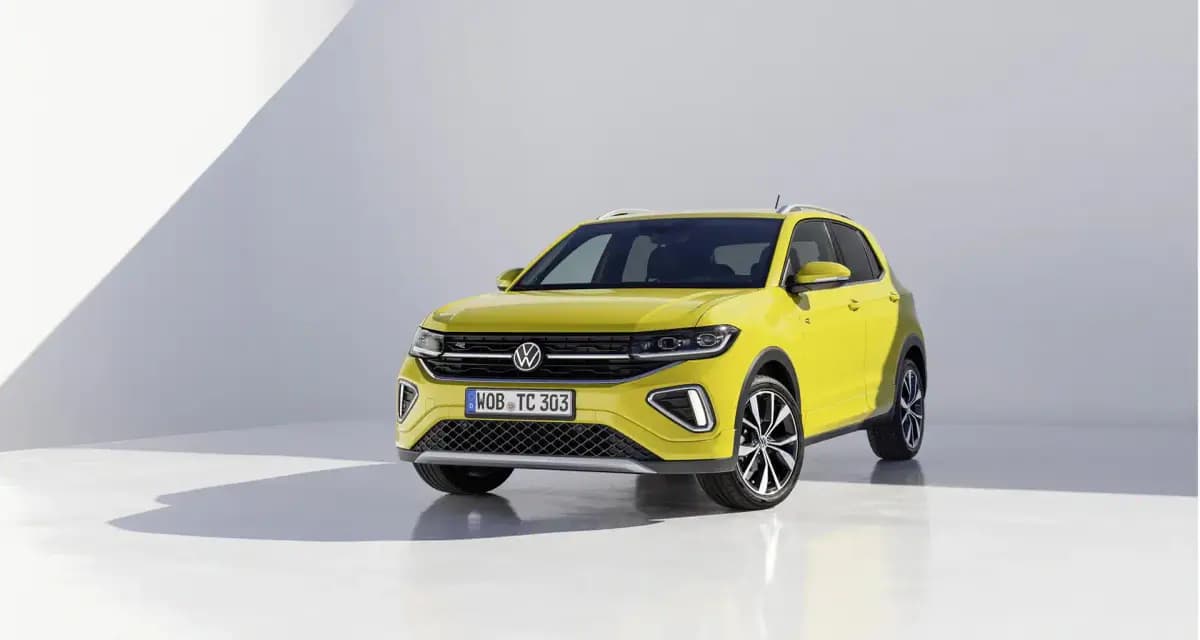
The upcoming facelift of the Volkswagen Taigun has been spotted on Indian roads for the first time. This update is part of Volkswagen’s broader India strategy, which focuses on refreshing existing models with new features and design changes while retaining the mechanical core.
The aim is to keep their cars fresh and competitive in India's fast-evolving SUV market without completely starting over.
Launch Timeline and Market Strategy
The facelifted Volkswagen Taigun is expected to be launched after the Skoda Kushaq facelift, likely in early 2026.
With this update, Volkswagen isn’t looking to fix what already works, but to bring just enough changes to keep the Taigun fresh and appealing. The goal is to hold its ground in the midsize SUV space, where cars like the Hyundai Creta, Kia Seltos, and MG Astor are already thriving.
Features Upgrades
Exterior
Volkswagen Taigun’s major styling changes are focused on the front and rear:
New bumpers, grille, LED headlamps, and updated tail lamps.
The profile remains unchanged with body-coloured door handles, roof rails, and cladding.
Expect new alloy wheel designs and fresh exterior colour options.
Interior
Volkswagen is expected to add new premium features to the facelift, including:
Level 2 ADAS: Adaptive Cruise Control, Lane Keep Assist, Emergency Braking, and Forward Collision Warning.
360-degree camera, new ambient lighting themes, and dual-zone climate control.
Possible updates to the infotainment system and upholstery.
Powertrain and specifications
At launch, the facelifted Volkswagen Taigun will retain its existing petrol engine lineup:
1.0-litre TSI, 3-cylinder turbo-petrol
Power: 115 PS
Torque: 178 Nm
Transmission: 6-speed manual or 6-speed torque converter automatic
1.5-litre TSI EVO, 4-cylinder turbo-petrol
Power: 150 PS
Torque: 250 Nm
Features cylinder deactivation for better fuel efficiency
Transmission: 6-speed manual or 7-speed DCT (dual-clutch automatic)
While no major changes are expected at launch, a new 8-speed automatic transmission is likely being created for the 1.0-litre TSI engine. This could be introduced 6 to 8 months after the facelift’s launch, with local manufacturing likely to reduce cost and make the Taigun more affordable.
Conclusion
Volkswagen isn’t making engine changes for now but is focusing on improving safety, tech, and overall value. The idea to keep the Taigun competitive in India’s fast-moving SUV market seems to be working, as the facelift is already creating buzz ahead of its expected launch.
Also Read: