
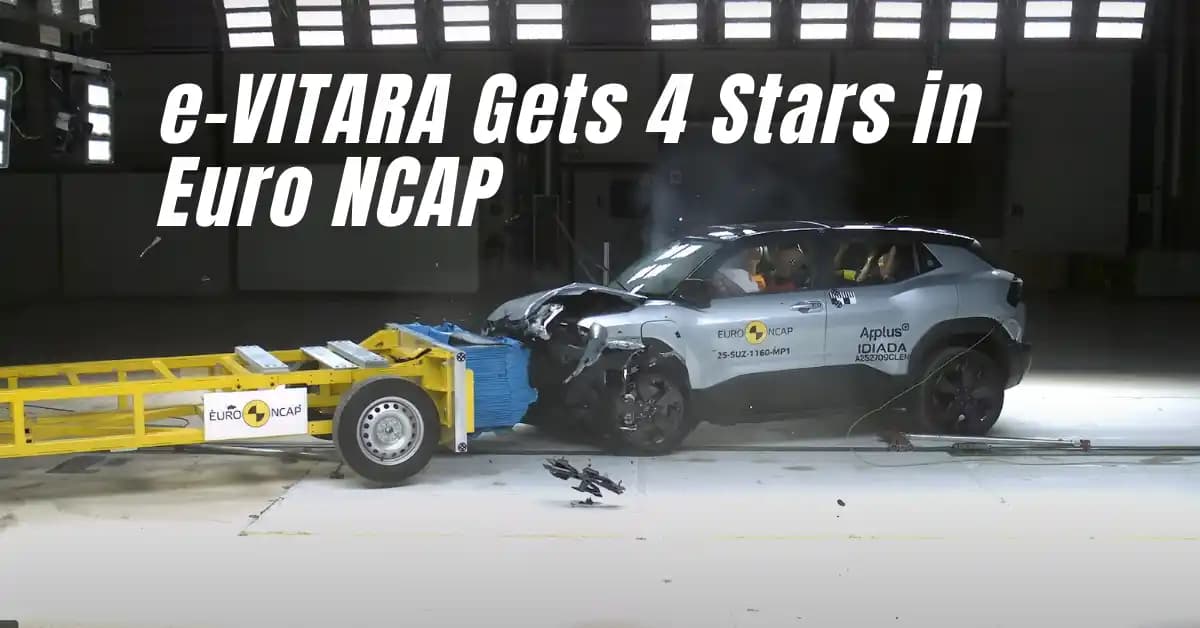
Maruti Suzuki e-Vitara/all-electric Urban Cruiser is the first all-electric SUV by the company, and the vehicle underwent Euro NCAP crash tests and received an impressive 4-star rating. The e-Vitara isn’t on sale in the UK yet, but was manufactured in India, with Toyota soon to introduce its repurposed version as the all-electric Urban Cruiser in Europe. This success is an important milestone for India-made EVs in the international markets.
Adult Occupant Protection
The e-Vitara was good in general occupant protection in adults in tested versions of 61kWh GLX and LHD. The SUV received a score of 31/40 points (77%), and in most cases, strong safety of the knees, femurs, head, and chest.
Whiplash protection was good both in the front and back in the rear-end car crashes. The added safety credibility was added by features such as an inbuilt eCall system, secondary impact prevention and doors that could be used even when it was underwater.
Child Occupant Safety: Excellent Results
The e-Vitara achieved 42/49 points (85%) in the child protection tests, which provided good protection to 6 and 10-year-old dummies in frontal and side tests. Child restraint systems were reliable, but marks were lost due to the lack of such options as child presence detection.
Pedestrian/Cyclist Safety: Ambivalent Results
To vulnerable road users, the e-Vitara performed well with a score of 79% in terms of protection of pedestrian heads and legs. But poorer performance was found around the windscreen pillars and at the bottom of the screen.
Most of the time, the AEB system operated successfully, but the SUV did not receive the protection of cyclist doorings.
Safety Assist: Advanced Systems at Work
The SUV received a score of 72% in the Safety Assist category, where the autonomous emergency braking (AEB), speed support, lane support, fatigue detection, and seatbelt reminder systems worked as intended.
Conclusion
The 4-star rating of the Euro NCAP makes the India-produced Maruti Suzuki e-Vitara—as well as the Urban Cruiser EV of Toyota—competitive and trustworthy global EVs. Although there is room to improve on a few aspects, the outcomes indicate the increasing Indian contribution to the manufacturing of electric cars that comply with international standards in safety.
Also Read: