
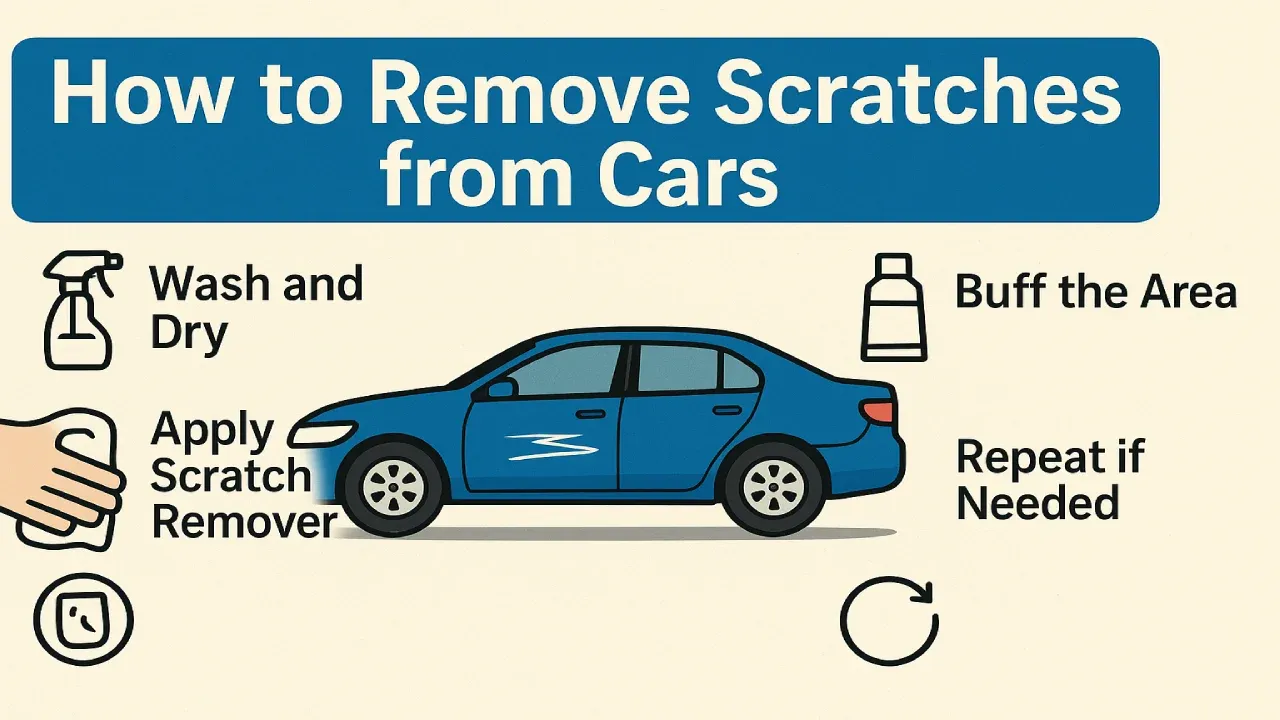
No matter how carefully we drive, scratches are an inevitable part of a car’s journey. These may occur while driving, like when another car hits, or due to everyday wear and tear in daily commutes.
Although scratches cannot always be avoided, they can surely be fixed either with a do-it-yourself approach or by professional help, depending on their severity. The measures to mend these scratches can range from basic home remedies to more advanced techniques like wet sanding using 1000-2000 grit sandpaper.
Every person who owns a car eventually builds a bond with it, and repairing these scratches is sometimes more about the emotional attachment than the functionality of the car.
With the tips and tricks for how to remove scratches from car at home, you can restore the quality and pristine look of your cherished vehicle.
What causes scratches on a car?
A car getting scratches isn't an uncommon thing, and can happen often due to multiple factors, some of which are not even in our control.
Vehicles can be affected adversely due to improper handling or washing, like using worn-out or dirty brushes to clean. They are also subject to scrapes that appear from routine use - parking, tree branches, automatic car washes, or simply brushing against objects.
Also Read:- What're the Bad Driving Habits
Types of scratches on the car
The following are the three major types of scratches that a car can experience:
1. Clear coat scratches
When only the transparent layer of a car is damaged, it is referred to as clear coat scratches. These scratches are often visible to the naked eye but are not deep, and can be felt if one touches the skin of the vehicle.
Although clear coat scratches are not as severe as a wound from a collision or minor accident, fixing these is also essential if one wants to avoid further deterioration and cares about the health of their car.
2. Paint (base coat) scratches
Paint scratches are those that penetrate the colour layer, but not the primer or the metal layer of the car. There is an apparent change in the colour of the vehicle’s body, making the metal part visible. It is relatively easier to remove small paint scratches from the car, especially if they are fresh.
3. Deep (primer/metal) scratches
When the primer layer of the car is damaged, and the metal substrate underneath is exposed, it is called a deep scratch. These can be caused by major accidents or collisions, and due to the complexity involved, a professional is required to fix these scratches.
Such professionals possess the expertise needed to repair deep scratches in the car without damaging it further.
Also Read:- Mandatory Car Rules
How to remove scratches from cars?
Scratches are not indelible, and there are a few ways to remove them depending on their type:
1. Fixing Clear Coat Scratches
These scratches are only present on the outermost transparent layer of a car. It happens while washing the vehicle unattentively, or keys brushing up, etc. For how to remove minor scratches from car, perform the following tips:
DIY Fixes
- Toothpaste (non-gel)
Acts as a mild abrasive to smooth out tiny surface imperfections.
Rub in circular motion with a microfiber cloth, then wipe clean.
- Scratch Remover / Polishing Compound
Designed to remove clear coat blemishes and swirl marks.
Apply with sponge or cloth using moderate pressure.
- Baking Soda Paste
A homemade mild abrasive. Mix with water to form a paste, gently rub the area, and clean off.
Quick Fixes
- Magic Eraser
Can reduce light marks but may reduce the car’s shine.
Dampen and lightly rub on the affected area.
- Petroleum Jelly (Vaseline)
Temporarily hides or removes minor scratches by filling them in.
Excess should be wiped off after application.
Professional Fixes
- Machine Buffing with Polisher
Used for larger areas or when DIY isn’t enough.
Professionals use orbital tools and high-grade compounds for better results.
2. Fixing Paint-Level (Base Coat) Scratches
These scratches cut into the color layer but not down to the metal. They’re visible to the naked eye.
DIY Fixes
- Scratch Repair Kit
Includes rubbing compound, paint, and polishing materials.
Clean area, apply compound, use color-matching touch-up paint if needed, finish with polish.
- Rubbing Compound
A stronger compound than polish, as it removes more material.
Use cautiously because it can thin the paint if over-applied.
- Clear Coat Pen or Paint Touch-Up Pen
Fills in the scratch and seals the surface.
Best for narrow paint scratches on doors or bumpers.
Quick Fixes
- Nail Polish (matching color)
Temporary and not durable, but can conceal minor paint scratches.
Professional Fixes
- Paint Correction & Blending
Technicians repaint the area and blend it with the surrounding panel.
It is best if the scratch is wide or in a noticeable location.
Also Check: Check Vehicle Owner Details
3. Fixing Deep Primer/Metal Scratches
These are severe scratches that go through the colour and primer, sometimes exposing bare metal. They can even lead to rust if left untreated.
DIY Fixes (Only if confident)
- Sandpaper + Primer + Touch-Up Paint + Clear Coat
Use sandpaper with 1500–2000 grit to smooth edges.
Apply primer, then matching paint, and seal with a clear coat.
Buff and polish once fully dried.
Note: Requires care and experience because mistakes can worsen damage.
Professional Fixes (Recommended)
Full Panel Repainting
Scratches down to metal usually need sanding, priming, painting, and sealing.
Experts use spray equipment for colour match and an even finish.
Rust Treatment (if needed)
If metal is exposed for a long time, rust may begin to form. Professionals treat and repaint rusted spots to prevent spreading.
Body Shop Repair
Best choice for large, deep, or multiple scratches.
Professionals assess damage and restore paint to factory finish.
Scratch Type Comparison: DIY vs Professional Help
| Type of Scratch | Severity | Visibility | DIY Fixes | When to Seek Professional Help |
|---|---|---|---|---|
| Clear Coat Scratch | Low | Visible under light; no colour change | - Toothpaste (non-gel) - Baking soda paste - Scratch remover or polish | If a large area is affected or results are unsatisfactory with DIY methods |
| Paint-Level Scratch | Medium | Visible colour change; metal not exposed | - Scratch repair kit - Rubbing compound - Clear coat or touch-up pen | If scratch is wide, deep, or affects a noticeable area |
| Deep Scratch (Primer/Metal) | High | Exposes primer or metal; risk of rust | - Wet sanding (1500–2000 grit) - Primer + Touch-up paint + Clear coat | Strongly recommended: Requires repainting, rust treatment, or body shop repair |
Preventive Tips to Avoid Car Scratches
Well, it is quite hard to prevent a car from getting scratches, but when it comes to how to avoid a car from getting deep scratches, then there are some simple preventive tips that you can adopt and they are:
Pay attention to car washing. A gentle car washing prevents the car from getting scratches.
Ensure there is no tag on the cloth you’re using for a car cleaning, as it might leave a scratch on the car.
To prevent your car from minor scratches, it is recommended to apply a wax layer.
To prevent door scratches, install door edge guards.
Conclusion
Getting scratches on your ride is a natural part of owning a car, but they can significantly affect its appearance. For how to remove scratches from car, it is important to first identify their severity and then choose an appropriate removal method. At-home remedies work well to remove minor scratches, while professional help is required to repair substantial damage. Following these tips effectively can help your car look as good as new and preserve its overall condition for years to come.