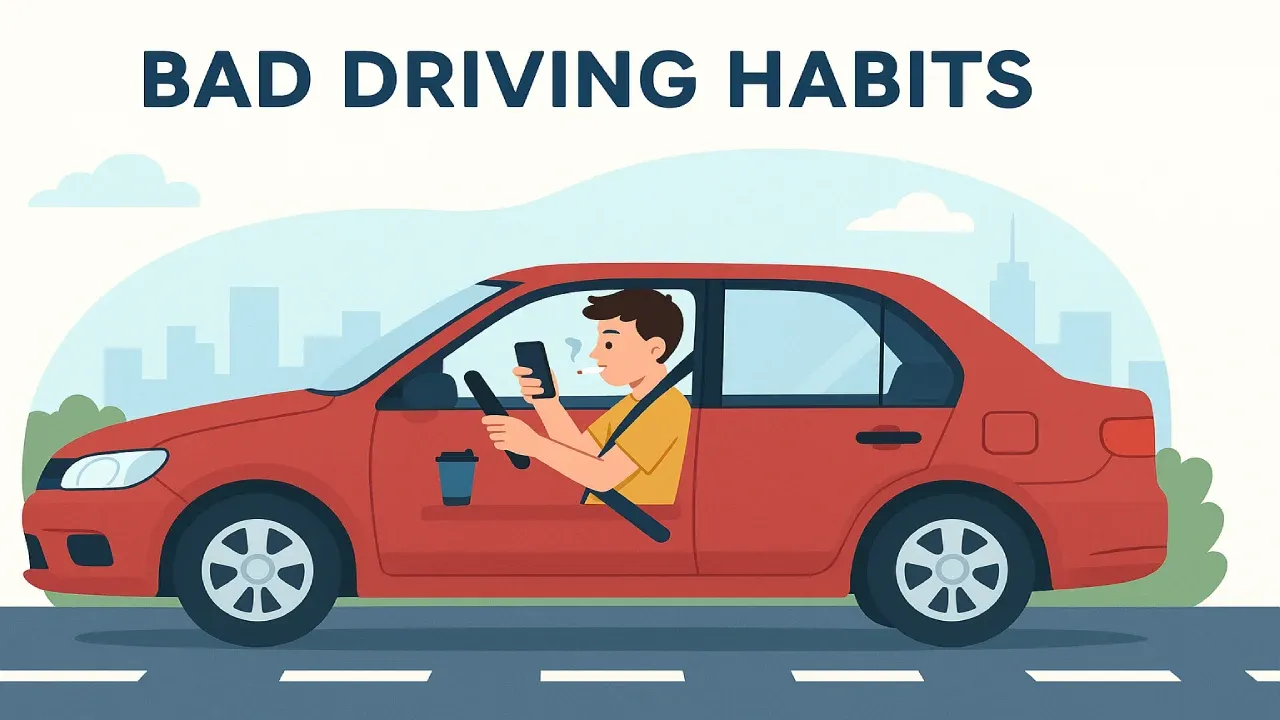
Driving is a big responsibility. Even small mistakes on the road can lead to serious accidents, harm your car, or put the lives of your family and others at risk. Many of us pick up bad driving habits over time without even realizing it. But these habits can cost you money, your car’s health, and most importantly, your safety.
In this blog, we’ll talk about 20 common driving habits that you should stop immediately to become a safer and smarter driver.
16 Bad Driving Habits You Must Avoid For Your Safety
We all try to be good drivers, but sometimes, without even realizing it, we pick up bad driving habits. These small mistakes might not come to attention and may seem harmless, but over time, they can damage your car, increase the chances of accidents, and even put lives at risk.
However, most of these habits are easy to fix once you become aware of them. Whether you’re a new driver or have years of experience, this list will help you drive more safely.
Let’s take a look at the 16 bad driving habits you should avoid starting today for your own safety.
1. Using mobile phones while driving
Texting, calling, or checking notifications while driving is extremely risky. Even a second’s distraction or hands-free calls can distract your focus from the road and can lead to a serious accident.
What can be done to avoid:
- Keep your phone on silent or “Do Not Disturb” mode.
- Use hands-free only if necessary.
- Park safely if you need to use your phone.
2. Overloading the vehicle
Carrying more people or weight than your car is built for, reduces mileage, affects its braking potential, and fails to stop the vehicle when required, resulting in a car crash. Moreover, it also adversely affects the fuel economy and may damage tires as well, increasing the probability of major accidents.
What can be done to avoid:
- Avoid overloading the vehicle with extra luggage or passengers.
Never exceed the load limit given in your car manual.
- Driving using one hand
Many drivers casually drive with one hand, which reduces the ability to control the car during emergencies. Though it may look “cool,” driving with one hand gives you less control when required the most.
What can be done to avoid:
- Keep both hands on the steering wheel, preferably in the 9 and 3 o’clock positions, for better control, especially during turns.
4. Hard Braking and Sudden Acceleration
Changing speed suddenly and abrupt stops while driving not only damages your car’s parts but also increases the chances of accidents, increases fuel consumption, wears out brake pads, and increases the risk of skidding.
What can be done to avoid:
- Drive smoothly.
- Anticipate traffic and slow down gradually.
- Be attentive and look out for speed breakers.
5. Not Using Indicators
Indicators are signals one should use while taking turns or changing lanes; failing to do so can confuse other drivers and can lead to serious accidents. Giving indicators at the correct time gives an idea to the other drivers on the road about your future actions.
What can be done to avoid:
- Always use indicators at least a few seconds before turning or switching lanes.
- Make it a habit, even when the road looks empty.
- Notice if other vehicles are using the same especially at turns.
Also Read:- How to Check Driving License Status
6. Driving Under The Influence
Even a small amount of alcohol or any type of intoxication can affect your brain, slow your reactions, confuse your judgment and responses, making driving dangerous for you and even for other people driving on the road. It's illegal, puts your insurance premium at risk, and causes 30% of traffic deaths.
What can be done to avoid:
- Use taxis or public transportation if you are intoxicated.
- Avoid peer pressure, don’t get in a car with an intoxicated driver.
- Support or follow strict enforcement of DUI (Driving Under the Influence) laws.
7. Tailgating
Driving too close to the vehicle in front doesn’t give you enough time to stop in case of a sudden brake. Moving too closely can be dangerous. Because if the vehicle in front suddenly stops, you won’t have enough time to react.
What can be done to avoid:
- Maintain at least a 3-second gap between vehicles.
- Increase the gap during rain or fog and use dippers.
8. Ignoring Dashboard Warning Lights
Those small lights on your dashboard can indicate serious issues like low oil, engine trouble, or brake failure. Those tiny lights on your dashboard are there for a reason. Ignoring them can lead to bigger, costlier issues later.
What can be done to avoid:
- Never ignore warning signs.
Visit a mechanic immediately if a light stays on.
- Not Checking Blind Spots
Blind Spots can always be dangerous; it's in their nature. Every driver might have experienced this situation where another vehicle from another lane suddenly changes lanes. So, relying only on mirrors while driving or changing lanes is risky, as they don’t show everything around you. You may miss vehicles or bikes in blind spots, leading to accidents.
What can be done to avoid:
- Quickly turn your head to check blind spots before changing lanes.
- Always double-check before merging on the road while driving.
Also Read:- Tips for Passsing your Driving License Test
10. Resting Foot on Brake Pedal
Keeping your foot on the brake pedal lightly while driving (especially in automatic cars) causes wearing out of brake pads and confuses other drivers behind.
What can be done to avoid:
- Keep your foot on the floor when not braking.
Use the brakes only when needed.
- Not Checking Tire Pressure Regularly
Low or uneven tire pressure affects grip, mileage, fuel efficiency, and tire life. It might not get noticed in the dry weather, but when it starts to rain or the road is icy, the worn-out tires won’t give you the required grip on the road. It also increases the risk of tire bursts and accidents.
What can be done to avoid:
- Check tire pressure every 2 - 4 weeks.
- Keep a digital tire gauge in your car if possible.
12. Disobeying Traffic Lights and Road Signals
Ignoring red lights, disobeying traffic rules is against the law and can also lead to a fatal accident. According to the Federal Highway Administration (FHWA), not following traffic rules causes thousands of crashes annually, resulting in serious injuries.
What can be done to avoid:
- Keep your eyes on the road while driving and be alert to the traffic signals.
Fully stop at the “STOP” signs.
- Aggressive Driving
According to NHTSA, aggressive driving is the cause og 50% of car crashes, which often turns minor frustrations into fatal, life-threatening situations. Aggressive behaviours like overtaking other vehicles, engaging in road rage and fits, weaving, excessive honking, frequent lane changes, etc., are all a part of aggressive driving, which can impact you and others on the road.
What can be done to avoid:
- Don’t engage in aggressive situations and focus of your own safe driving.
- Keep your emotions in check while driving.
- Avoid driving the vehicle if you’re in anger.
- Try to keep your patience to maintain calm and environment.
Also Read:- Mandatory Car Rules You Should Know
14. Overspeeding
Speeding has been a cause of fatal crashes for over decades now. Many drivers have a habit of driving faster than the posted speed limit, and according to government statistics, 56% of fatal collisions in 2023, when 37% of HGV drivers were caught speeding on residential roads.
Speeding damages the vehicle and makes it lose control, it also decreases your capacity to respond in unforeseen circumstances.
What can be done to avoid:
- Keep your speed limits within the rules and regulations.
- Even if you’re running late, don’t speed up.
Give yourself enough time to respond effectively to avoid accidents.
15. Not wearing a seat belt
The seat belt is the “lifesaver”; wearing it is one of the most important and smartest thing to do to be safe. Most states have fines and laws for seat belt use. This is the first line of defense at the times of collisions or accidents if you have to break suddenly.
What can be done to avoid:
- Make sure everyone in the car has their seat belts on, especially children, before starting driving.
- Make it a habit of first thing you do, when you get into the car.
16. Keeping high beams
If you are driving on the dark roads, it is important to use high beams to see the road in front of you. But forgetting to turn it off when there’s another vehicle approaching in front can be risky. As it temporarily blinds them and can lead to collisions and accidents.
What can be done to avoid:
- Make sure to switch off the high beam after you are off the road or another vehicle is approaching.
- Be attentive and keep your focus on the road.
Also Read:- Revised Challan List in India
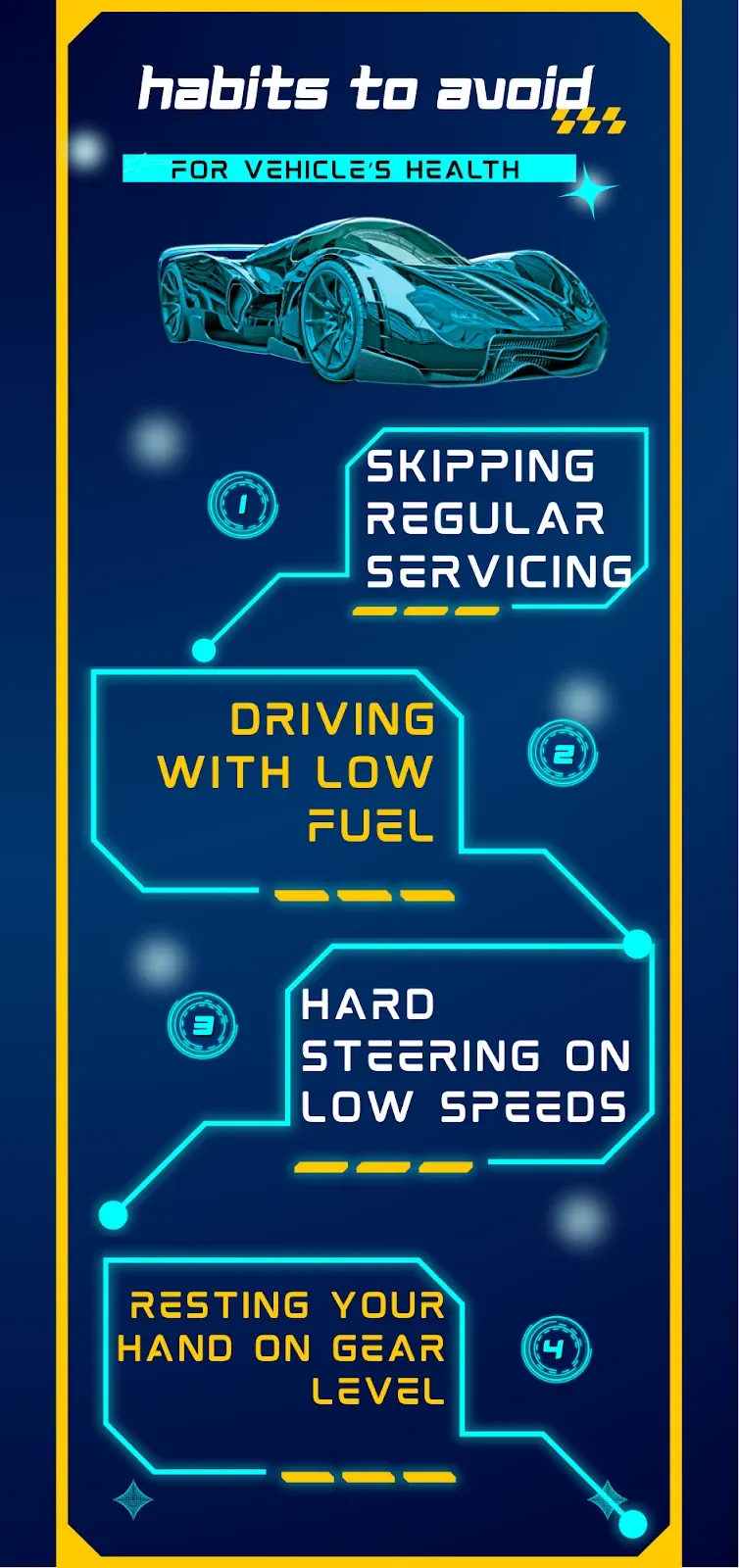
4 Bad Driving Habits that Can Affect Your Vehicle’s Health
There are some bad driving habits that advesrely affects the health of your vehicle. Some of them are as follows:
1. Skipping Regular Servicing
Many people ignore servicing until something breaks down. This habit shortens the lifespan of your car. Avoiding regular maintenance affects your vehicle’s health, performance, and safety.
What can be done to avoid:
- Follow the service schedule in your car manual.
Get regular oil changes, filter replacements, and check-ups.
2. Driving With Low Fuel Frequently
Running your car on a nearly empty tank can often damage the fuel pump and reduce engine life over time. A vehicle’s fuel pump is designed to be filled so the engine can work properly.
While it may save some money for the time being, but will cost you more expenses later at the time of repair.
What can be done to avoid:
- Get the tank filled up when it reaches one-fourth full.
Don’t wait for the warning light every time.
3. Resting Your Hand on the Gear Lever
Many people keep their hands on the gear lever even when not shifting the gears. This may seem easy and convenient when changing gears frequently, but it adds pressure on the gearbox and can damage it over time.
What can be done to avoid:
- Shift gears and place your hand back on the steering wheel.
4. Hard Steering at Low Speeds
Turning the steering wheel fully while the car is at a stop or moving very slowly can put pressure on the power steering system. The tires may also respond abruptly, especially at tight places, which can lead to accidents.
What can be done to avoid:
- Move the car slightly forward or backward while turning the wheel.
- Avoid turning the steering wheel when the car is still.
Also Check: Lok Adalat
What could be the consequences if these habits aren’t improved?
Bad driving habits not only put your life at risk but also harm others on the road and damage your vehicle. Some may seem harmless, a simple one like resting your hand on the gearstick or not checking tire pressure regularly, but over time, they lead to expensive repairs and even accidents.
The Possible Consequences
Despite the existence of traffic laws and regulations, bad driving continues to be a significant problem that results in tragic consequences. To avoid adverse situations or consequences, every driver should do their best to identify and change their own bad driving habits.
1. Higher Repair Costs
Driving on low fuel, skipping maintenance, or riding the clutch damages your vehicle, leading to costly repairs and deprecating health of the vehicle.
2. Increased Risk of On-Road Accidents
Habits like distracted driving, not checking blind spots, or tailgating can directly cause crashes, putting your life and others in danger.
3. Mental and Emotional Stress
Causing or witnessing a road accident can lead to long-term guilt, anxiety, or trauma.
4. Increased Insurance Premiums
Accidents and violations can raise your car insurance rates significantly.
5. Financial Losses
Besides medical bills or car repairs, you may face legal penalties, lawsuits, or loss of income after a serious accident.
Conclusion
Even the smallest driving mistakes can lead to big problems. By becoming mindful of these habits and making simple changes, you can drive more responsibly, reduce risks on the road, and keep your vehicle running smoothly for years to come