The pitch is easy to like. Fill up in minutes, cover a long distance and keep tailpipe emissions very low. That is why the hydrogen car keeps coming up whenever people discuss cleaner mobility in India.
Now the reality check. If you have searched for a hydrogen fuel car in India hoping to book one, you will not find a booking page. No confirmed mainstream hydrogen passenger-car launch has been announced for Indian consumers in 2026.
So if the technology exists, why hasn't it reached your neighbourhood? We will get to that.
What Are Hydrogen Cars?
A hydrogen car is any vehicle that runs on hydrogen. That covers two different technologies, and mixing them up is the easiest way to get confused.
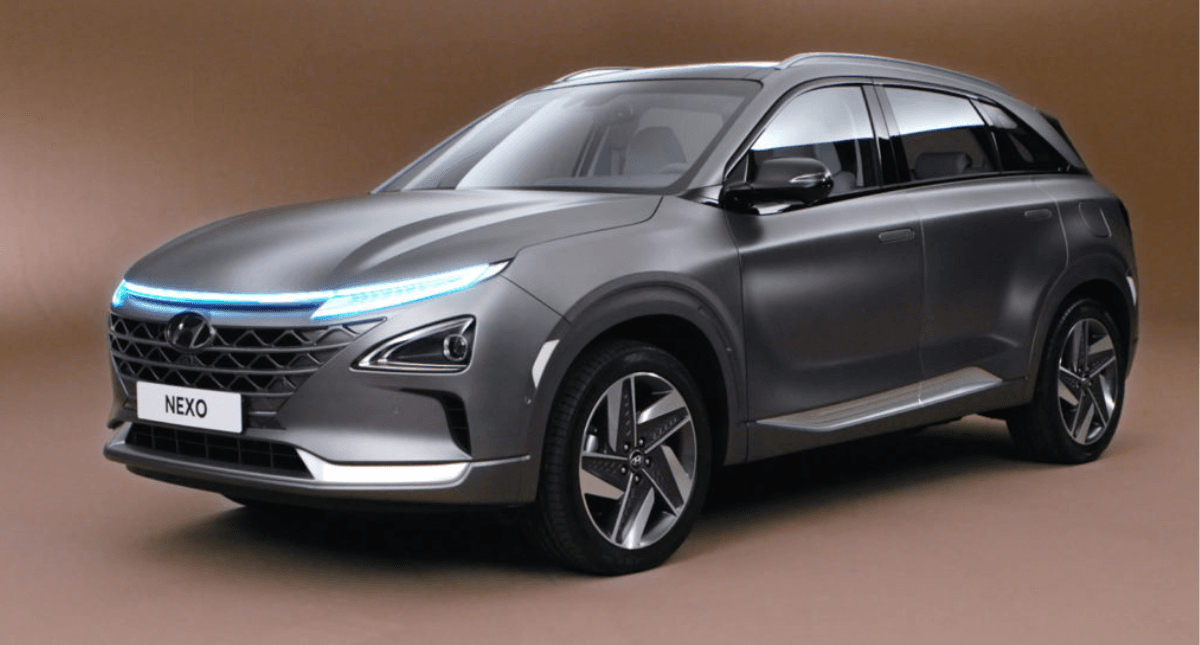
Hydrogen fuel-cell electric vehicle (FCEV): This is an electric vehicle that makes its own electricity on board. Instead of relying mainly on a large battery that you plug in, it carries hydrogen in tanks. A fuel-cell stack, the unit that turns hydrogen into electricity, generates power as you drive, and an electric motor moves the wheels. The main by-product at the exhaust is water. Because you fill tanks rather than wait for a battery to charge, refuelling can be quick. Hyundai says the NEXO takes around five minutes.
Hydrogen internal-combustion engine (hydrogen ICE): This one is closer to the car you already know. Hydrogen takes the place of petrol or diesel, and an engine burns it. There is no fuel-cell stack and no on-board electricity generation. The Suzuki Swift Hydrogen works this way, which is why it differs from an FCEV such as the Toyota Mirai. Both still need hydrogen refuelling.
Benefits of Hydrogen Cars
Quick refuelling: Filling hydrogen tanks takes a few minutes, which suits drivers who cannot spare long waits.
Long range: Toyota quotes up to 850 km for the Mirai under its specified test method, and Hyundai projects up to 826 km for the European NEXO. These are test figures, not promises for Indian roads.
Low tailpipe emissions: An FCEV releases water at the exhaust, but that describes only the vehicle. How the hydrogen was produced decides how clean the full journey is. Green hydrogen is hydrogen made using renewable energy, and it fits a clean-mobility goal far better than hydrogen with a heavier production footprint. Produced cleanly, it also reduces dependence on conventional fossil fuels. Low tailpipe emissions still do not make a car zero-emission overall.
Hard-working vehicles: Quick refuelling and long range count most for vehicles that work all day, which is why current pilots also focus on commercial transport.
Hydrogen Cars vs. Other Cars
| Technology | How the vehicle is powered | Refuelling/charging | Tailpipe output | Key strength | Key limitation |
|---|---|---|---|---|---|
| Hydrogen FCEV | Electricity generated on board through a fuel cell | Hydrogen refuelling | Mainly water | Quick refuelling and long-range potential | Hydrogen infrastructure |
| Hydrogen ICE | Internal-combustion engine | Hydrogen refuelling | Depends on combustion | Uses an ICE-based powertrain approach | Efficiency, emissions and infrastructure |
| Battery EV | Battery and electric motor | Charging | No tailpipe emissions | Larger existing ecosystem in India | Charging time and infrastructure |
| Petrol/Diesel | Internal-combustion engine | Conventional fuel stations | Exhaust emissions | Mature infrastructure | Fossil-fuel dependence |
The table sticks to general characteristics. It carries no cost or efficiency figures, because none of the hydrogen vehicles below has a confirmed Indian price or Indian specification.
Upcoming Hydrogen Cars in India
Four names come up in this conversation. None is on sale to Indian buyers, and none has a confirmed Indian retail launch, price or booking date. Here, "upcoming" describes interest, not a schedule.
Toyota Mirai (FCEV sedan). This is the one that has actually been tested here. In December 2025, Toyota Kirloskar Motor handed a second-generation Mirai to the National Institute of Solar Energy for real-world testing under Indian conditions. The 850 km figure comes from Toyota's specified test method. This is a pilot, not a retail launch.
Hyundai NEXO (FCEV SUV). The all-new NEXO has a 190 kW total system output, and Hyundai projects up to 826 km on the WLTP test cycle for the European model. Those are global specifications, not Indian ones. The NEXO is designed for markets where hydrogen refuelling infrastructure exists, which India lacks today.
MG Euniq 7 (FCEV MPV). MG showed this seven-seater at Auto Expo 2023, with sliding rear doors, a panoramic sunroof, a claimed range of up to 605 km and around 201 hp. It was presented merely as a technology demonstrator.
Suzuki Swift Hydrogen (hydrogen ICE prototype). Developed by AVL in collaboration with Suzuki, this is a working prototype and technology demonstrator. It uses a 1.4-litre direct-injection hydrogen engine, meaning fuel is injected straight into the cylinder, with stated outputs of 134 hp and 220 Nm. Unlike the Mirai, it burns hydrogen in an engine instead of using a fuel cell.
| Vehicle | Type | Current status | India availability/launch |
|---|---|---|---|
| Toyota Mirai | FCEV sedan | Tested/pilot | Not confirmed for retail sale |
| Hyundai NEXO | FCEV SUV | Global model / India prospect | Not confirmed |
| MG Euniq 7 | FCEV MPV | Demonstrated/showcased | Not confirmed |
| Suzuki Swift Hydrogen | Hydrogen ICE prototype | Technology demonstrator | Not confirmed |
Is India Ready for Hydrogen Cars?
“I travel in a hydrogen vehicle. Its name is Mirai, which means future,” says Mr. Nitin Gadkari - The Union Minister for Road Transport and Highways.
So why have the Mirai, NEXO, Euniq 7 and Swift Hydrogen not launched for the public here, in India? Their makers have not confirmed reasons for India, so we cannot say anything for sure. What we can say is that the following gaps would affect any hydrogen passenger car because the problems form a chain and each link depends on the next.
Production: Hydrogen, ideally green hydrogen, has to be produced, stored, transported and distributed safely, which demands heavy investment and careful handling at every stage. Without that supply, there is nothing to put into a hydrogen refuelling station.
Refueling Station: An EV owner can charge at home, at work or at a public charger. A hydrogen car needs a specialised refuelling station, and India does not yet have a widespread public network. A car you cannot refuel conveniently is hard to sell, and stations are hard to justify without cars. Each waits on the other.
Cost and Demand: Fuel-cell vehicles use specialised parts such as fuel-cell stacks and high-pressure hydrogen tanks, which remain expensive compared with mainstream battery EVs. Indian buyers already have a wide choice of battery EVs and hybrids, with charging networks and ownership support at a much larger scale.
A Quick Note: India does have a policy anchor in the National Green Hydrogen Mission, which covers hydrogen production, storage, transport, distribution and research, along with mobility pilot projects. But what is missing from that list is a showroom. Building a green hydrogen supply is one challenge. Building a passenger-car ecosystem around it is another, and ecosystems do not appear overnight.
A Final Word
Hydrogen is no longer just theory. India has seen a Mirai tested under local conditions and an MG demonstrator at Auto Expo 2023, and the Swift Hydrogen now adds hydrogen ICE as another route. But the missing piece is not simply the vehicle. Production, distribution, refuelling, cost and ecosystem readiness all have to come together, and no date is attached.
For a buyer today, a battery EV is the more practical choice. Hydrogen may count first where quick refueling, range and heavy daily use matter, which is why commercial transport features so heavily in current plans. Until the fuel and stations arrive, the hydrogen fuel car in India will remain a promising idea parked just outside the garage.
FAQs
What is a hydrogen car?
It is a vehicle that runs on hydrogen. It is either a fuel-cell electric vehicle, which makes electricity on board and releases mainly water, or a hydrogen ICE vehicle, which burns hydrogen in an engine.Are hydrogen cars available in India?
No. No confirmed mainstream hydrogen passenger-car launch has been announced for Indian consumers in 2026. The Mirai is in pilot testing, the Euniq 7 was a showcase and the Swift Hydrogen is a prototype.Is the Suzuki Swift Hydrogen coming to India?
No Indian launch is confirmed. It is a working prototype developed by AVL in collaboration with Suzuki.Is the Suzuki Swift Hydrogen an electric car?
No. It uses a 1.4-litre direct-injection hydrogen engine that burns hydrogen. An FCEV such as the Mirai makes electricity through a fuel-cell stack and drives an electric motor.What is green hydrogen?
It is hydrogen made using renewable energy. It matters because how hydrogen is produced decides how clean the full journey is.Why are hydrogen cars not common in India?
Supply, stations, cost and demand depend on each other. India has no widespread public hydrogen refuelling network, fuel-cell parts remain expensive and buyers already have battery EVs and hybrids to choose from.Are hydrogen cars better than electric cars?
Not for most buyers today. Battery EVs have more models, charging networks and ownership support in India. Hydrogen's strengths, quick refuelling and long range, are likely to count first in vehicles that work hard all day.