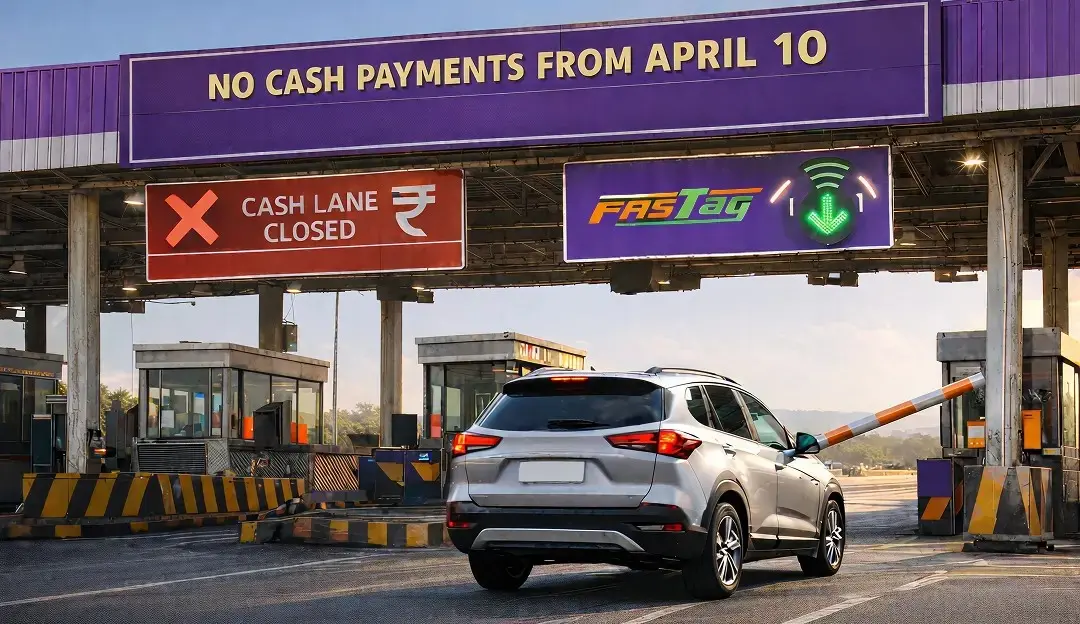
India’s highway system is undergoing a major shift. The National Highways Authority of India (NHAI) has announced that cash payments at toll booths will no longer be accepted starting from April 10. This initiative aims to promote digital transactions and alleviate congestion at toll plazas.
With the increasing adoption of FASTag and digital payments like the Unified Payments Interface (UPI), the government is pushing for a fully automated toll collection system across national highways.
Understanding the new rules and payment modes
Under the new rules, toll plazas across India will operate entirely on a cashless system. While FASTag remains the primary mode of payment, all vehicles are expected to use a functional tag for seamless travel. Those without a valid FASTag may still pay via UPI as a backup option; however, UPI transactions may attract an additional charge of up to 1.25 times the standard toll fee. The aim is to ensure smoother traffic flow and eliminate delays caused by cash transactions.
The National Highways Authority of India (NHAI) has equipped most toll plazas with digital payment infrastructure to support this transition. With cash removed, commuters must use digital methods. The approved payment options include:
FASTag (primary and mandatory mode)
UPI payments via QR codes
Debit and credit cards (at select plazas)
Net banking and wallet-based toll payments
However, FASTag remains the most reliable and widely accepted method under the NHAI toll pass system.
FASTag Changes: UP toll charges increase
The shift towards a fully digital toll system also comes with a revision of travel costs. While the FASTag system makes payments faster and smoother, travellers in Uttar Pradesh may need to maintain a slightly higher balance during their FASTag recharge.
The Uttar Pradesh Expressways Industrial Development Authority has revised toll rates across key expressways. Toll charges on National Highways in the state have increased by up to 10% in certain areas.
If you're travelling through Uttar Pradesh, here are the key updates:
Lucknow–Agra Expressway: Toll for cars has increased from ₹665 to ₹675.
Gorakhpur Link Expressway: Toll has increased by ₹10.
Why are cash payments being removed?
The decision to eliminate cash payments is part of a broader initiative to modernise India’s road infrastructure. Cash transactions at toll booths often lead to long queues, delays, and inefficiencies.
By removing cash:
Traffic congestion at toll plazas will be reduced.
Transaction time will significantly decrease.
Transparency in toll collection will improve.
Fuel wastage due to idling vehicles will be minimised.
What is FASTag and how does it work?
FASTag is an electronic toll collection system that enables automatic, cashless payments using RFID technology. It is linked to your bank account, prepaid wallet or digital app under the NHAI FASTag network.
How it works:
A FASTag sticker is attached to your vehicle’s windshield.
The tag is linked to your bank account or prepaid wallet.
Toll plaza scanners detect the tag as your vehicle approaches.
The toll amount is automatically deducted from your account.
You receive instant SMS or app notifications for each transaction.
You can check your balance and FASTag status anytime through apps or portals
What happens if you don’t have a FASTag or sufficient balance?
Not having a valid FASTag or sufficient balance can lead to penalties, delays, and a disrupted travel experience at toll plazas. The following are some of the key consequences:
Double toll charges may apply: Vehicles without a valid FASTag or with a low balance can be charged up to double the standard toll fee.
Delays at toll plazas: Without a working FASTag, your vehicle may be diverted or stopped for manual verification. This can lead to longer waiting times compared to FASTag-enabled lanes.
UPI payments may cost extra time or charges: While UPI is available as a backup, it may involve additional charges and slightly slower processing. FASTag remains the quickest and most efficient option.
Risk of FASTag being blacklisted: If your FASTag remains inactive or has insufficient balance for a long time, it may get temporarily blacklisted.
How to manage FASTag status and avoid any issues?
To avoid delays and penalties, every vehicle owner should keep their FASTag status ready before travelling. Here are two key things every driver must regularly check:
Check FASTag status regularly
Before starting your journey, make sure your FASTag is active and working properly. A tag can get blacklisted due to low balance, incomplete KYC or technical issues. You can easily check your FASTag status using Park+ or your bank app, which offers a quick and simple way to track your tag activity. Driving with an inactive FASTag is treated the same as not having one.
Do a timely FASTag recharge
Insufficient balance is one of the main reasons for delays at toll plazas. Always do your FASTag recharge in advance, especially before long trips, to avoid last-minute issues. You can recharge through a bank, UPI platforms or for an instant way, use the Park+ app, which provides a smooth and user-friendly recharge experience. Regular FASTag recharge ensures uninterrupted travel and helps avoid penalties or double toll charges at plazas.
Tips for daily commuters and highway users
For daily commuters and long-distance travellers, adapting to this system is essential. The days of paying cash at toll booths are ending, and digital readiness is now mandatory.
If you regularly travel on highways:
Make sure your FASTag is installed, activated and properly linked to your vehicle.
Consider opting for an Annual FASTag Pass, priced at around ₹3,075 per year (in effect from April 01, 2026), which offers up to 200 toll trips or one-year validity, making it ideal for frequent highway users.
Always maintain a sufficient balance in your FASTag account to avoid any issues.
Monitor your FASTag usage and status regularly.
Ensure your KYC details are updated to adhere with "One Vehicle, One FASTag" enforcement.
Conclusion
The NHAI’s move to end cash payments is a bold step toward a modernised India. To ensure your journey is stress-free, ensure that the FASTag is active, have a minimum FASTag balance and that the KYC is completed. To avoid paying double toll charges, switch to digital payments. A well-managed FASTag ensures faster, smoother and more efficient highway travel.
Other Park+ Services : FASTag, Vehicle Owner Details, E-Challan, New Cars, Car Insurance