If you've ever driven past a blue circular sign and hesitated for a second, wondering whether it's telling you what to do or what not to do, you already know why traffic rules signs and symbols in India matter so much. A missed sign isn't just an awkward moment on the road. It can mean a challan, a near-miss, or worse.
Most of us learned these signs years ago for a learner's licence test and never looked at them again. But road infrastructure has changed, penalties have gone up sharply since the Motor Vehicles (Amendment) Act, and traffic police across cities are far stricter about enforcing sign violations than they used to be.
This guide breaks down every major category of traffic rules signs and symbols used in India: what they look like, what they mean, and why they exist in the first place. Whether you're prepping for your driving test, brushing up before a long highway drive, or just tired of guessing at unfamiliar signage, this should clear things up in one read.
Why you shouldn't ignore Road Signs
Road signs exist because Indian roads are unpredictable. One stretch might have a school nearby, the next a sharp hairpin bend, and the one after that a railway crossing with no gate. Signs are the only warning you get before the road itself surprises you.
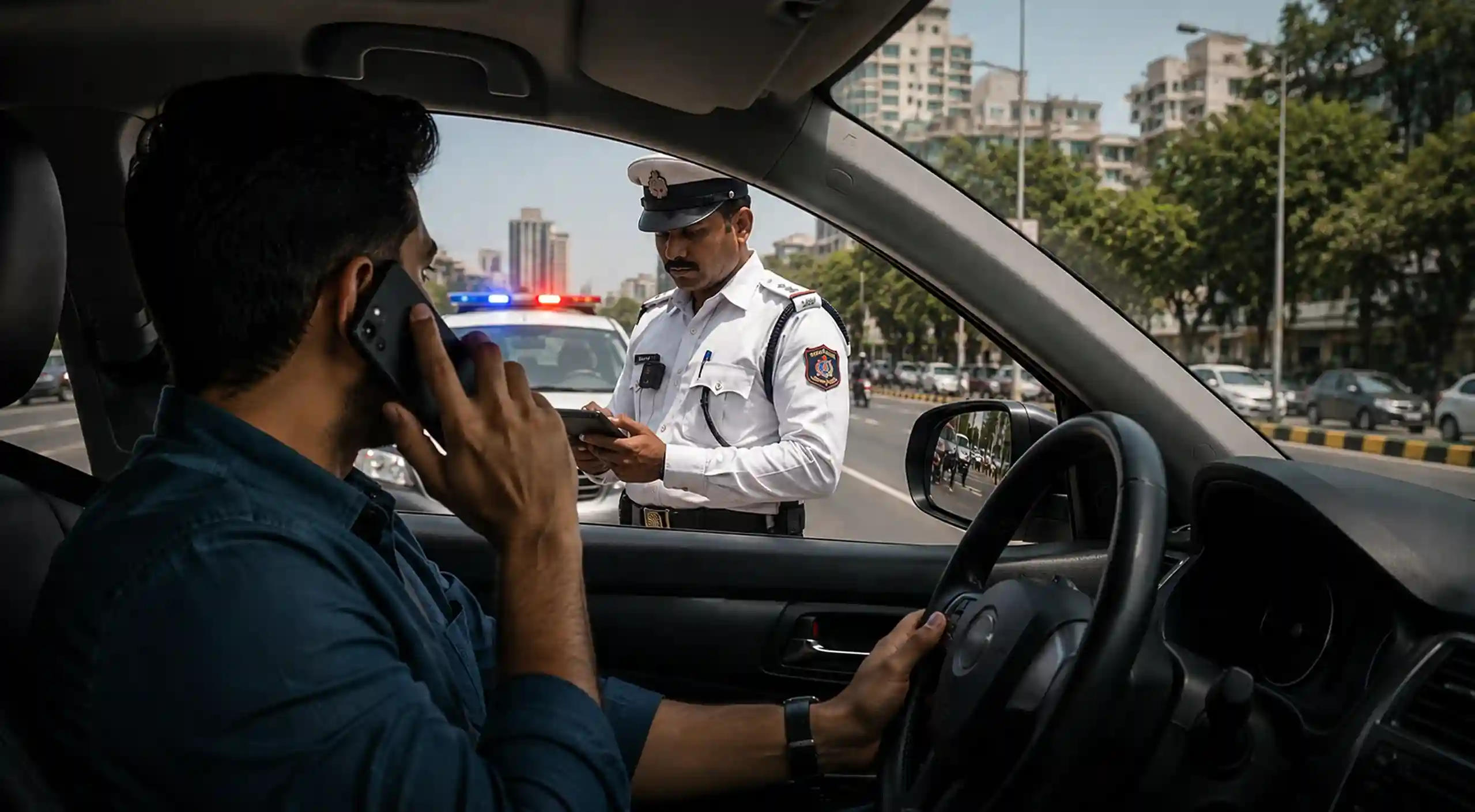
Here's the part that catches people off guard: ignoring a mandatory sign isn't a minor slip. Under Section 119 of the Motor Vehicles Act, violating a mandatory road sign can attract a fine, and if that violation leads to reckless or dangerous driving, Section 184 kicks in with a much steeper penalty and even possible imprisonment for repeat offences.
There's also a safety cost that no fine can undo. A missed "Sharp Curve Ahead" sign on a hill road or a skipped "Unguarded Railway Crossing" warning doesn't just risk a challan - it risks your life and the lives of people around you.
The three categories of traffic signs in India
Every traffic sign in India falls into one of three categories, and once you understand the shape and colour logic, reading them becomes second nature.
| Category | Shape | Colour | What it tells you |
|---|---|---|---|
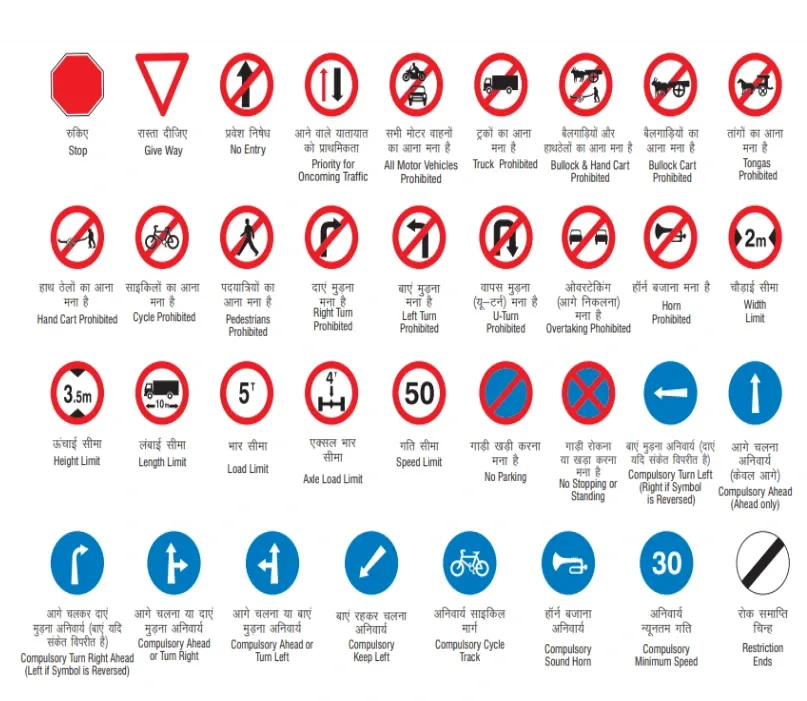
| Mandatory/regulatory Signs | Circular | Red border (prohibition) or blue fill (instruction) | What you must or must not do |
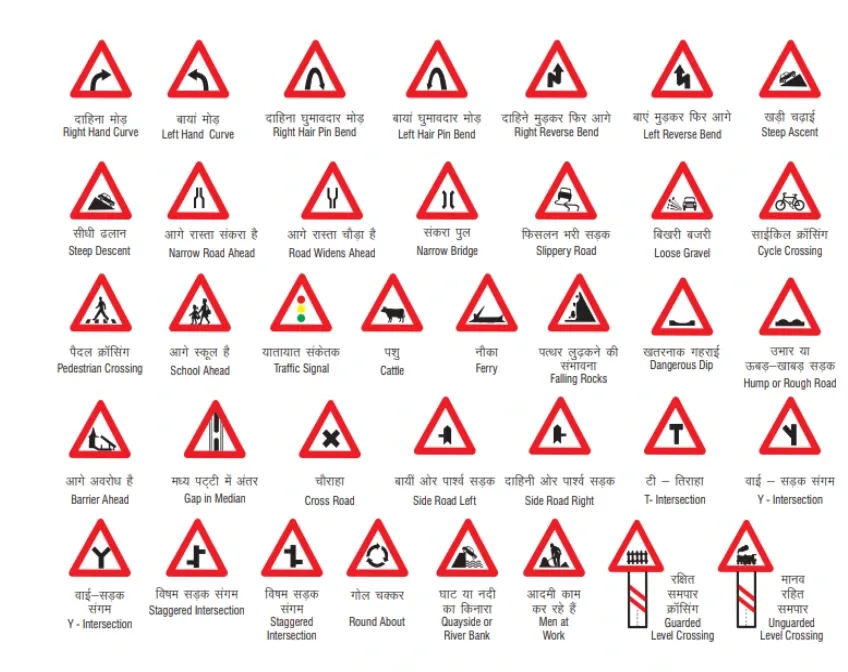
| Cautionary Signs | Triangular | Red border, white background | What hazard lies ahead |
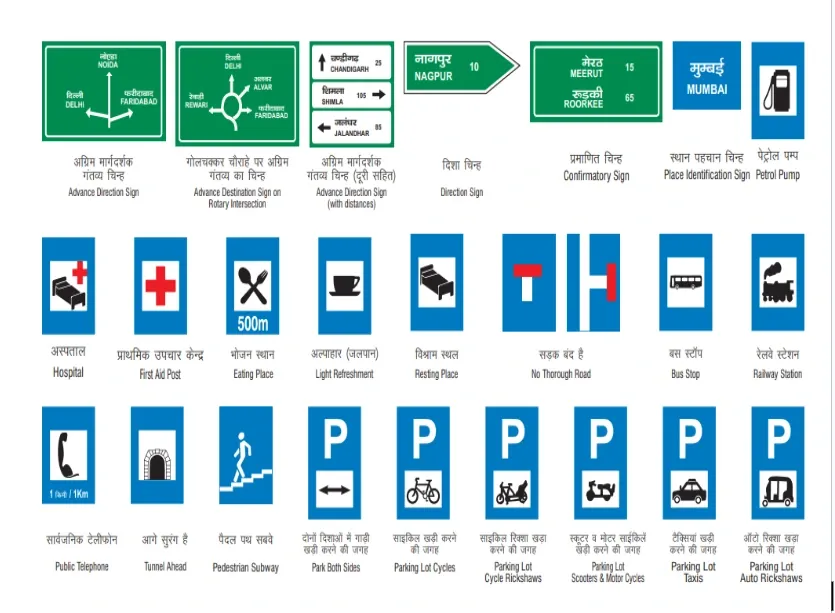
| Informatory Signs | Rectangular | Blue background | Useful information like parking, hospitals, or fuel stations |
Mandatory/regulatory Signs
A red circle always means "this is not allowed." A blue circle means "this is compulsory."
Cautionary Signs
A triangle is your early warning system for a hazard. Once that logic sticks, you can often guess a sign's meaning even before reading the fine print underneath it.
Informatory Signs
Blue Rectangular signs simply let you know where a nearby facility is. They don't carry any legal weight and won't get you a challan if you ignore them
Arm Signals: the backup for Indicator Symbols
Indicators fail. It happens more often than anyone likes to admit, especially in older vehicles or during monsoons. That's why every driver is expected to know hand signals as a backup to the vehicle's own signal lights.
- An arm extended straight out means you're turning or moving left.
- Arm extended and moving in a circular motion (or simply raised) signals a right turn.
- Arm raised with palm facing back means you're slowing down or stopping.
- Arm moving up and down means you're indicating the vehicle behind you to overtake.
These aren't outdated relics from a driving manual. Traffic police still expect you to use them if your vehicle's indicators or brake lights aren't working, and skipping them can be treated as reckless driving under Section 184.
Hand Signals by Policemen
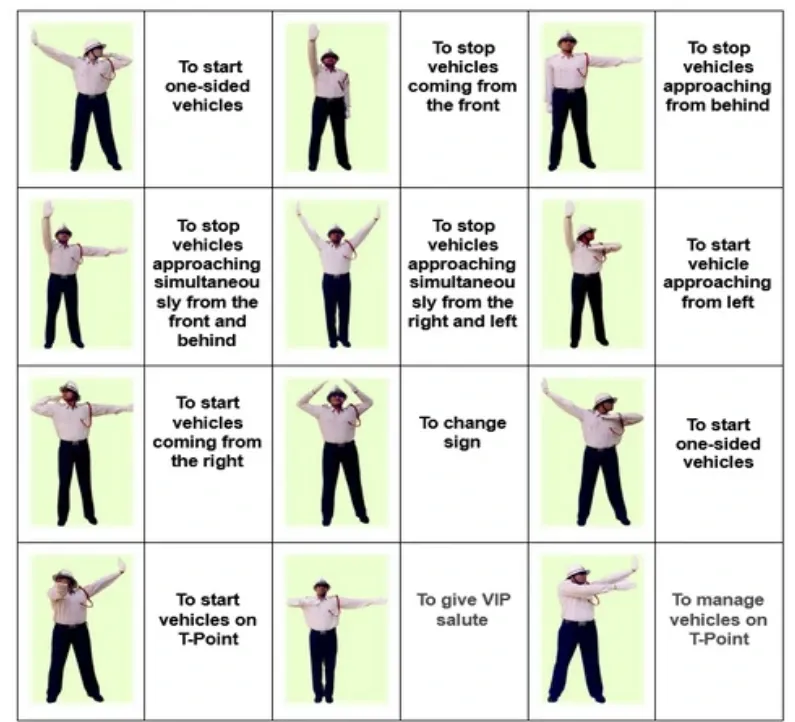
Besides traffic signs and symbols, there's another piece of the puzzle that trips up a lot of drivers: traffic police hand signals. These are the hand gestures a traffic constable uses at a junction to direct vehicles when there's no signal, or when the signal isn't enough on its own.
Every driver and road user is expected to understand these signals and follow them without hesitation, since a policeman's gesture always overrides a traffic light. Here are the common hand signals used by traffic police in India, along with what each one means.
Fines for ignoring traffic signs (2026)
Penalties for sign violations have gone up considerably compared to a few years ago. Here's where things stand for common sign and signal offences under the Motor Vehicles Act and related state rules.
| Offence | Penal section | First-time fine | Subsequent fine |
|---|---|---|---|
| Violation of mandatory road signs | Section 119, MV Act | ₹100 | ₹300 |
| Violation of traffic signal | Section 119, MV Act | ₹100 | ₹300 |
| Overtaking in a no-overtaking zone | State RRR/177, MV Act | ₹100 | ₹300 |
| Driving dangerously (including ignoring signs that leads to rash driving) | Section 184, MV Act | ₹1,000 | ₹2,000 |
A Quick note: These are state-notified compoundable fines, and some states have raised them further under their own amendments. It's worth checking your state transport department's current fine schedule, since penalty amounts do change from time to time.
Recent changes worth knowing
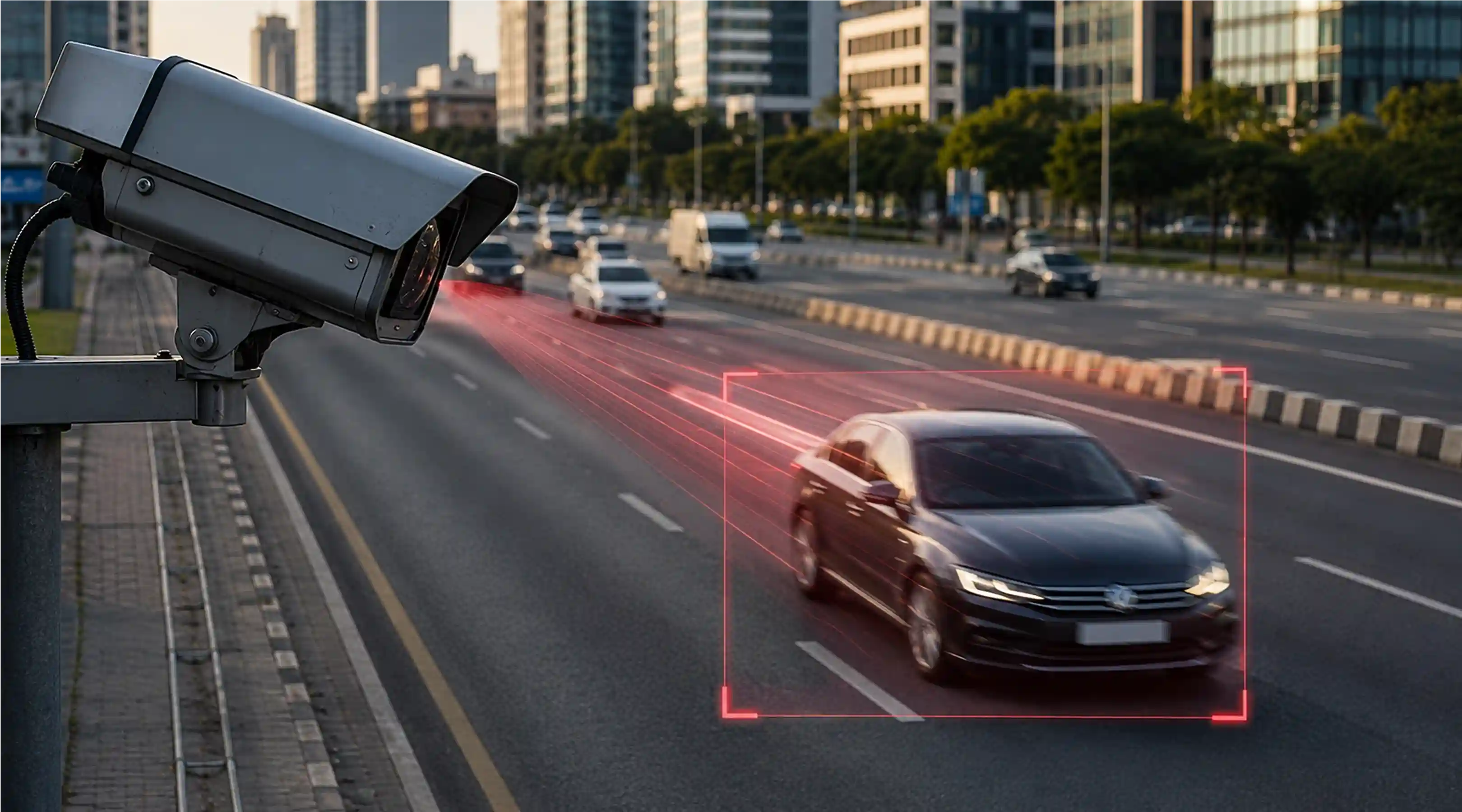
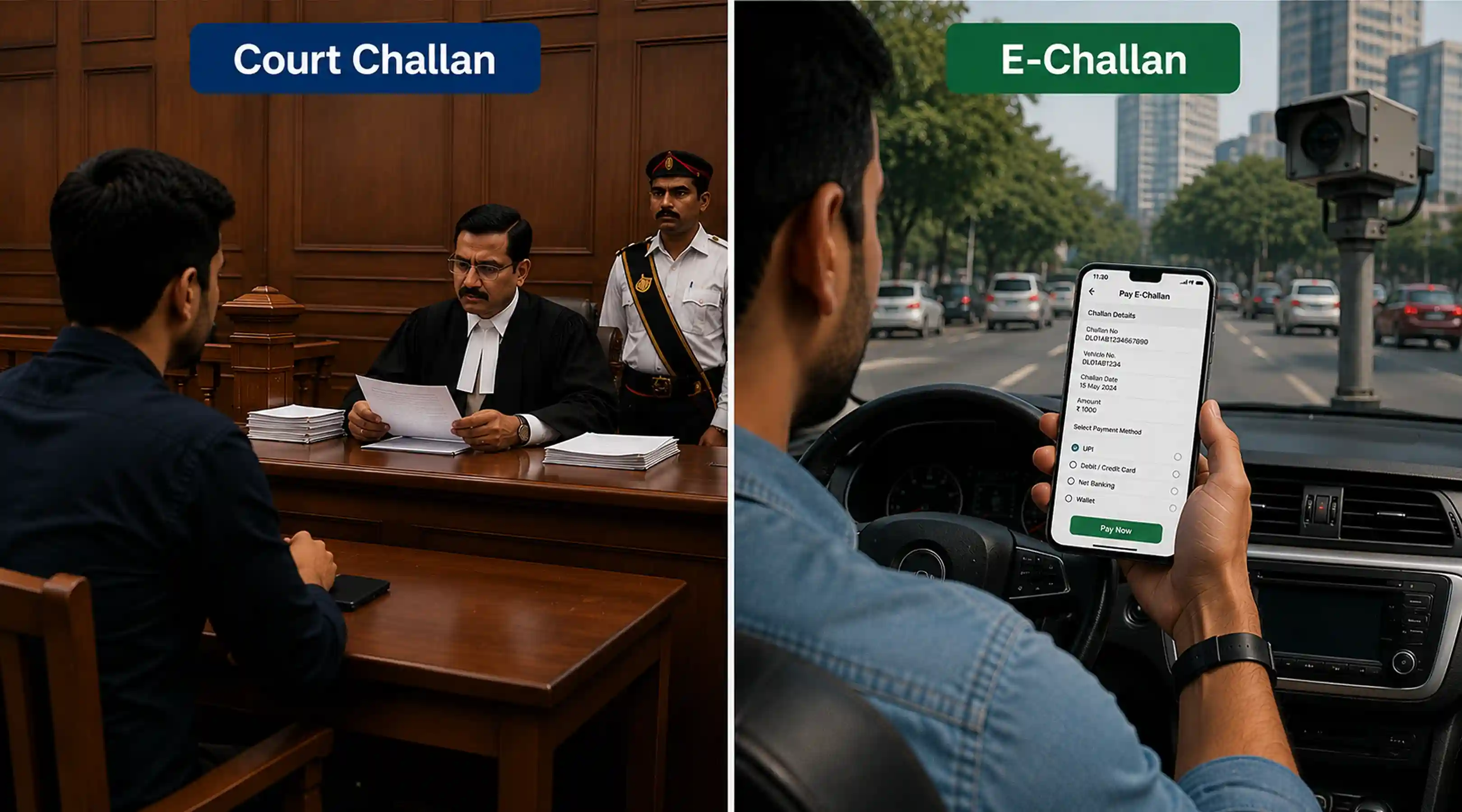
Traffic enforcement has become noticeably tighter across metro cities, largely driven by e-challans generated through CCTV and ANPR cameras. A missed stop line, a wrong turn at a "No Right Turn" sign, or overtaking in a no-overtaking zone is now far more likely to be caught on camera than by a traffic constable standing at the junction. Many states have also started tying sign violations to your driving licence points, meaning repeated offences can eventually lead to licence suspension rather than just a fine. If you've been ignoring a challan assuming no one's tracking it, that assumption doesn't hold up as well as it used to.
A Final Word
Traffic rules signs and symbols aren't something you memorise once and forget. Roads change, new signs get added, and enforcement keeps getting sharper with technology. The safest habit is simple: treat every sign as if it exists for a reason someone learned the hard way. Before your next long drive, especially on unfamiliar highways or hill roads, take a minute to recall the basics: red means prohibited, blue circle means compulsory, and a triangle means slow down and pay attention. It costs nothing and saves you from both a challan and a genuinely dangerous situation.