Maruti Suzuki's Top Boss Explains Why Small Cars That Revolutionised Japan Market Are Needed In India
While SUVs overpower India's automotive arena, they are not the end of the trouble for the visionary chairman of Maruti Suzuki: Kei cars in Japan are being perceived as the possible answer to democratizing the means of owning a four-wheeler.
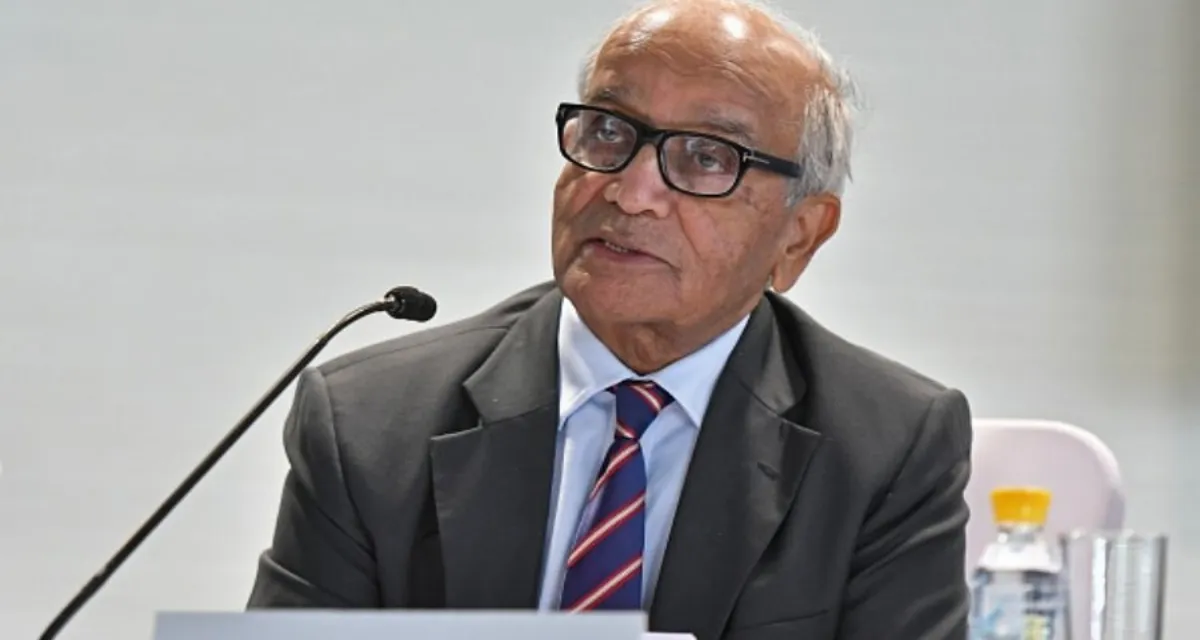
R.C. Bhargava, Chairman of Maruti Suzuki, India's largest passenger car manufacturer, suggested creating a new class of small cars modeled after the successful Kei car in Japan. The new segment comes in response to the serious price gap emerging between the two-wheeler segment and entry-level passenger cars at a time when SUVs captured in 2024-2025 almost 65% of India's passenger vehicle market (up from 60% last year).
Bhargava stated in an interview with Forbes that moving from two-wheelers to four-wheelers is a challenge for many. "What is to be done for this segment? We haven't attended to the issue of two-wheeler owners. Just putting six airbags in cars doesn't cater to that place. It's actually making it much worse now as it's making a car more expensive for those who use two-wheelers and want to buy a vehicle," he explained.
The inspiration for this proposal comes from a solution envisaged for motoring in Japan after World War II. Introduced in 1949, the so-called Kei car category(-light or compact automobile) was intended for a post-war nation suffering from shortages of both steel and fuel. At present, these vehicles are limited to a maximum displacement of 660cc and have relatively small dimensions (3.4 m length, 1.48 m width, and 2 m height). They revolutionized Japanese mobility and still account for nearly one-third of the total car sales in Japan.
Bhargava goes on to suggest that a location-centric approach could also be effective for India, where entry-level cars have suffered an even bigger drop in volume. Such proposals might be regulatory support in terms of significantly lowered taxes and de-tethering compliance norms pertaining to this new category of vehicles, making it cheaper in fact and hence making four-wheelers affordable for the current two-wheeler owners.
The proposal comes at a time chosen well strategically for Maruti Suzuki, as it has set aside a capital expenditure of Rs 8,000-9,000 crore for this fiscal. Since the domestic growth might be slow, the company is ramping up an export focus. Furthermore, Bhargava, divulged that Maruti would also start on September this year selling its electric model, the e-Vitara, most of the 70,000 units planned for the export market instead of the local market.
According to industry analysts, the proposal of Bhargava fills a large gap in the market pertaining to the Indian automotive ecosystem. While improved safety regulations and feature addition have uplifted the quality of vehicles, they have also raised entry-level prices, leaving a huge wall for new entrants.
The success of such a small car category would depend on several factors, such as a government willing to develop enabling legislation, consumer acceptance of smaller-sized vehicles in the midst of an SUV boom, and manufacturers' abilities to produce exciting product offerings under stringent cost restrictions.
Maruti Suzuki is not the first company that seeks to bring in changes to the mobility landscape in India. In the 1980s, the first Maruti 800 helped spread car ownership in India. According to Bhargava, the latest conception may cause a similar impact by providing a practical solution in bridging the mobility chasm for millions craving to shift from two-wheelers to four-wheelers. Whether this plan gains traction with the policymakers and other stakeholders in the industry is yet to be seen, but it lays bare the continued tension between customers aspiring to own a vehicle and ground economic realities in an evolving automobile climate in India.
Also Read: