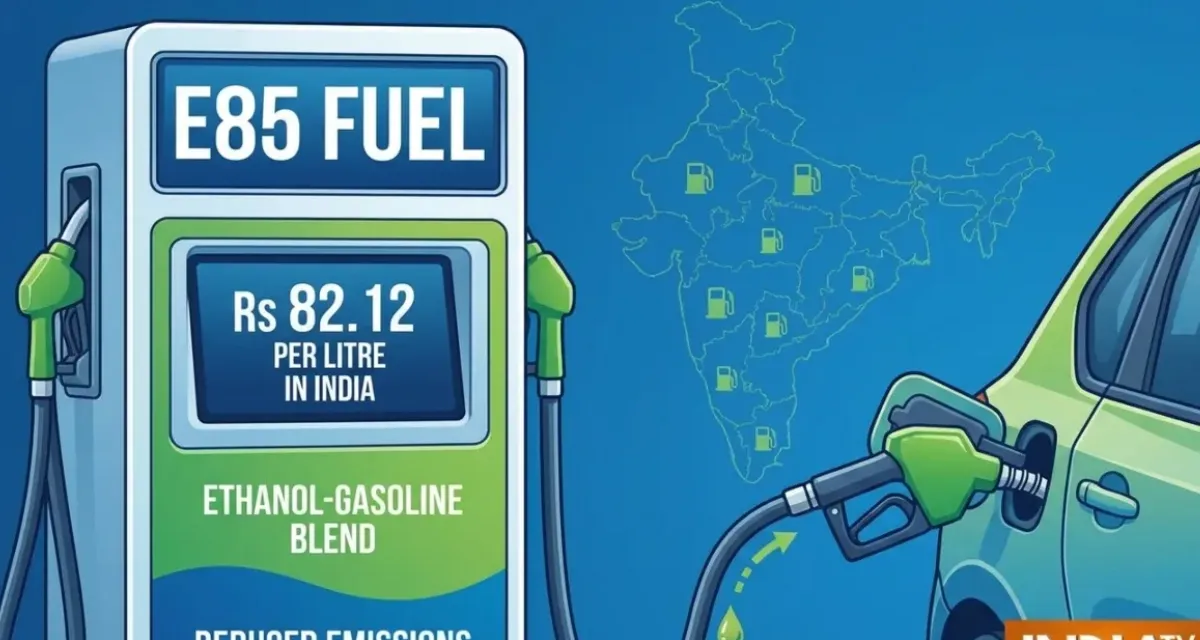
E85 Fuel in India at Rs. 82.12 Per Litre
E85 fuel has been introduced in Delhi at Rs. 82.12 per litre, around Rs. 28 cheaper than petrol.
Most petrol-powered cars in India are not compatible with E85, limiting its real-world impact for now.
India has been steadily raising ethanol content in its fuel supply for years, and E85 is the most significant step yet.
Unlike the E20 fuel now widely available across the country, which blends up to 20 per cent ethanol with petrol, E85 contains as much as 85 per cent ethanol and just 15 per cent petrol. That is a fundamentally different product, one that demands specially built engines and fuel systems capable of handling ethanol's distinct chemical properties.
With petrol priced at around Rs. 110 per litre in Mumbai, E85's launch price of Rs. 82.12 per litre in Delhi looks attractive on paper. A gap of nearly Rs. 28 per litre sounds like the kind of saving that would have motorists queuing up. The catch, however, is that the overwhelming majority of petrol cars currently sold in India simply cannot run on E85.
Even vehicles that have been updated to support E20 are not automatically compatible with an 85 per cent ethanol blend. Filling up a standard petrol car with E85 could result in poor performance and long-term engine damage.
To make use of E85, a vehicle must be flex-fuel compatible. Such vehicles are engineered to detect the ethanol concentration in the fuel and adjust engine parameters accordingly, whether they are running on regular petrol or a high-ethanol blend like E85.
The Maruti Suzuki Wagon R Flex Fuel is one of the few examples developed specifically for this purpose in the Indian market, but flex-fuel models remain a rarity on Indian roads at this stage.
This is where the maths gets interesting. Ethanol carries less energy per litre than petrol, which means engines consume more of it to cover the same distance.
In markets like Brazil and the United States, where flex-fuel vehicles have been in use for years, drivers typically see a fuel efficiency drop of between 20 and 30 per cent when running on E85 compared to petrol.
The real purpose of E85 extends well beyond fuel bills. It forms part of India's broader strategy to cut crude oil imports, support domestic agricultural output through ethanol production, and reduce tailpipe emissions.
Ethanol is produced primarily from homegrown feedstocks, making it a domestically sourced alternative to fossil fuels, one that carries both an energy security and an environmental rationale.
For most Indian motorists, though, E85 remains out of reach for now. Availability is limited to select locations, and the absence of compatible vehicles in any significant number means the fuel's arrival is, for the moment, more of a policy statement than a practical alternative at the forecourt.
Also read: