2026 BYD Atto 3 Arrives With 5-Minute Flash Charging and 630 km Range
The third-generation BYD Atto 3 introduces the brand's new e-Platform 3.0 Evo architecture, with flash charging capable of going from 10% to 70% in approximately 5 minutes under ideal conditions.
Available in four variants priced between 119,900 and 149,900 yuan in China, the updated model also offers up to 630 km of CLTC range and an optional LiDAR-based driver assistance system.
BYD has pulled the wraps off the third-generation Atto 3, and if the numbers are anything to go by, this is the most complete version of the compact electric SUV yet.
Launched in China on 21 May 2026 under its domestic name, the Yuan Plus, the updated model goes on sale in four variants priced between 119,900 yuan and 149,900 yuan, roughly £11,800 to £14,700, with the entry-level trim sitting slightly higher than its predecessor in a market not exactly known for upward price movements.
The biggest change you cannot see is arguably the most important. BYD has moved the Atto 3 from its original e-Platform 3.0 to the more advanced e-Platform 3.0 Evo, which brings with it a new 12-in-1 integrated powertrain, replacing the previous 8-in-1 setup.
The second-generation Blade Battery, using lithium iron phosphate chemistry, carries over, but it now feeds into a rear-wheel-drive layout, a departure from what many rivals in this segment still default to.
Two battery and motor combinations are on offer. The smaller 57.5 kWh pack pairs with a 200 kW (268 hp) rear motor and delivers up to 540 km on the CLTC cycle, while the larger 68.5 kWh unit steps up to a 240 kW motor and stretches range to 630 km.
The suspension setup is equally considered, with MacPherson struts up front and a five-link independent arrangement at the rear, joined by BYD's DiSus-C intelligent damping system on higher-specification variants.
The headline that will travel furthest is the flash charging capability. Under ideal conditions, BYD says the Atto 3 can charge from 10% to 70% in around five minutes, which, if it holds up in real-world use, would make it one of the quickest-charging compact electric SUVs available anywhere. It is a significant shift for a model that has traditionally competed on value rather than outright technological bravado.
The new Atto 3 has grown noticeably in every direction. At 4,665 mm long, 1,895 mm wide, and 1,675 mm tall, with a 2,770 mm wheelbase, it is a meaningfully larger car than before.
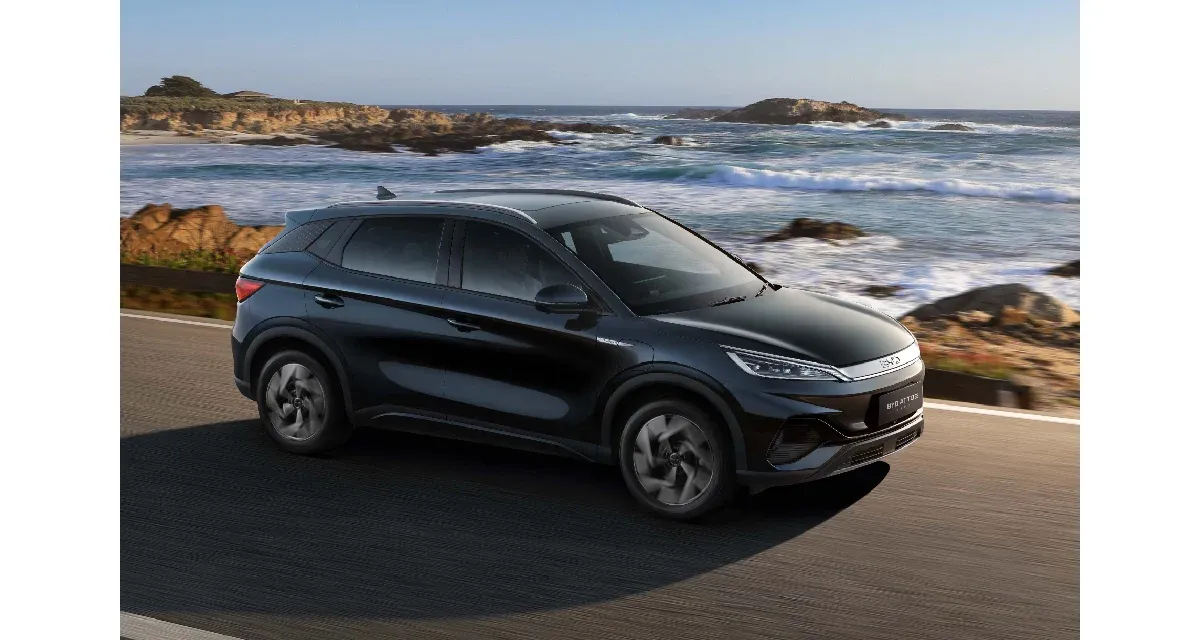
Stylistically, BYD has retained its Dragon Face design language while updating the execution, slimmer headlights, a flatter front end, semi-hidden door handles, and a full-width rear light bar with woven-style graphics give it a sharper, more contemporary presence. Nine exterior colours, including dual-tone finishes, round out the options.
Practicality has improved too. A 180-litre powered front boot is new to this generation, while boot space at the rear expands to as much as 750 litres.
Step inside and the improvements are equally tangible. A larger floating touchscreen runs BYD's DiLink infotainment system, supported by a head-up display and a redesigned two-spoke steering wheel.
Practical touches include 50W wireless charging, heated and ventilated front seats, a heated steering wheel, a refrigerated storage compartment, and a 16-speaker audio system.
The front passenger seat features a powered "Queen Seat" function with extending leg support, a feature more commonly associated with executive saloons than compact SUVs.
Buyers willing to pay an additional 12,000 yuan can equip most variants with the DiPilot 300 God's Eye B driver assistance package.
Built around a LiDAR sensor working alongside 30 sensing units in total, the system enables highway navigation assist, urban navigation assist, and automated parking, capabilities that represent a notable step forward for a model at this price point.
The Atto 3 has already accumulated more than 1.1 million cumulative sales across 116 countries and regions by April 2026, making it one of BYD's most strategically important models worldwide.
The competition in China's compact EV segment has sharpened considerably, but with this generation, BYD is not simply defending ground, it is pushing forward on range, speed of charging, and technology simultaneously.
Also read: