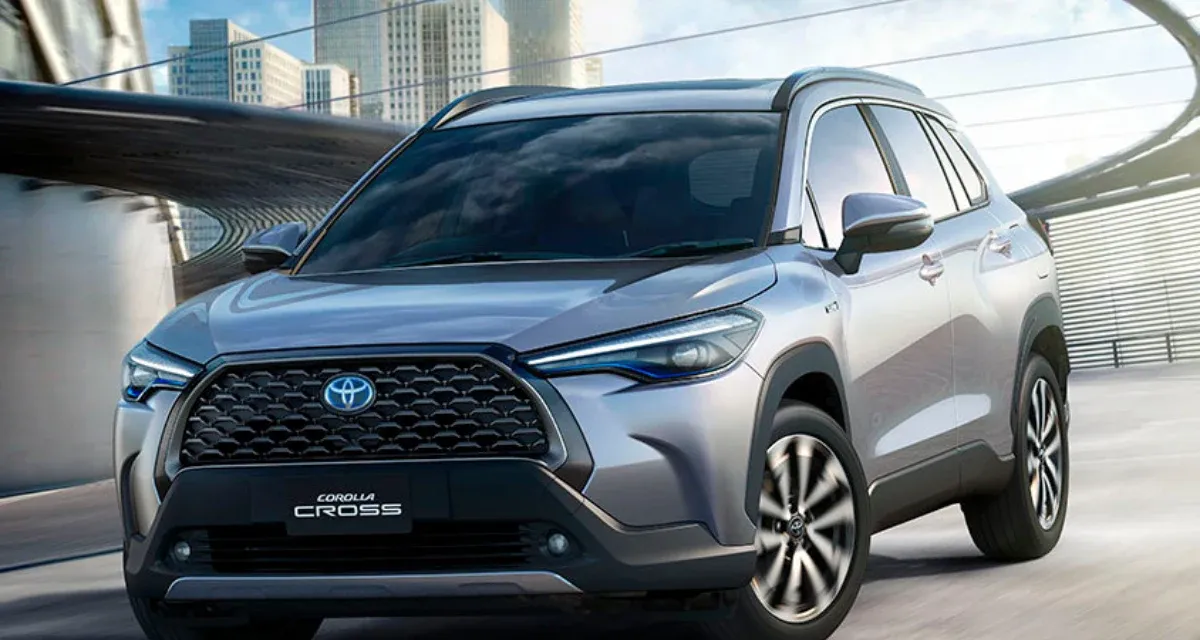
Toyota Corolla Cross Receives a 2-Star Safety Rating in the Most Recent International NCAP Test
Explains the Toyota Corolla Cross's low performance in the most recent crash testing, specifically for Africa.
Investigate why the SUV's safety rating was lower than that of other areas.
In the most recent Global NCAP crash testing conducted as part of the "Safer Cars for Africa" initiative, the Toyota Corolla Cross, a small SUV that has been a popular seller in places like South Africa and abroad, achieved a dismal two-star safety rating for adult occupant protection.
Tests on the version of the car marketed in African markets, where the standard safety equipment is different from what is installed elsewhere, are reflected in the rating.
The findings of Global NCAP indicate a number of important problems. The Corolla Cross lacks standard side head protection, or the curtain airbags that shield occupants' heads in side crashes, despite having standard safety equipment including frontal airbags, a driver knee airbag, and Electronic Stability Control (ESC).
The adult safety rating was considerably reduced as a result of the inability to conduct a side pole impact test. While the overall bodyshell was classified as stable, the footwell area was also found to be unstable under loading.
However, side impact tests continued to demonstrate sufficient protection for the chest and decent protection for the abdomen and pelvis. The SUV received a three-star certification for child safety, although there were issues with the lack of passenger airbag separation and the exposure of a three-year-old dummy's head during testing.
The poor score has alarmed the Automobile Association of South Africa and other safety advocates, who contend that cars sold in Africa should have the same standard safety features as those sold in Europe or Australia.
They have pushed manufacturers to make sure that essential safety features, including side head airbags, are standard in every area rather than just optional extras. The call coincides with more general worries about inconsistent standards that could put some consumers at more risk in actual mishaps.
It's interesting to see that some areas have given the Corolla Cross greater safety ratings. Thanks to more extensive safety measures, the model has received a five-star crash rating in evaluations conducted by organizations like the Australasian New Car Assessment Programme (ANCAP). This striking disparity highlights the significant impact regional standards can have on consumer perception and safety performance.
In conclusion, the most recent Global NCAP crash test findings serve as a reminder that safety ratings are not universally applicable and that the presence of essential protective elements can significantly alter how well a vehicle protects its occupants in an accident.
Also read: