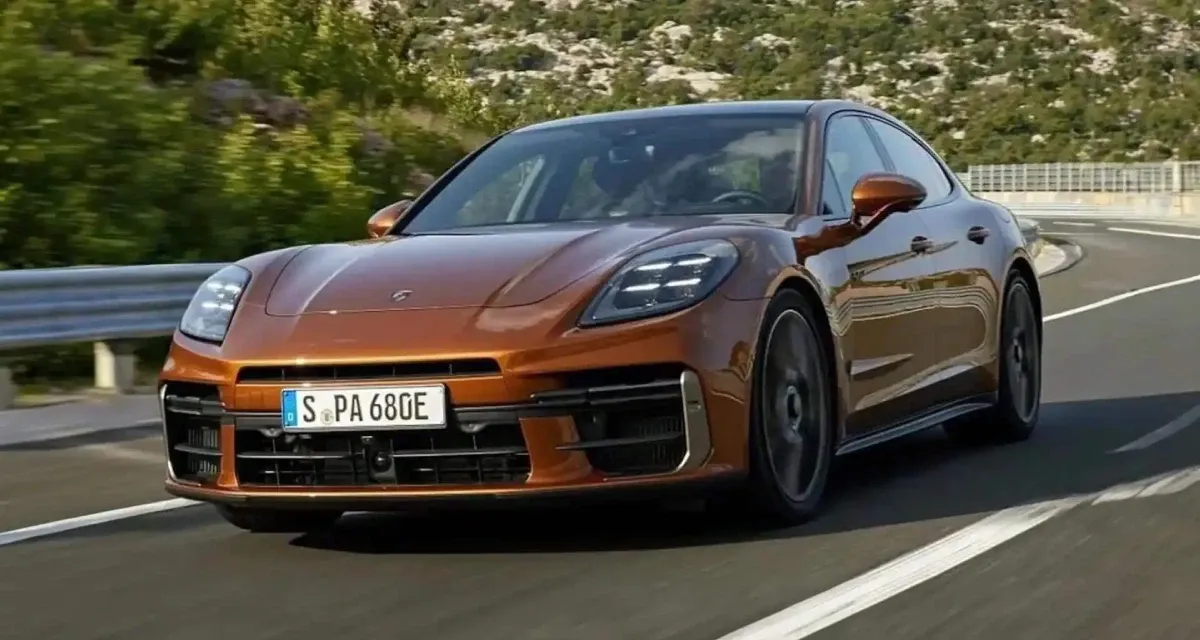
Porsche May Merge the Panamera and Taycan Into One Car
Porsche may combine the Panamera and Taycan under one nameplate to cut down on costs and production complexity
The German marque has already spent €1.8 billion on platform development without turning a profit on its EV sales
Right now, the Panamera and Taycan are two very distinct machines living very separate existences beneath the same Porsche crest. The current Panamera sits on Porsche's Modular Standard Drivetrain platform, known as MSB, while the Taycan rides on the brand's 800-volt J1 architecture.
Keeping both in production means separate tooling, separate assembly lines, separate workforces and, inevitably, a whole lot of separate bills.
Porsche has already developed a new architecture called the Porsche Premium Platform Combustion, or PPC, which is expected to serve as the foundation for the next-generation Panamera before 2030. The catch is in the name itself. This platform has only been designed for combustion-powered models, which means it cannot be used for the fully electric Taycan. That leaves Porsche staring at a rather inconvenient fork in the road.
Stuttgart Scouts a Smarter Path Forward
According to reports, insiders have hinted that Porsche could engineer a new modular platform capable of catering to both combustion and fully electric powertrains while maintaining long-term relevance at an acceptable cost. There is also the possibility that Porsche sidesteps a full platform overhaul altogether and instead maximises parts sharing between the two models to achieve a similar financial outcome.
The logic here is not difficult to follow. Porsche has already spent €1.8 billion on platform developments without being profitable with its EV sales, all while revisiting its broader electrification strategy across its model range. That is a significant sum to absorb, and it explains why brand boss Michael Leiters is reportedly looking hard at trimming unnecessary expenses wherever possible.
This would not be new territory for Porsche. The German automaker already follows a similar strategy with the Macan and Cayenne SUVs, retaining the same model names regardless of whether the car is combustion-powered or fully electric.
A buyer can walk into a dealership and choose a Macan on petrol or a Macan EV, and both are simply called the Macan. Applying that same thinking to the saloon segment feels like a natural next step.
Should Porsche consolidate the Panamera and Taycan, the practical benefits would be considerable. A singular nameplate could allow Porsche to pool the engineering, development and lifecycle update costs that would otherwise be duplicated across two separate models. Which of the two names survives, however, is still an open question.
For customers, a merged model would presumably mean a single showroom choice that arrives in either petrol or electric form, much like walking into an Apple store and deciding between storage options rather than entirely different product lines. The soul of both cars, that blend of genuine driver engagement and real-world usability, would presumably carry over regardless of what badge ends up on the boot.
Whether Porsche ultimately goes through with this consolidation remains to be confirmed. But the direction of travel is telling. This is a company carefully recalibrating its approach to electrification without abandoning it, and the Panamera-Taycan situation sits squarely at the centre of that rethink.
Also read: