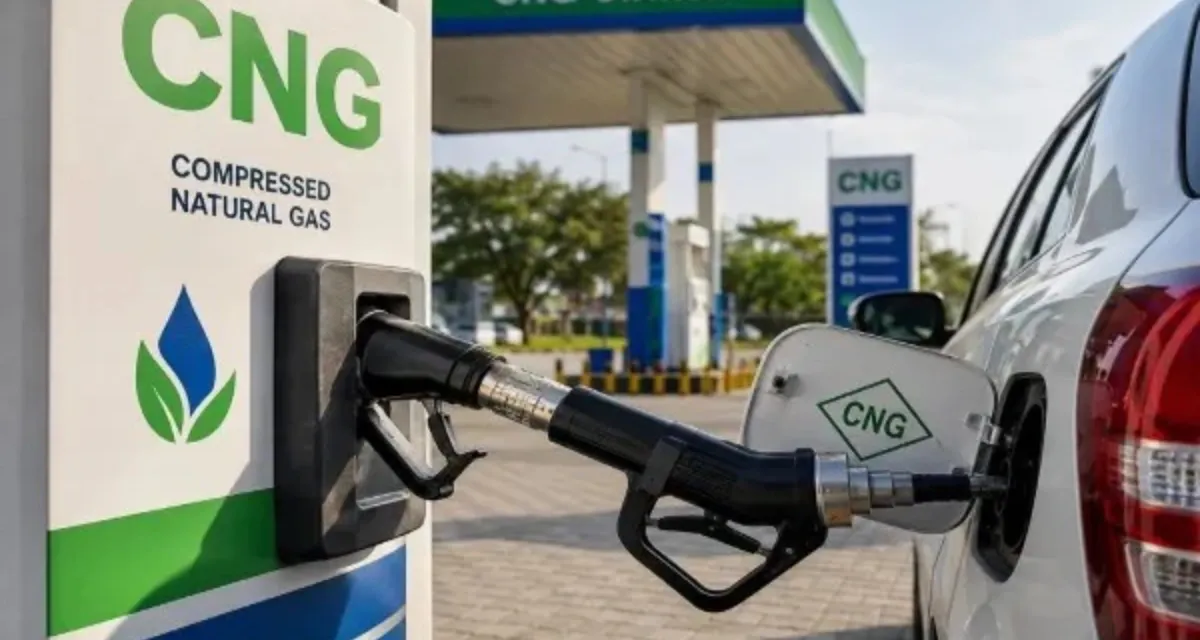
India's Fuel Prices Surge Again as IGL Hikes CNG Rates for the Second Time in 48 Hours
IGL raised CNG prices by Rs 1/kg on May 17, 2026, the second hike in two days, citing higher input gas costs and a stronger US dollar.
Petrol and diesel prices were also revised upward on May 15, 2026, with increases of up to Rs 3 per litre across all major Indian cities.
The week of May 15, 2026, will not be remembered fondly by Indian motorists. Oil marketing companies, reportedly absorbing significant daily losses against the backdrop of elevated international crude prices, revised petrol and diesel rates upward with immediate effect.
In Delhi, petrol moved from Rs 94.77 to Rs 97.77 per litre, while diesel climbed from Rs 87.67 to Rs 90.67 per litre. The picture was no different in Mumbai, where petrol reached Rs 106.68 per litre and diesel Rs 93.28 per litre.
Kolkata and Chennai saw comparable increases, with petrol touching Rs 108.74 and Rs 103.67 per litre, respectively.
These were the first such revisions in nearly four years, and the trigger was clear enough. Prolonged conflict in West Asia and disruptions around the Strait of Hormuz, a critical corridor for global oil and gas shipments, have kept energy markets on edge, pushing input costs to levels that could no longer be absorbed without passing them on to the consumer.
Hot on the heels of the petrol and diesel hikes came a Rs 2 per kg increase in CNG rates on 15 May, affecting cities including Delhi, Mumbai, Chennai, and Kolkata. Delhi's CNG price rose to Rs 79.09 per kg at that point, but the story did not end there.
Indraprastha Gas Limited announced a further Rs 1 per kg increase effective from 6 am on 17 May 2026, applying the revision across all its geographical areas. That pushed Delhi CNG to Rs 80.09 per kg, a first in the fuel's history in the capital.
Other IGL-served areas saw their rates adjust accordingly, with Noida, Greater Noida, and Ghaziabad now at Rs 88.70 per kg, and Gurugram at Rs 85.12 per kg.
In a statement, IGL attributed the revision to a rise in input gas costs compounded by a sharp appreciation in the US dollar.
The company was quick to point out, however, that despite the back-to-back increases, CNG continues to offer savings of up to 45% on running costs when compared to vehicles using petrol or diesel at current price levels. That margin still makes a compelling case for CNG-powered vehicles, even if the gap has narrowed somewhat this week.
For the millions who rely on CNG autorickshaws, cabs, and privately owned gas-powered cars in Delhi and the NCR, this week has delivered a genuine financial pinch. The broader fuel hike affecting petrol and diesel users only compounds the pressure. With global energy markets showing little sign of settling in the near term, it would be unwise to assume these are the last revisions India will see in the months ahead.
Also read: