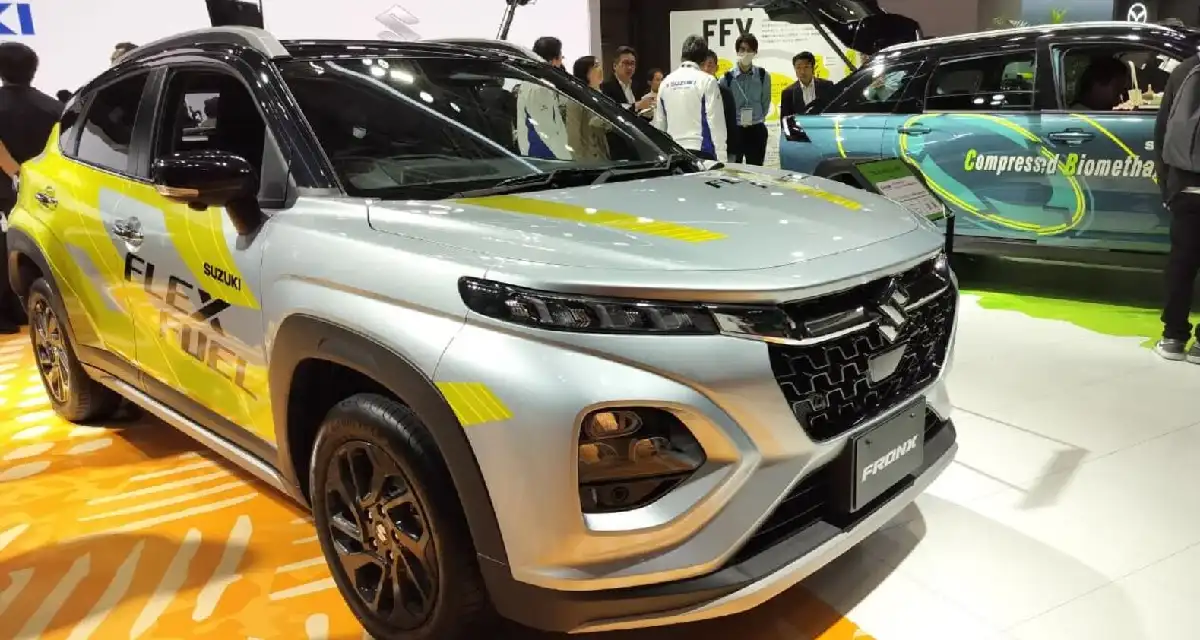
Indian version of the Maruti Fronx Flex-Fuel available by 2026
In 2026, Indian automaker Maruti Suzuki India plans to introduce a flex-fuel version of its well-liked compact SUV, the Maruti Fronx. The car, which can run on petrol-ethanol mixtures up to E85 (i.e., 85% ethanol), was first shown as the Fronx FFV (Flex Fuel Vehicle) concept at the Japan Mobility Show 2025.
Petrol mixed with 20% to 85% ethanol (E20 to E85) can power the concept Fronx FFV.
This indicates that it is both future-ready for higher mixes like E30 or even E85 and compatible with India's existing E20 grade gasoline.
The Fronx's flex-fuel variant looks almost exactly like the regular vehicle. Its measurements are the same: 1,765 mm in width, 1,550 mm in height, and 3,995 mm in length.
Green "flex-fuel/FFV" decals are distinguishing characteristics.
Although the engine specifications for India have not yet been made public, the concept version displayed abroad suggests that it is compatible with the E85.
As part of its plan for cleaner fuel and less reliance on oil imports, the Indian government has been promoting increased ethanol mixing in gasoline. The E20 implementation is now in progress, and plans are in place to advance to E30 and beyond in the future years. This policy path is precisely aligned with the Fronx flex-fuel model.
It is anticipated that flex-fuel vehicles will receive more favorable treatment under the impending CAFE (Corporate Average Fuel Efficiency) standards, providing them with some regulatory parity with EVs. This strengthens the case for firms to currently invest in FFV technology.
It is anticipated that the flex-fuel Fronx would debut in India in 2026.
Future-proof flexibility is hinted at in the prototype on show at the Japan Mobility Show, but the precise powertrain, fuel efficiency, and cost have not yet been made public.
The small adjustments for flex-fuel capabilities could facilitate the move, since the regular Fronx is currently being produced and sold in India.
Particular engine specifications and whether the flex-fuel version will use a modified version of the current engine or a dedicated powertrain.
How much more expensive will the flex-fuel version be than the regular model?
E-blend fuels' actual fuel efficiency (ethanol mixes, for instance, frequently produce different mileage than pure gasoline).
Fuel infrastructure readiness: Although E20 is generally accessible, E85's availability will be crucial to the flex-fuel vehicle's full potential.
Also Read: