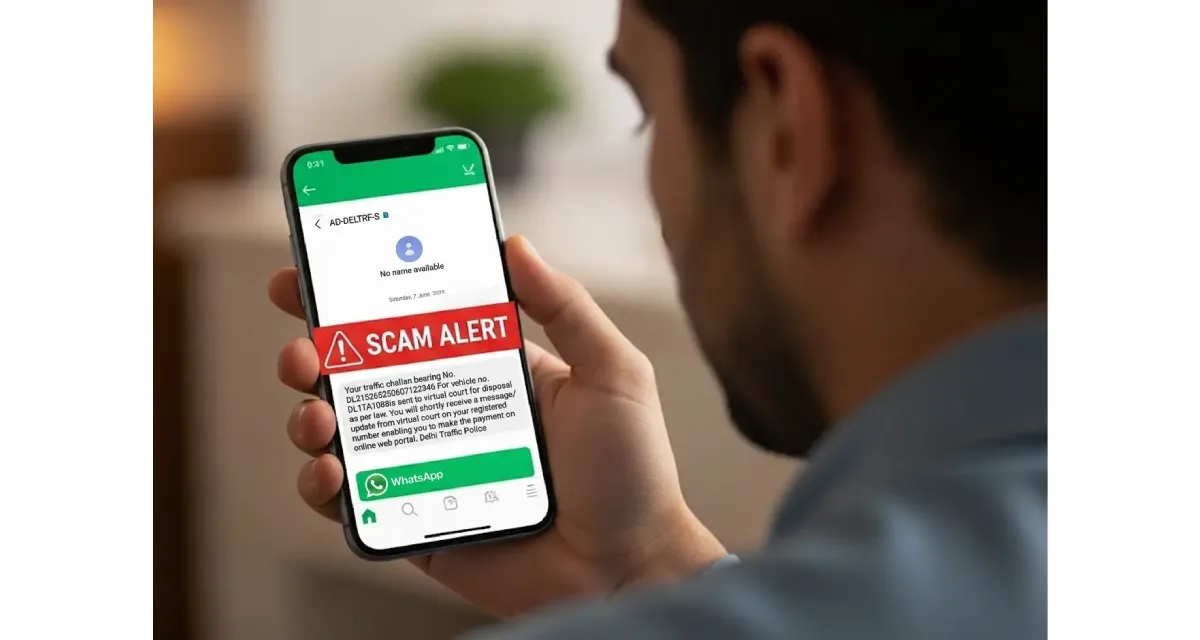
Fake RTO Challan Message Scam: Avoid APK Files, Fraud Links & Cyber Fraud
Cybercriminals are targeting vehicle owners with deceptive SMS and WhatsApp messages disguised as official Regional Transport Office (RTO) traffic challans.
Clicking on these malicious links or installing unknown APK files can allow scammers to access personal information, steal sensitive data and put banking details at risk.
Got an RTO challan message? Check before you click any link. Vehicle owners across India are being warned about a growing online scam involving fake traffic challan messages. Cybercriminals are sending SMS and WhatsApp messages claiming that a vehicle has a pending traffic fine and asking users to click a payment link or download an APK file.
The Press Information Bureau (PIB) has warned citizens about fraudulent messages circulating with fake RTO challan claims and advised users not to click on suspicious links or download unknown files. These fraudulent links and files are designed to look like official RTO or e-challan notifications but can compromise users' personal information and banking details.
The scam mainly targets users by creating urgency, warning them about unpaid challans, penalties or possible action against their vehicle. Once users click suspicious links or install unknown applications, scammers may gain access to sensitive data stored on their devices.
The scam mainly works by creating fear and urgency. Users receive messages claiming that they have broken traffic rules and need to pay a pending challan immediately. These messages are designed to look genuine by copying official RTO formats, logos, and department names.
The fake message usually says something like: “Your vehicle has been issued a traffic challan. Pay the pending fine immediately to avoid further action.” It then includes a payment link or asks users to download an APK (Android Package Kit) file.
An APK is the file format used to install Android applications. However, unlike apps downloaded from the official Google Play Store, APK files received through unknown links may contain harmful software. Once installed, these files can allow malware or spyware to access personal information stored on the device.
If you receive a message claiming that your traffic challan is pending, avoid clicking any link or downloading attached files. Do not install applications received through SMS or WhatsApp, even if they appear to be related to RTO services.
Instead, vehicle owners should manually check their challan status through official government platforms such as the Parivahan e-Challan portal. PIB Fact Check has also advised users to install applications only from official app stores and avoid unknown APK files.
Following a few precautions can help protect vehicle owners from online fraud:
Never download APK files received through SMS, WhatsApp or unknown source.
Avoid clicking unknown payment links.
Do not share OTPs, card details or banking information.
Verify traffic fines only through official government websites.
Keep mobile security updates and antivirus protection active.
If you have accidentally downloaded or installed a suspicious challan application, immediately uninstall it and check your device for unusual activity. For financial fraud cases, users can report incidents through the National Cyber Crime Reporting Portal or call the cyber helpline number 1930
To stay updated about pending traffic challans, vehicle owners can check their challan details through official platforms like the Parivahan e-Challan portal or trusted services such as Park+. While genuine traffic challans can be verified online, authorities never ask users to download random APK files or share sensitive information through unofficial links.
Before clicking on any challan-related message or making a payment, always verify the details through reliable sources to protect yourself from cyber fraud.
Also read: