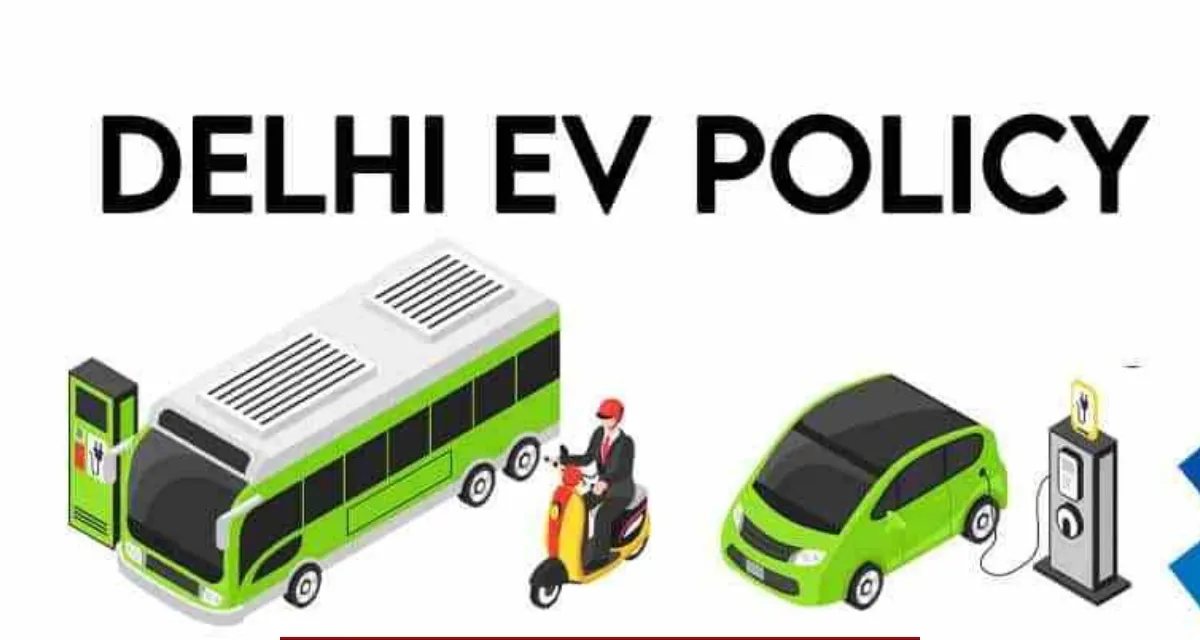
Delhi's Upcoming Electric Vehicle Policy Is Almost Here
Subsidies, the development of charging infrastructure, and incentives for the scrappage of older cars are the main components of the proposed EV policy.
Officials will shortly make the proposed policy available for public comment after speaking with industry partners.
Delhi is preparing to implement a new electric vehicle (EV) legislation that is anticipated to go into force during the upcoming fiscal year. This action is part of the city's plan to modernise its transportation system by encouraging more citizens to convert from gasoline and diesel vehicles to electric vehicles (EVs) and to minimize air pollution, a major problem that is largely caused by vehicle emissions.
The Delhi administration has finalized the future policy framework, which includes a number of significant steps to hasten the capital's adoption of electric vehicles. More EV adoption, according to officials, will help reduce particle emissions (PM2.5 and PM10), which are major factors in Delhi's infamous smog issues.
Financial incentives are one of the main components of the new program. In order to lower the cost disparity between electric vehicles and traditional gasoline vehicles, the government intends to provide subsidies. To help consumers save money up front, Delhi has already eliminated road tax and registration fees for EV sales.
A scrappage incentive is being added in addition to subsidies. In an effort to hasten the phase-out of high-emission vehicles on city roads, owners who decide to purchase an electric vehicle instead of their old gasoline or diesel vehicles would receive financial rewards.
Another important objective is to extend and enhance the infrastructure for charging. In order to make EV ownership more convenient, the program envisions more public charging stations near residential areas as well as in popular public areas.
Additionally, measures are in place to guarantee the safe disposal of spent EV batteries and to facilitate battery swapping facilities.
In order to match production, supply, and infrastructure development with anticipated demand, the government is collaborating with power distribution companies, automakers, and authorized scrap dealers.
Before the policy is formally put into effect, Delhi will invite citizens to express their opinions during a public consultation session after the final draft is complete.
This policy expands on past initiatives, such as the previous policy's extended EV incentives, and it coincides with expanding conversations about potential future policies, such as bans on fossil-fuel two-wheelers in favour of electric alternatives.
Also read: