Managing vehicle entry manually can slow down traffic and make it harder to keep track of vehicles entering and leaving a facility. A modern, automated access point solves this by turning chaotic entryways into streamlined, accountable checkpoints.
What is a boom barrier?
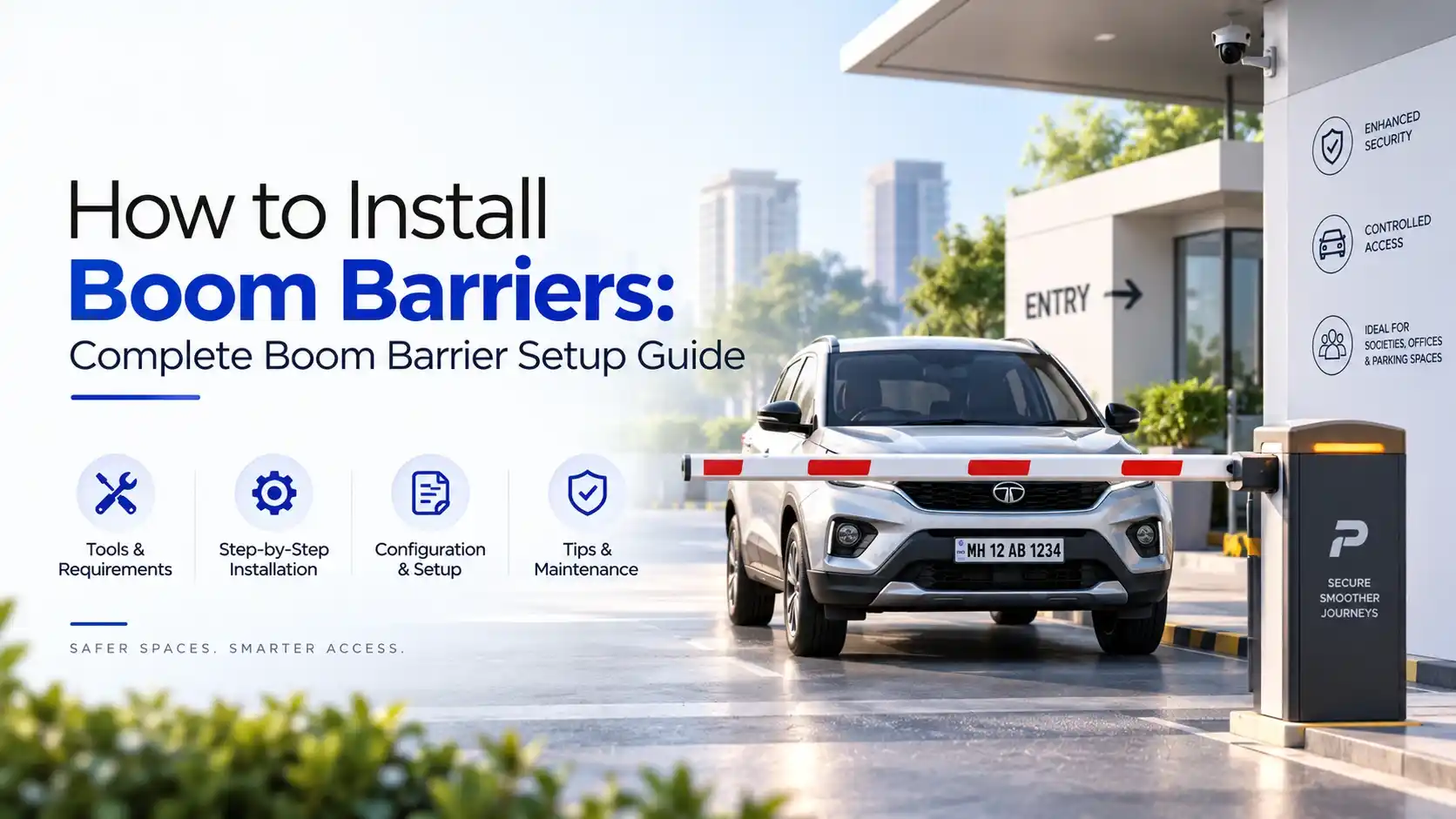
A boom barrier is a motorised or manually operated arm that rises to let authorised vehicles pass and lowers to block the entry point. An automatic boom barrier can be connected to RFID readers, ANPR cameras, access cards, remote controls or other access systems for easier vehicle management.
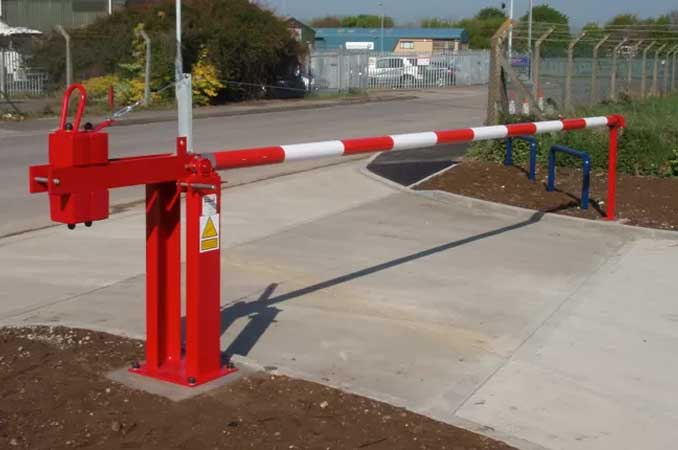
On the other hand, a manual boom barrier is operated by hand and does not require a motor or automated access system. It is a simple and cost-effective option for locations with low or moderate vehicle traffic.
How does it work?
A boom barrier manages vehicle entry/exit by raising or lowering its arm. The working process depends on whether it is manual or automatic:
Manual boom barrier: The arm is raised and lowered by an operator to allow or stop vehicles.
Automatic boom barrier: Sensors or access systems such as RFID, ANPR or remote controls send a signal to the controller, which operates the motor. Safety sensors can keep the arm raised until the vehicle has safely passed.
Types of Boom Barriers
Choosing the right barrier depends on traffic volume, available space, security requirements, availability of raw materials, labour and the level of automation needed.
| Type | How It Works | Best Suited For |
|---|---|---|
| Manual boom barrier | The arm is raised and lowered manually. | Low-traffic locations |
| Automatic boom barrier | The motor raises and lowers the arm automatically. | Offices, societies, and parking areas |
| High-speed boom barrier | Opens and closes quickly | High-traffic entry and exit points |
| RFID boom barrier | Opens after reading an authorised RFID tag | Gated communities and offices |
| ANPR-integrated barrier | Uses number-plate recognition for access | Smart parking and controlled facilities |
Step-by-Step Boom Barrier Installation Process
A precise boom barrier installation requires careful site preparation, proper concrete curing, and detailed sensor calibration.
Step 1: Site Survey & Path Clearance Measure the overall lane width and overhead clearance. Ensure the rising arm clears trees, overhead cables, and roof overhangs. Position the cabinet where guards have clear visibility.
Step 2: Civil Base & Conduit Laying Dig a foundation pit and pour high-grade concrete for the base plate. Lay PVC conduits through the centre of the base for AC power cables, safety loops, and communication lines. Allow 24 to 48 hours for concrete curing.
Step 3: Cabinet Mounting & Wiring Bolt the steel housing unit onto the cured foundation plate using anchor bolts. Wire the main power lines, safety ground connection, and control inputs to the primary terminal block.
Step 4: Barrier Arm Balance & Testing Fix the barrier arm to the motor shaft. Balance the internal tension springs according to the arm length, then calibrate the safety loop detectors and anti-collision infrared sensors.
Key benefits of installing security barriers
Installing an automated parking barrier delivers multi-layered operational benefits across busy entrances:
Controlled Access: Helps restrict unauthorised vehicle entry when connected to an access-control system.
Streamlined Traffic Flow: Speeds up verification times during peak rush hours at gate houses.
Reduced Manual Work: Automation can reduce the amount of routine manual work required at vehicle entry and exit points.
Digital Log Keeping: Paired with RFID tags or licence plate readers, every entry and exit is logged in real time.
How to choose the right type of boom barrier for installation?
Good preparation can prevent alignment, wiring and access problems later. Before beginning the boom gate installation, check the following:
Assess the Site: Check the lane width, vehicle movement, available space and ground condition. There should be enough room for the boom arm to operate without hitting vehicles, walls or other objects. Also check the location of the power supply and decide where control equipment and safety sensors will be placed.
Choose the Right Barrier: The barrier should match the expected traffic and lane size. A small residential entrance may need a different system from a busy commercial parking facility. Consider:
- Arm length
- Opening and closing speed
- Traffic volume
- Indoor or outdoor installation
- Access-control requirements
- Backup or manual-release options
- Post sales service
Check Local Requirements: Depending on the location and type of facility, local permissions, electrical requirements and safety regulations may apply. These should be checked before installation.
Prepare the Foundation: The barrier needs a stable base. The foundation should be prepared according to the manufacturer's specifications and allowed to cure properly before the equipment is mounted.
Why do facilities choose Park+ smart boom barrier systems?
Standard boom barriers help control vehicle movement, while Park+ boom barriers connect the physical barrier with digital security and parking management:
- FASTag & RFID Integration: Automatically verifies registered resident and employee vehicles in under 3 seconds, reducing the need for manual entry logs.
- Real-Time App Notifications: Property managers and vehicle owners get instant mobile alerts when a vehicle enters or exits the premises.
- Digital Anti-Theft Lock: Residents can lock their vehicle through the Park+ app. If unauthorised movement is detected, the barrier stays closed and an alert is triggered.
- Centralised Admin Dashboard: RWAs and facility managers can monitor visitor duration, peak traffic and live parking-slot availability from one platform.
Common problems after installing a boom barrier
Even a properly installed system can develop issues over time. Some common problems include:
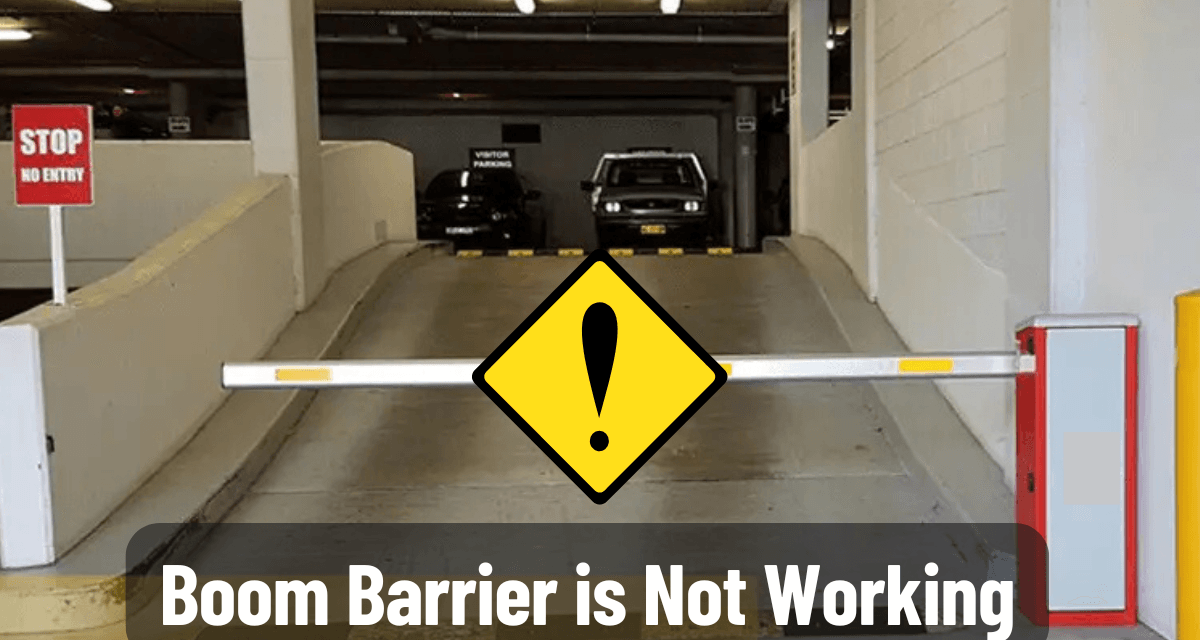
- Barrier not opening: Check the power supply, access command, remote or control panel.
- Barrier not closing: Look for an obstruction or a sensor detecting a vehicle.
- Slow movement: The motor, mechanical components or settings may need inspection.
- Unusual noise: Check for loose or worn mechanical parts.
- Electrical problems: Inspect wiring and connections through a qualified technician.
- Physical damage: Check the boom arm and cabinet for cracks, bends or other damage.
Essential maintenance and safety practices
Routine checks maintain long operational life and prevent unexpected gate blockages:
- Regular Visual Checks: Inspect the cabinet, boom arm, mounting bolts and sensors for damage or dirt.
- Safety Checks: Test the sensors, emergency release and reversing mechanism regularly.
- Backup Power Checks: If the system has battery backup, test it periodically to ensure it works during a power failure.
Conclusion
A boom barrier is a simple and effective way to control vehicle access and manage traffic at entry and exit points. With proper installation, safety features and regular maintenance, it can improve both security and traffic flow. Choosing the right barrier for your location ensures reliable and hassle-free operation.