
Choosing a boom barrier is not only about its appearance or price. The boom barrier specifications determine how well it fits your entrance, traffic volume and security requirements.
Boom length, motor type, opening speed, operating cycle, safety features and access-control options are some of the key specifications to compare before installation.
Understanding these specifications helps you select a barrier that suits your traffic volume, entrance layout and security needs.
What are boom barrier specifications?
Boom barrier specifications are the technical details that describe how a barrier is built and how it operates. These include boom length, motor, power supply, opening time, material, protection rating, operating capacity and control options.
The right specifications depend on where the barrier will be installed. A residential society may need a different setup from a busy office, shopping centre, parking facility or industrial site.
Key boom barrier specifications breakdown
Before selecting a model, compare the specifications that affect its performance, durability and suitability for your site.
| Technical Parameter | Manual Boom Barrier | Automatic Boom Barrier |
|---|---|---|
| Operating Mechanism | Hand-operated | Motorised |
| Power Supply | Not required for basic operation | Usually 220–240V AC, (depending on model) |
| Motor Type | Not applicable | 24V DC or other model-specific motor |
| Opening Time | Depends on the operator | Around 0.9 – 3 seconds in many models |
| Boom Length | Typically available in different lengths | Commonly available up to around 6 metres |
| Control Method | Manual handle or counterbalance mechanism | Remote, push button, RFID, ANPR and other access systems |
| Safety Sensors | Usually limited or optional | Photocells, loop detectors and obstacle sensors may be available |
| Backup During Power Failure | Continues to work manually | Manual release or backup options may be available |
| Maintenance | Generally lower | Requires motor and control-system maintenance |
| Price / Cost Level | Low (Cost-effective) | High (Due to motor, automation & sensors) |
| Best Suited For | Low-traffic entrances | Medium- to high-traffic entrances |
Core automatic boom barrier specifications to check
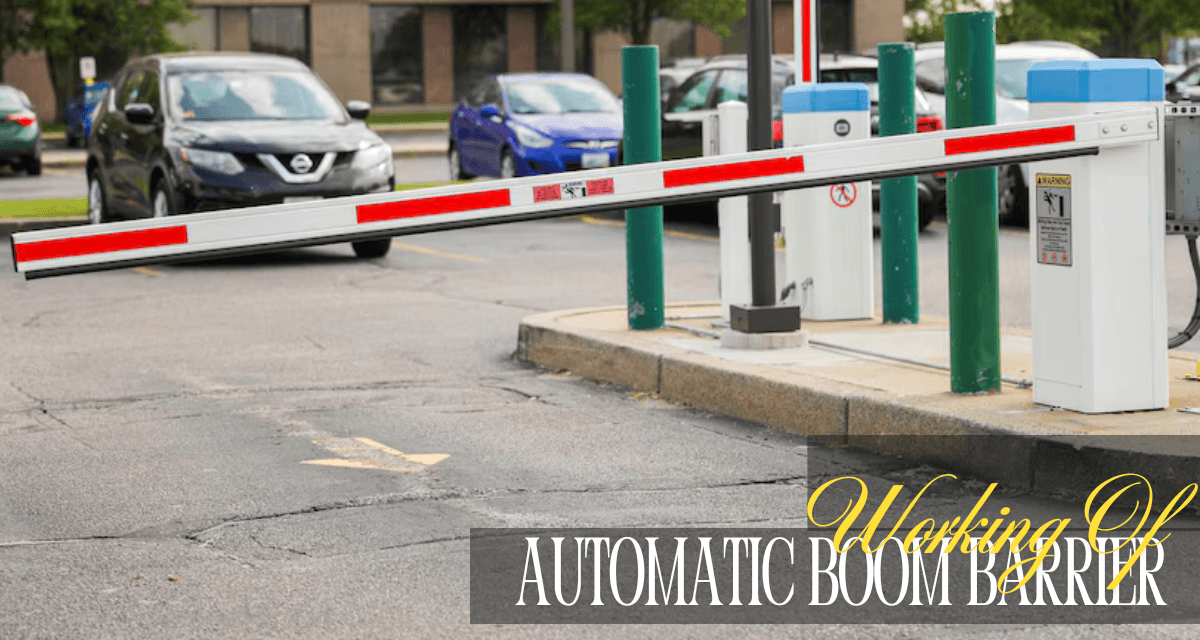
Automatic barriers are designed for regular vehicle movement, making their technical specifications particularly important.
Focus on the following points before selecting a model:
- Motor Type: Many modern barriers use 24V DC brushless motors, which offer efficient, quiet and reliable operation.
- Operating Speed: Opening times can range from around 0.6 seconds for high-speed systems to several seconds for longer commercial boom arms.
- Power Supply: Check the required voltage and electrical setup before installation.
- IP Rating: An IP54 or IP65 rating can provide protection against dust and water, making the barrier more suitable for outdoor use.
- Operating Cycle: Check how frequently the barrier can open and close, particularly if it will be used throughout the day.
- Durability: Check the specified temperature range to ensure reliable performance in both hot summers and cold weather.
Core manual boom barrier specifications to check
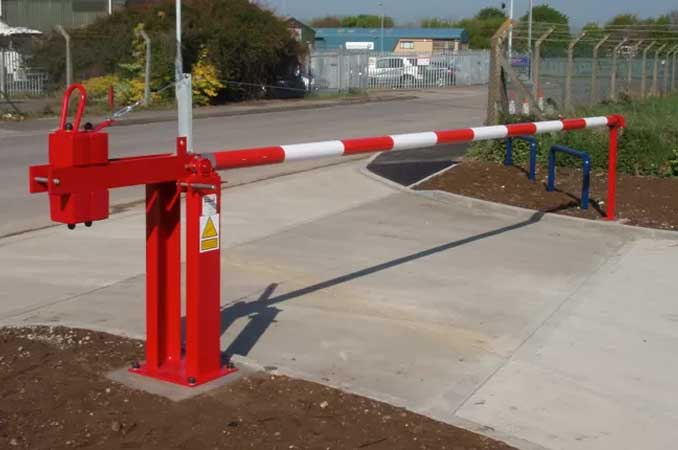
Manual boom barriers are simpler than automatic systems, but their size, construction and operating mechanism still matter.
Before choosing one, consider the boom length, material, mounting arrangement, operating effort and durability based on the location and expected vehicle movement.
- Boom Length: Choose an arm length that covers the required entry or exit width without restricting vehicle movement.
- Material: Aluminium or steel arms are commonly used, with the choice depending on the required strength and installation conditions.
- Operating Mechanism: A balanced manual mechanism should allow security staff to raise and lower the arm smoothly with minimal effort.
- Counterbalance: Springs or other balancing mechanisms can reduce the effort required to operate a longer or heavier boom arm.
- Mounting and Base: A stable and level base helps keep the barrier secure during regular use.
- Weather Resistance: Choose a weather-resistant construction if the barrier will be installed outdoors or exposed to frequent use.
Boom gate dimensions: What should you measure?
Boom gate dimensions are important because the barrier needs to fit the entrance without restricting vehicle movement. The main measurements include the boom arm length, cabinet size, mounting area and available lane width.
Measure the clear width of the entry or exit before choosing the barrier. Also check the available height, especially in basements and covered parking areas. A longer boom may require a stronger mechanism, so avoid selecting the arm length based only on the width of the entrance.
Essential boom barrier features for safety and access
Modern systems offer several boom barrier features that improve safety and make vehicle access easier:
- Anti-Crush Safety: Infrared sensors and ground-loop detectors can detect vehicles or obstacles under the boom and prevent the arm from closing on them.
- Obstacle Detection: Sensors can detect vehicles or objects near the boom and help prevent collisions.
- Manual Override: A manual release allows staff to operate the barrier during a power failure or system fault.
- LED Indicators: Warning lights can make the boom more visible to approaching drivers.
- Access Control: RFID, ANPR, FASTag and other systems can be integrated with compatible barriers.
- Breakaway Arm: Some models allow the arm to detach during an impact, helping reduce damage to the mechanism.
- Automatic Closing: The barrier can close automatically after a vehicle passes when supported by the control system.
How to select the right boom barrier for you?
Choosing the right boom barrier is easier when you know what to check before buying.
- Measure the entrance: Check the lane width, available height and mounting space.
- Estimate traffic: Consider the number of vehicles during your busiest hours.
- Choose the operating type: Select manual for simpler, low-traffic access or automatic for frequent vehicle movement.
- Check the specifications: Compare boom length, opening speed, motor, operating cycle and IP rating.
- Consider safety: Look for suitable sensors, warning lights and manual-release options.
- Check access control: If required, choose a system compatible with RFID, ANPR, FASTag or other access technologies.
Conclusion
A barrier with the wrong boom length may not cover the entrance properly, while an underspecified motor may not suit frequent use. Comparing the boom barrier specifications helps you choose a system that fits your site, traffic flow and security needs. Park+ offers smart boom barrier solutions for modern parking and access-control needs, helping businesses and communities manage vehicle entry more efficiently.