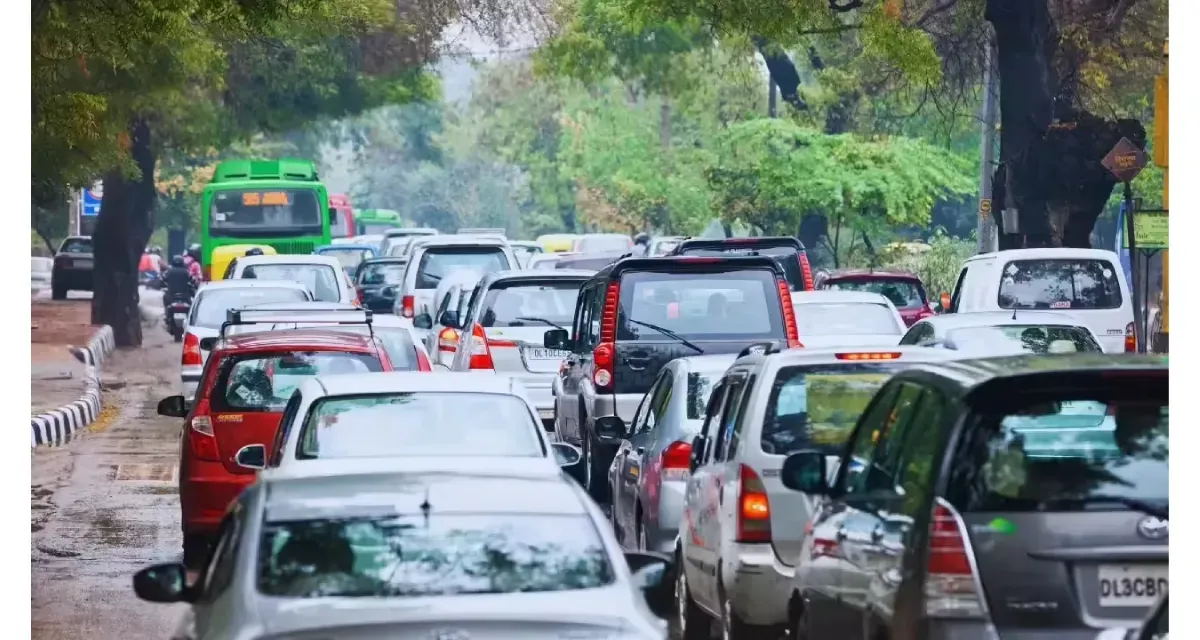
Vehicle Banned in Noida! New Restrictions on Non-BS6 Cars
Noida has restricted non-BS6 vehicles under GRAP-III rules to tackle worsening winter air pollution across the National Capital Region.
Violators face heavy fines of up to ₹20,000 as traffic police ramp up border inspections and awareness drives following Delhi's seasonal crackdown.
Winter has arrived in the National Capital Region (NCR), bringing a seasonal rise in air pollution. Following the restrictions introduced in Delhi, authorities in Noida have also tightened vehicle movement rules under Stage III of the Graded Response Action Plan (GRAP-III). The restrictions target specific older petrol and diesel vehicles that do not meet the prescribed emission standards, with the aim of reducing vehicular pollution across the region.
Under the active GRAP-III guidelines, older petrol and diesel vehicles manufactured before April 2020 are prohibited from plying on Noida roads. Specifically, the ban targets BS3 and BS4 category vehicles.
However, cleaner mobility options remain unaffected. CNG-powered vehicles and electric vehicles (EVs) are completely exempt from these restrictions, alongside ambulances, fire tenders, and other essential emergency services.
To ensure commuters are aware of the restrictions, the Noida Traffic Police have launched public awareness campaigns. These include distributing pamphlets and putting up posters at major intersections, district boundaries and state borders.
Alongside these efforts, authorities have increased vehicle inspections across Gautam Buddha Nagar. The enforcement measures include:
Dedicated Checkpoints: Multiple enforcement teams are inspecting vehicles entering Gautam Buddha Nagar from Delhi, Ghaziabad, Faridabad and neighbouring districts.
Penalties: Motorists caught driving restricted BS-III petrol or BS-IV diesel vehicles may face penalties of up to ₹20,000, depending on the applicable offence.
Massive Crackdown: Reports indicate that authorities have already issued more than 5,000 challans as part of the ongoing enforcement drive.
Noida’s move follows Delhi’s winter pollution measures. From November 1, 2026, to January 31, 2027, Delhi has banned non-BS6 vehicles registered outside the capital from entering the city. This is now a fixed annual winter restriction rather than a measure triggered only by severe pollution.
Delhi is also enforcing a strict “No PUC, No Fuel” rule. Fuel stations across the capital use Automatic Number Plate Recognition (ANPR) cameras to check vehicles’ Pollution Under Control (PUC) certificate status. Vehicles with expired PUC certificates can be denied fuel at these stations.
Restrictions on older petrol and diesel vehicles have encouraged some car owners across Delhi-NCR to explore CNG conversions. For households that depend on a single car, purchasing a new BS6 vehicle can be expensive, making an approved CNG kit a possible alternative.
According to industry reports:
Rising Demand: Demand for government-approved CNG kit installations has increased by over 50% in recent weeks.
Installation Cost: Retrofitting a typical BS4 petrol car with an approved CNG kit costs around ₹35,000–₹50,000.
Running Costs: CNG can help reduce daily fuel expenses for regular commuters travelling across NCR.
If you travel across the Noida-Delhi corridor, ensure your vehicle meets BS6 criteria or runs on clean alternative fuel and keep a valid PUC certificate handy at all times.
Also read: