Skoda and Volkswagen Plot a Busy Road Ahead for India with RS Return and Facelift Twins
Skoda has confirmed a second batch of the sold-out Octavia RS performance saloon for India, with priority going to the nearly 350 customers already holding deposits.
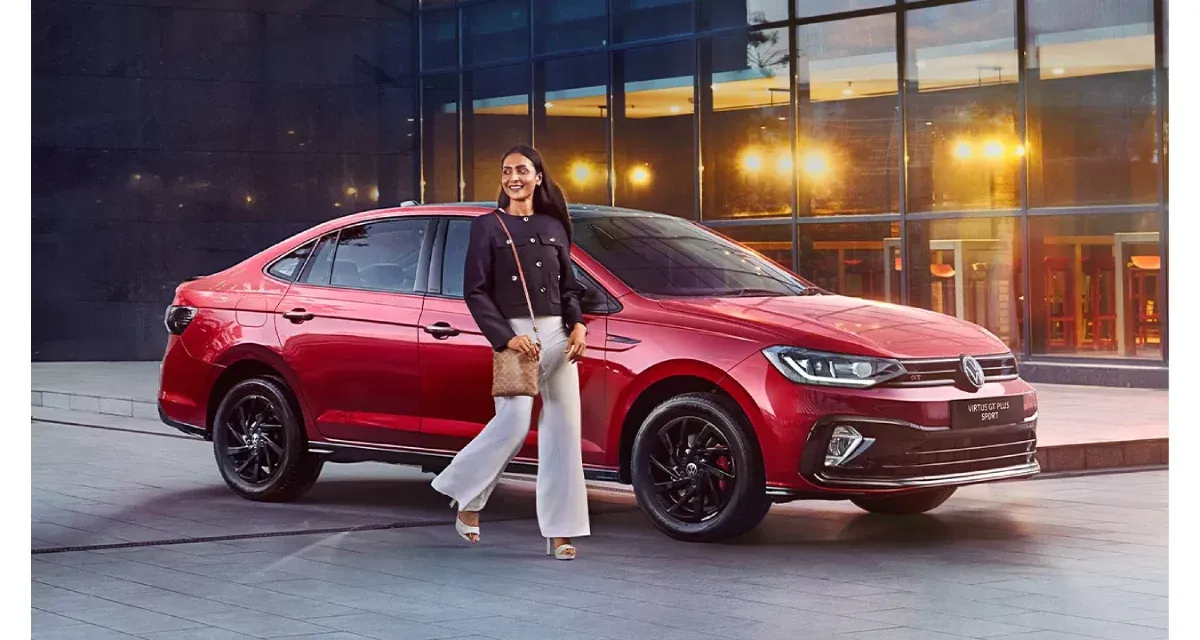
The Skoda Slavia and Volkswagen Virtus facelifts are currently under testing, bringing revised styling, a broader feature list, and pricing expected to undercut key rivals.
It is not often that a car sells out before its price is even announced, but that is precisely what happened when Skoda opened bookings for the Octavia RS.
All 100 units of the first batch were claimed within minutes, leaving the brand holding roughly 350 bookings with nowhere to put them.
Skoda's Brand Director Ashish Gupta confirmed that the brand is actively working on securing more cars for India, with existing deposit holders being given first right of refusal when order books reopen.
The Octavia RS arrives in India as a fully imported CBU, priced at Rs 49.99 lakh ex-showroom. It is powered by a 2.0-litre turbocharged petrol engine producing 265 hp and 370 Nm of torque, paired with a seven-speed dual-clutch automatic gearbox sending power to the front wheels.
The same powertrain does duty in the Volkswagen Golf GTI, which similarly sold out its first allocation. At this price point, the Octavia RS has no direct rival in India, and that scarcity is precisely what makes it so desirable.
While the Octavia RS caters to a narrow but passionate audience, the Skoda Slavia and Volkswagen Virtus play in far higher volumes, and both are preparing to step out in updated form.
Spy shots and test mules captured on Indian roads confirm that both sedans are well into development, with the launch expected in the coming months. The two cars share their platform with the Kushaq and Taigun SUVs, both of which received their own updates earlier this year.
At the front, both sedans are set to receive revised grilles and updated headlamps. The Slavia is expected to feature connected LED daytime running lamps, while Volkswagen may offer a similar treatment accompanied by an illuminated badge.
The side profiles are expected to stay largely unchanged, with fresh alloy wheel designs providing a point of distinction. At the rear, revised bumpers and tail lamps are confirmed, along with what is expected to be a connected LED bar treatment running across the tailgate.
Inside, both cars will move up considerably in terms of equipment. A larger driver display, leatherette upholstery, seat ventilation, automatic climate control, an electric sunroof, rear AC vents, and an updated touchscreen infotainment system are all expected as part of the package.
The Slavia may also gain a rear-seat massager function, which the Virtus could miss out on. Neither sedan is expected to receive ADAS features, though both will continue to offer six airbags, ABS, and EBD as standard safety equipment.
The engine lineup remains unchanged. Buyers can choose between a 1.0-litre three-cylinder turbocharged petrol unit producing 115 PS and 178 Nm, available with either a six-speed manual or six-speed automatic, and a 1.5-litre TSI engine producing 150 PS and 250 Nm, paired with a seven-speed DSG gearbox.
On pricing, Skoda is expected to take a particularly aggressive approach with the Slavia, offering a feature-rich base variant that could include alloy wheels, cruise control, automatic headlamps, and automatic climate control as standard.
The Virtus may take a slightly different approach, with a less generous base specification and a marginally higher starting price. The current Slavia begins at Rs 10 lakh ex-showroom, with the Virtus starting at Rs 10.50 lakh. Their closest rivals, the Hyundai Verna and the recently launched Honda City facelift, are priced from Rs 10.98 lakh and Rs 12 lakh respectively.
Both the Slavia and Virtus are expected to retain their pricing advantage even after the update.
Also read: