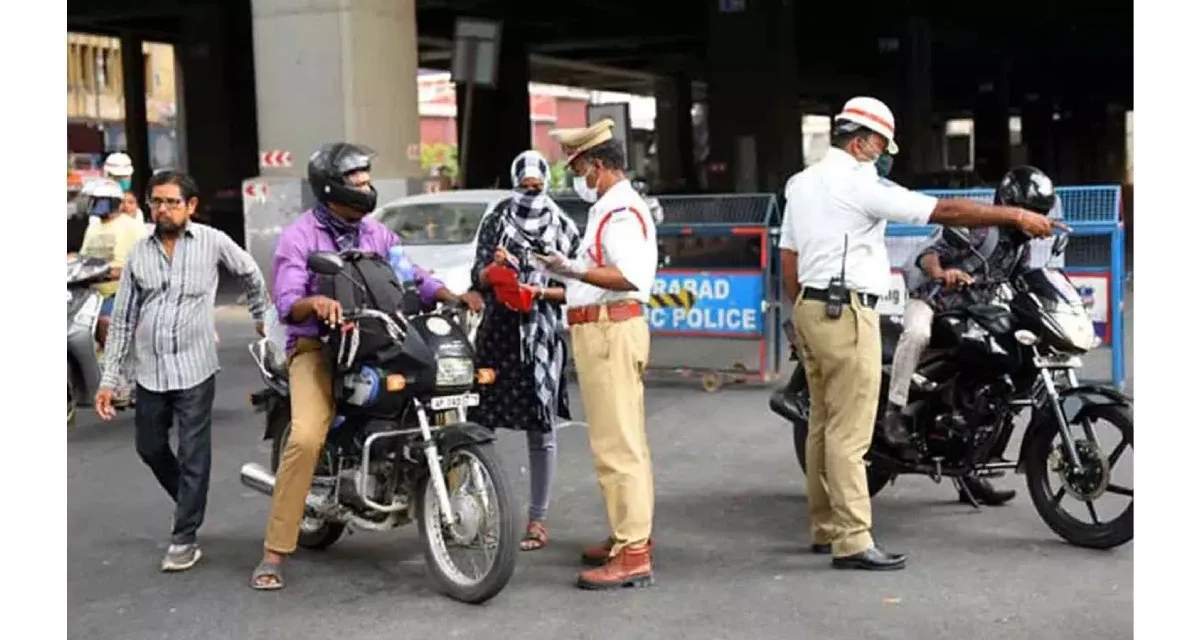
New Traffic Challan Rules Require 50% Payment Upfront
India has amended traffic challan rules, making a 50% upfront deposit mandatory before seeking court relief
Vehicle owners now have a strict 45-day window to either pay the fine or contest it online via the NextGen mParivahan portal
For years, a quiet workaround existed for Indian motorists who found themselves on the wrong side of a traffic fine. By waiting for their challan to land in court, they could turn up at a Lok Adalat and walk away having paid a fraction of the original amount, sometimes less than half. That route has now been firmly shut.
The central government has amended the Central Motor Vehicles Rules, 1989, introducing a far stricter framework that demands accountability well before any courtroom is involved.
Under Rule 167 of the revised Central Motor Vehicles Rules, 1989, a vehicle owner who receives a traffic challan must act within 45 days.
The options are straightforward: either pay the fine in full or formally contest the challan through the NextGen mParivahan portal, supported by relevant documents. Sitting on it and doing nothing is no longer a neutral choice.
Inaction past the 45-day mark will be treated as acceptance of the challan, removing any avenue for a reduced settlement later.
If an owner chooses to dispute the challan through the portal, the traffic police are required to resolve the complaint within 30 days. Should the complaint be rejected and the vehicle owner wish to escalate the matter to a court, the new rules require that 50 per cent of the challan amount be deposited on the state government portal before any such appeal can be filed. There is no flexibility here, the half-payment is a non-negotiable precondition, not an optional step.
The amendment is a direct response to a pattern that had become widespread. Previously, traffic police would send pending challans to court, after which Lok Adalat sessions allowed motorists to settle their dues for less than 50 per cent of the original fine, and in some cases, even less.
The entire process was manual and loosely enforced, making it easy to game. The revised system moves everything online and introduces firm deadlines at each stage, significantly reducing the scope for last-minute reductions without any prior engagement.
The scale of pending challans across the country gives context to why the government moved on this. In Noida alone, over 11 lakh challans were issued in the period up to May this year.
Traffic DCP Abhay Mishra confirmed that both payment and the process of contesting a challan now operate within fixed time limits, and that the 50 per cent deposit before approaching a court will be strictly enforced going forward.
The practical impact is significant. Anyone holding an unpaid challan and planning to wait for a Lok Adalat opportunity must now reconsider that approach entirely. The new rules do not eliminate the right to contest a fine or seek court relief, but they do raise the cost of doing so considerably.
Paying half the amount upfront while simultaneously arguing the charge before a court is a far less attractive proposition than the old near-zero settlement that Lok Adalats once offered.
For motorists across India, the message is clear: address a challan promptly through official channels, or be prepared to pay a meaningful sum before any legal challenge can even begin.