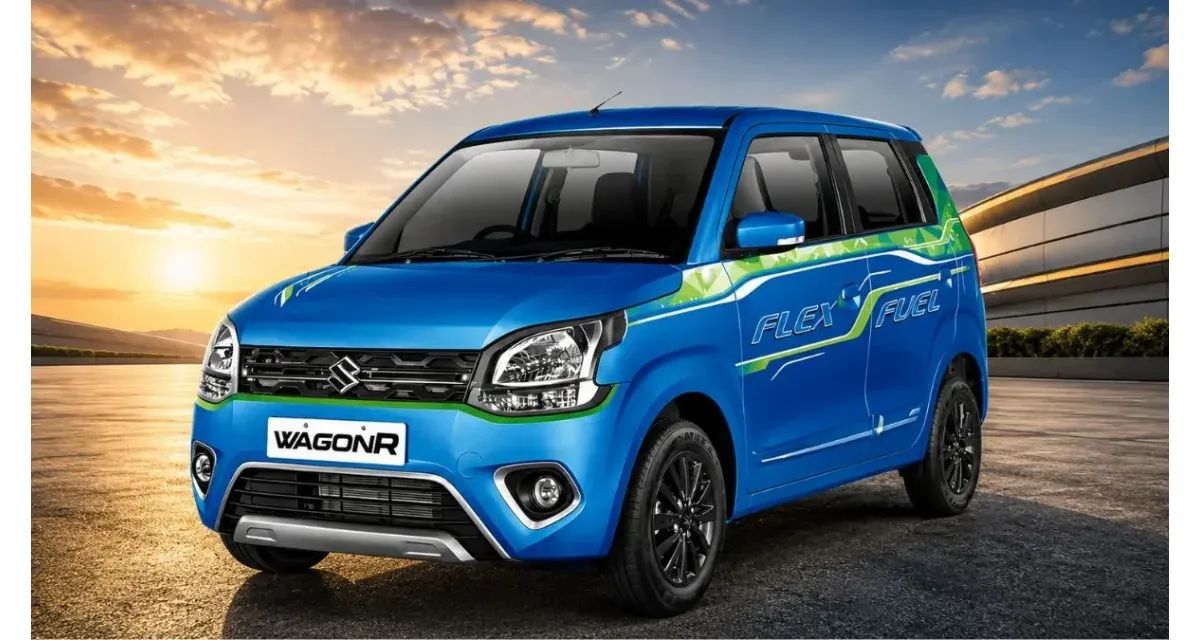
Maruti WagonR BioFlex Sales At Just 3 Units So Far
WagonR BioFlex has recorded only three registrations since deliveries began
Limited E85 fuel availability is being seen as the biggest roadblock so far
Maruti Suzuki's WagonR BioFlex, positioned as India's first mass-market flex-fuel passenger car, has had a slow start on the sales front. Just weeks after reaching customer hands, the car has managed only three registrations, a figure that has drawn attention within the industry.
Rather than pointing to weak demand for the vehicle itself, experts suggest the numbers reflect how underdeveloped India's E85 fuel network still is.
WagonR BioFlex was launched on June 4, 2026, with deliveries starting from June 17, 2026. The car is built to run on petrol-ethanol blends stretching from E20 right up to E100, though under present rules it is homologated specifically for E85. It carries a price tag of Rs 7.24 lakh ex-showroom, a premium of roughly Rs 74,000 over the equivalent petrol variant at the top of the range. Vahan registration figures show that only three units had found buyers by June 29, 2026.
A major factor behind this is simply where the fuel can be bought. India currently has just 48 outlets selling E85, and these are mostly clustered around Delhi-NCR and Mumbai. Buyers living outside these pockets would struggle to make practical use of a car built around this fuel, unlike E20 petrol, which by now reaches almost every corner of the country.
E85 does look appealing when comparing pump prices. In Mumbai, it retails at approximately Rs 91 per litre, about Rs 20 less than E20 petrol. That said, ethanol carries less energy per litre than petrol, so vehicles running on higher ethanol blends tend to post lower fuel efficiency figures. This eats into much of the savings that the lower price per litre initially suggests.
Maruti Suzuki has so far not released official mileage figures for the WagonR BioFlex on E85, leaving buyers to weigh the purchase without a clear picture of real-world running costs.
The WagonR BioFlex is not alone in facing a cautious market. Honda Motorcycle and Scooter India brought out its CB300F Flex-Fuel motorcycle back in October 2024, and even that has managed fewer than 30 registrations in the first half of 2026.
Suzuki Motorcycle India's Gixxer SF 250 FFV, introduced in early 2025, is yet to register a single sale according to Vahan records.
Going further back, TVS Motor's Apache RTR 200 Fi E100 from 2019, built to run purely on 100% ethanol, never found commercial traction either, largely because dedicated E100 pumps simply never came up.
India's push towards flex-fuel vehicles ties into a larger strategy to cut down crude oil imports, boost farmer incomes through greater ethanol demand, and bring down vehicle emissions.
Automakers including Toyota, Hyundai, Tata Motors, Bajaj Auto, Yamaha and Royal Enfield have all shown or trialled flex-fuel vehicles at some point, yet most have held back from a full commercial launch while waiting for fuel infrastructure to mature.
Maruti Suzuki, when asked about the low early numbers, said the focus should not rest solely on initial registrations. The company noted that the more important question is how quickly all stakeholders can align behind a shared national goal centred on energy security, farmer support and lower carbon emissions, adding that technologies of this scale need sustained commitment rather than snap judgement based on early sales.
The situation mirrors what electric vehicles and CNG cars went through in their own early days in India. Fuel retailers are reluctant to invest in more E85 pumps without a large enough population of compatible vehicles on the road, while buyers hold back from purchasing such vehicles until fuel becomes easy to find nearby.
Until that cycle breaks, flex-fuel vehicles are likely to stay a niche choice, policy backing notwithstanding. The early WagonR BioFlex numbers, then, may say less about the car and more about how far the surrounding ecosystem still has to go.
Also read: