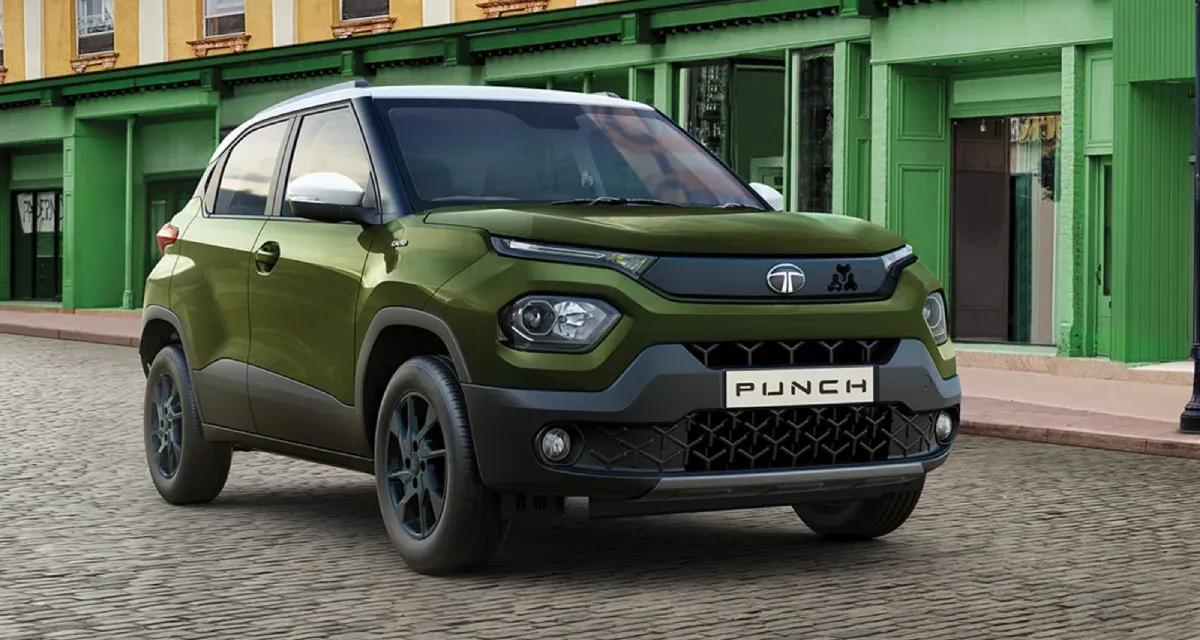
India's Most Exciting Affordable Electric Car Just Got a Whole Lot Better with the Tata Punch EV Facelift
The 2026 Tata Punch EV facelift goes on sale this week, with deliveries confirmed by the end of February 2026, priced from ₹9.69 lakh (ex-showroom), or as low as ₹6.49 lakh under the new Battery-as-a-Service scheme.
The updated model gains larger 30 kWh and 40 kWh battery packs, a claimed range of up to 468 km, 65 kW DC fast charging, and a host of new interior and safety upgrades.
The wait is nearly over. Tata Motors has confirmed that deliveries of the 2026 Punch EV facelift will commence before the end of February 2026, which, as things stand, means buyers could be driving one home within days.
Launched on February 20, 2026, at an introductory price of ₹9.69 lakh (ex-showroom, Mumbai), the facelifted Punch EV arrives as a considerably more capable machine than the model it replaces, having debuted back in January 2024.
For a country still warming up to electric mobility, the timing feels deliberate. With competition heating up from the likes of the MG Windsor EV and the Mahindra XUV 3XO EV, Tata clearly wasn't content to let its entry-level electric SUV coast along unchanged.
At the heart of the facelift is a significant battery upgrade. The outgoing model's packs have been replaced with a new 30 kWh unit and a larger 40 kWh option, both featuring prismatic LFP cells that Tata claims are around 10% more energy-dense than before.
The 40 kWh variant is rated at 468 km on the ARAI cycle, while real-world figures under the C75 test protocol settle closer to 355 km, still a meaningful step forward for daily commuters and occasional long-distance travellers alike.
The smaller 30 kWh pack offers an ARAI-rated range of 365 km, with real-world figures around 270 km. Both batteries are paired with a front-mounted electric motor, producing 88 hp in the 30 kWh variants and a more spirited 129 hp in the 40 kWh versions. The latter can sprint from 0-100 km/h in under nine seconds, a modest but respectable number for a compact urban SUV.
Fast charging has also been improved. Both battery packs support 65 kW DC fast charging, which can top the battery up from 20% to 80% in just 26 minutes.
Tata claims that a 15-minute pitstop at a fast charger adds up to 135 km of range on the 40 kWh variant. The 40 kWh battery also comes with a lifetime, unlimited-kilometre warranty for first owners, a bold promise that speaks to Tata's confidence in its technology.
Perhaps the most eye-catching element of this launch is the introduction of Battery-as-a-Service (BaaS), a first for Tata Motors.
Under this scheme, buyers pay only for the car itself, starting at just Rs. 6.49 lakh (ex-showroom), and then pay for battery usage at a rate of Rs. 2.6 per kilometre. This effectively separates the battery cost from the vehicle price, dramatically lowering the financial barrier to electric car ownership.
It is a model that makes a great deal of sense in the Indian context, where upfront cost remains one of the biggest obstacles to EV adoption. For city dwellers clocking up modest mileage each day, the BaaS route offers predictable monthly costs and eliminates concerns about long-term battery degradation. In the event of ownership transfer, the high-voltage battery warranty shifts to an 8-year or 1,60,000 km coverage, counted from the original registration date.
The facelift brings a noticeably cleaner face to the Punch EV. Up front, the bumper has been redesigned with a larger air dam, while the vertically stacked headlamps now sit within a bolder triangular cluster. The connected LED light bar between the DRLs, a distinctive feature of the outgoing car, has been removed in favour of a sleeker aesthetic.
At the rear, connected LED tail lamps, and a revised bumper with a faux silver skid plate complete the look. New aero-optimised 16-inch alloy wheels and fresh exterior colour options round out the changes.
Step inside, and the changes are equally welcome. Upper trims gain a 10.25-inch digital instrument cluster, a 10.25-inch central touchscreen with wireless Apple CarPlay and Android Auto, ventilated front seats, a voice-activated electric sunroof, and four paddle-controlled regenerative braking modes.
A new HVAC panel, dual-tone upholstery, and a 360-degree camera further elevate the cabin experience on higher variants. Safety hasn't been neglected either, six airbags come as standard across the range, alongside electronic stability control, hill start assist, and an intelligent tyre pressure monitoring system.
The Punch EV facelift goes up against the Citroën eC3, its most direct rival, as well as the broader competition from the MG Windsor EV and Mahindra XUV 3XO EV. Within Tata's own line-up, it slots neatly below the Nexon EV and above the Tiago EV, making it the middle-ground choice for buyers who want something more substantial than a city runabout but don't yet need a full-sized family SUV.
With sharper styling, a more convincing range, genuine fast-charging capability, and a pricing model that genuinely challenges convention, the 2026 Punch EV facelift arrives as one of the most well-rounded affordable electric cars on sale in India today.
Also read: