Indian Coverage on Citroën's European eC3 Hints at Significant EV Improvements
Testing of a Citroën eC3 version with European specifications has been observed in India, prompting concerns about a possible launch or feature assessment.
Important design, battery, and feature differences between the Euro-spec and India-spec eC3 vehicles could affect what Indian consumers receive if Citroën chooses to import the Euro version.
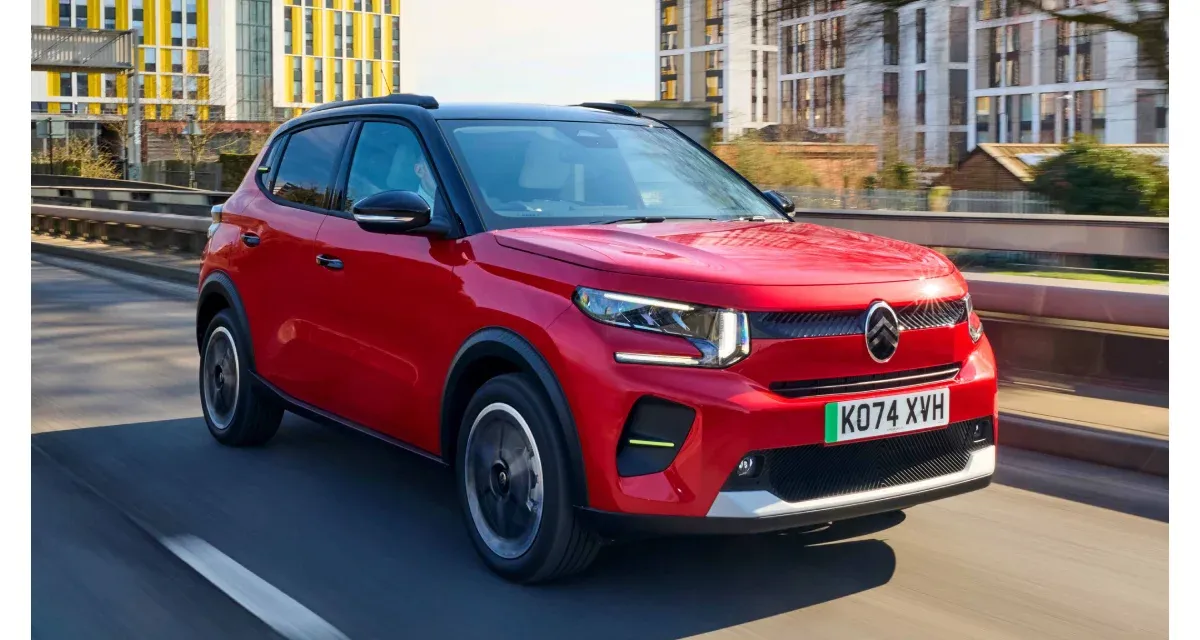
Spy photos of a European-spec Citroën eC3 undergoing road testing in Bengaluru, Karnataka, have surfaced. The test car had only partial camouflage, with just the Citroën insignia hidden. It was easily recognized by its red registration plates from Bengaluru Central RTO. This was no typical test mule, as seen by its red-and-black dual-tone finish, which matches the version released worldwide in October 2023.
In contrast to India's current eC3, which is based on the design of the ICE-powered hatchback marketed here, this version of the eC3 features the manufacturer's newest design language, akin to the Euro-spec Citroën C3 Aircross SUV.
According to reports, the business is internally pursuing a new "Citroën 2.0" strategy, which is a departure from previous initiatives and focuses on increasing technology and feature content in its vehicles targeted at Indian consumers.
The low camouflage on this test car suggests a distinct purpose, as previous Indian versions were heavily camouflaged prior to deployment. It might be a part of testing enhanced safety, comfort, or powertrain systems, possibly including advanced driver-assistance features (ADAS), rather than a full-scale debut of the Euro-spec eC3 in India.
The improved version may eventually have an impact on upcoming Indian models, such as the eC3, the SUV lineup (such as the Aircross X), or possibly new releases.
The Euro-spec eC3 is far more premium underneath the surface, not merely a visual improvement. The European version of the eC3 has a larger 44 kWh battery and a more potent ~113 PS motor; however, the Indian model uses a 29.2 kWh battery pack and a 57 PS electric motor with a stated range of about 320 km.
In addition to having a different powerplant, the Euro-spec car has a more upscale appearance and upgraded safety features. The India-spec model lacks sharp C-shaped LED headlights, a closed-off grille, 17-inch alloy wheels, new LED taillights, and a more elegant interior.
The European eC3's 100 kW DC fast charging capability allows the battery to go from 20% to 80% in roughly 26 minutes, which is far faster than the rather slow charging performance of the India-spec.
Despite the enthusiasm these espionage photos have generated, caution is advised. Vehicles headed for India have always been carefully camouflaged to conceal shape and detail; the test car's mild concealing suggests a different goal. Rather than being a pre-launch prototype, the European-spec eC3 might be utilized as a "test bed" for new technologies or global-spec components.
However, the fact that the vehicle is being tested in India at all indicates that the corporation is taking its global-spec products seriously for our market. If nothing else, it might encourage future models or the next generation of eC3 to incorporate some features or parts from European specifications.
Also read: