India Prepares Draft Rules for E85 Ethanol Fuel as It Eyes Energy Independence
India is set to notify draft rules for E85 fuel, a high-ethanol blend designed to reduce the country's dependence on imported crude oil.
E85 will require dedicated flex-fuel engines and separate dispensing infrastructure, with a full rollout expected within a couple of years.
The government is reportedly set to issue draft rules for E85, a blend containing up to 85 per cent ethanol and 15 per cent petrol. The plan, envisaged as far back as 2016, is likely to be put into action even as an oil crisis grips the world because of the conflict in the Middle East.
A senior government official confirmed that a draft notification to allow 85 per cent ethanol blending in fuel is ready and will be issued shortly, with market consensus already achieved and preliminary vehicle testing completed. The actual rollout, however, is expected to take a couple of years.
The timing of this push is no coincidence. The move comes amid a global energy crisis sparked by military operations in the Middle East, and India currently imports around 90 per cent of its oil requirements.
According to Union Road Transport Minister Nitin Gadkari, the country spends around Rs 22 lakh crore annually on fossil fuel imports, a figure the government is clearly determined to bring down.
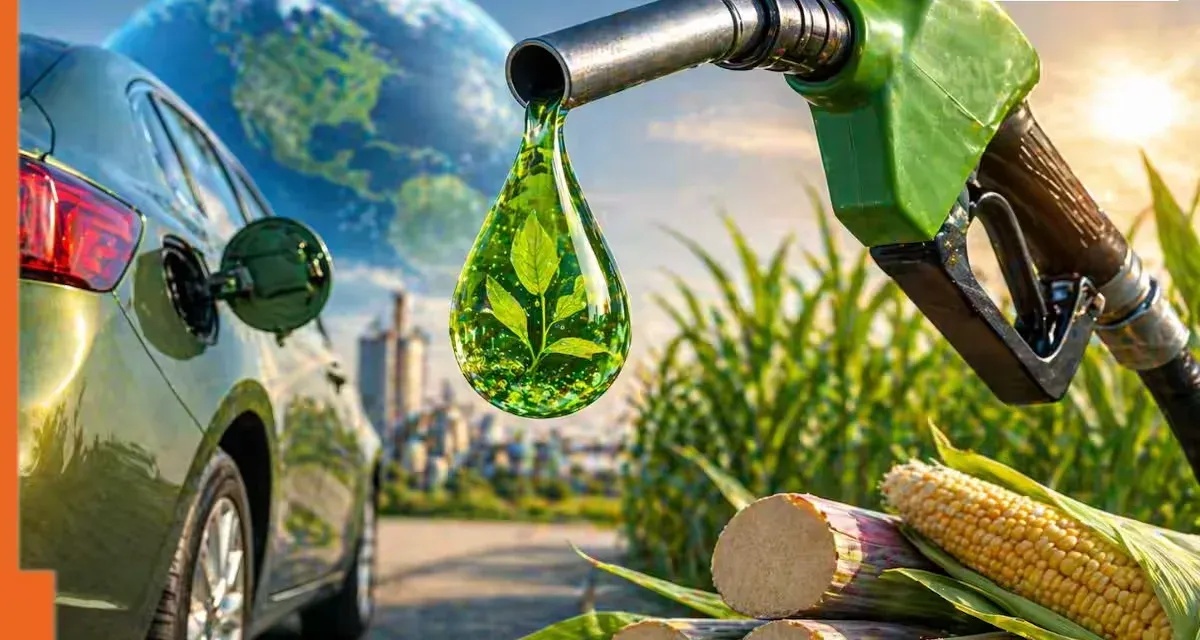
Ethanol, produced domestically from sugarcane, maize, or grains, is renewable and burns cleaner than pure petrol. Beyond the environmental case, there is a strong economic argument as well. Higher ethanol demand creates new market opportunities for farmers growing these crops, directly linking fuel policy to rural income.
E85 will be introduced as a separate fuel grade, distinct from the existing E20 petrol, where ethanol blending can go up to 27 per cent. The sale of E20 petrol became mandatory across all states and union territories from 1 April 2026.
This is far from a sudden idea. Use of E85 was notified as early as 2016 for two-, three- and four-wheelers, along with emission standards for E85 and even pure ethanol.
In December 2022, the Ministry of Road Transport and Highways notified test requirements for vehicles running on blends from E5 up to E85, and a draft notification issued in June 2025 proposed updating the norms to support flex-fuel vehicles and near-100 per cent ethanol compatibility.
The transition to E85 is not without significant hurdles. Standard petrol engines and fuel systems are not designed to handle such high alcohol content. Using E85 in a non-flex-fuel vehicle can cause corrosion, damage seals and hoses, lead to poor performance, and create starting issues.
Only vehicles specifically designed as flex-fuel vehicles should use E85, though an engine built for E85 can safely run on lower blends such as E60, E50, or regular E20.
The rollout will also require dedicated dispensing infrastructure at fuel pumps, with separate nozzles and storage systems for E85 alongside E20. Carmakers will need to develop compatible engines quickly, while oil companies will have to invest in new infrastructure at very short notice. Consumer education will also be crucial to prevent accidental use of E85 in non-flex vehicles.
Minister Gadkari has been riding in a flex-fuel car and demonstrated during a drive in Delhi how a Toyota vehicle ran on 100 per cent ethanol, signalling that E85 is very much a stepping stone rather than a destination.
Officials have claimed there is now surplus ethanol available in the country, enough to meet demand for road transport as well as the one per cent blending target in aviation turbine fuel for international flights, as part of the International Civil Aviation Organization's net-zero plan by 2050. If the regulatory framework and infrastructure fall into place, India's fields of sugarcane and maize may well end up powering its roads.
Also read: