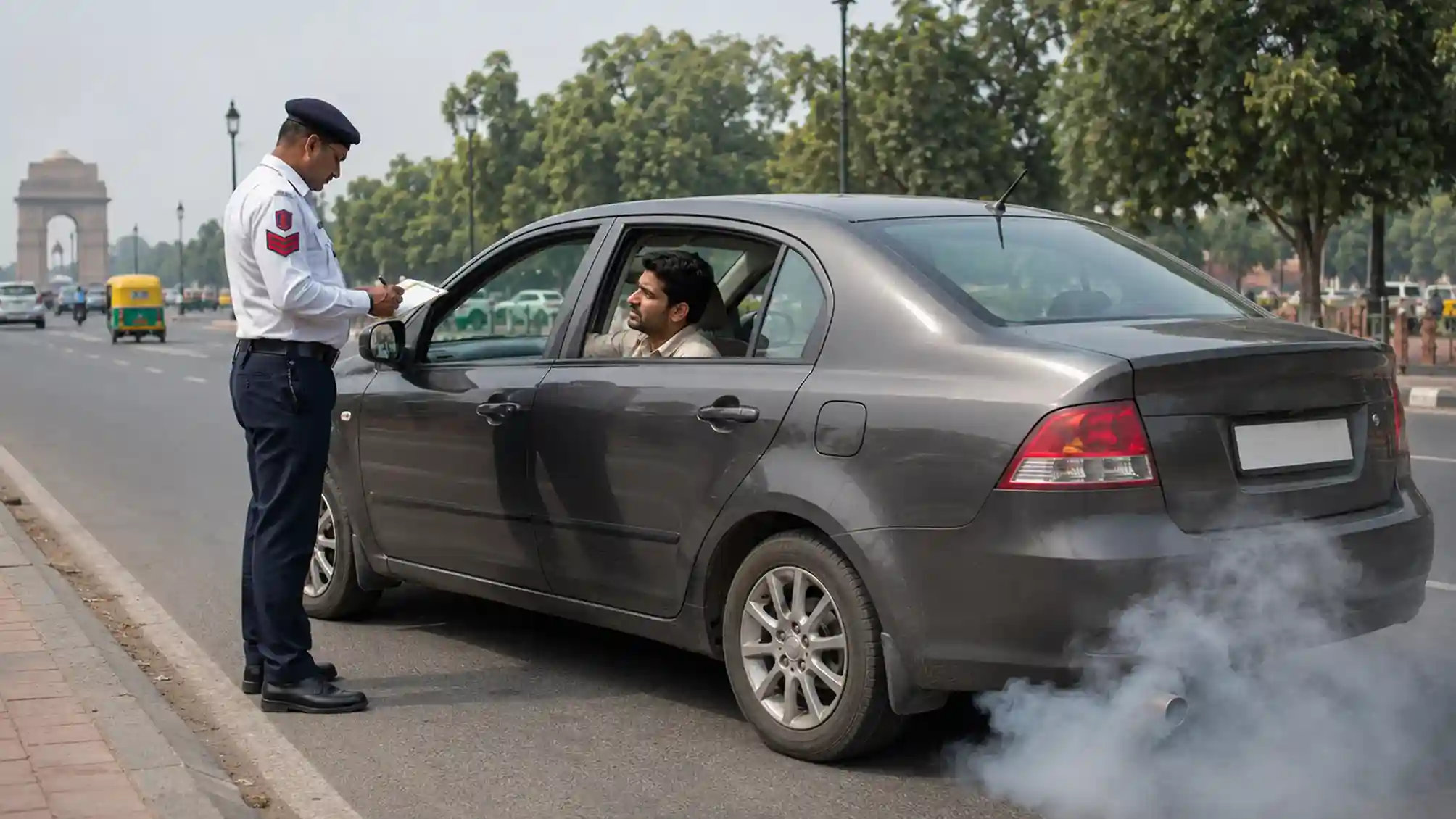
PUCC Challan in Delhi 2026: ₹10,000 Penalty, Revised Rules and How to Pay Online
Driving a vehicle without a valid PUC certificate in Delhi can quickly lead to a PUCC challan and heavy penalties. With stricter pollution control rules and AI-enabled traffic monitoring systems, Delhi Traffic Police now actively issue e-challan notices for vehicles that fail emission checks or do not carry a valid Pollution Under Control certificate.
Understanding the rules related to a PUCC challan in Delhi is important for every vehicle owner to avoid legal consequences and heavy fines.
A PUCC challan is a penalty issued to vehicle owners who drive without a valid Pollution Under Control certificate. The PUC Certificate confirms that a vehicle’s emission levels are within the limits prescribed by authorities.
The PUCC is defined u/s 190(2) of the Motor Vehicles Act, 1988. Further, the regulations relating to the rules, validity and issuance are governed under Rule 115 (7) of the Central Motor Vehicles Rules, 1989.
Whether you drive a petrol car, a diesel or a CNG commercial vehicle, the PUC certificate serves as proof that your vehicle’s exhaust emissions fall within the permissible environmental limits.
In Delhi, traffic police and automated surveillance systems regularly check:
If your vehicle fails to meet pollution norms, authorities may issue a PUCC challan directly against the vehicle registration number.
Delhi has some of the strictest penalties for missing or expired PUC certificates to control vehicle pollution. As of 2026, driving without a valid certificate can lead to heavy fines and strict action under Delhi’s zero-tolerance pollution policy.
| Offence Type | Fine amount |
|---|---|
| Driving without a valid PUC | ₹10,000 |
| Driving with forged or fake PUC | ₹10,000 |
A PUC certificate is an official document issued after a vehicle passes an emission test at an authorised pollution testing centre. It contains items such as the vehicle registration number, emission details, date of testing and validity period. The validity of a PUC certificate, which depends on the age and type of vehicle.
Typical validity periods include:
New vehicles: Up to 1 year from registration
Older vehicles: Usually 6 months after each emission test
There are over 800 authorised emission testing centres across Delhi where vehicle owners can get a valid PUC certificate. These pollution testing centres are commonly available at petrol pumps, fuel stations and transport checkpoints, making it convenient to complete emission checks and avoid a PUCC challan in Delhi.
If you have been issued a notice, you can settle it quickly through digital platforms:
In a significant enforcement shift starting April 2026, Delhi has implemented the "No PUC, No Fuel" mandate. All petrol pumps and CNG stations across the city are now required to verify your PUC challan status and certificate validity before dispensing fuel.
If your certificate has expired, fuel stations are legally bound to deny service, making it virtually impossible to operate a non-compliant vehicle within the city limits.
With stricter pollution monitoring systems in Delhi, carrying a valid PUC certificate in Delhi is essential. A PUCC challan in Delhi can lead to heavy fines and legal issues, so renewing your certificate on time helps avoid unnecessary penalties and keeps your vehicle compliant.
Driving without a valid PUC certificate in Delhi can attract a fine of up to ₹10,000 along with possible legal action.
Delhi has strict pollution control rules, and vehicles without a valid PUC certificate contribute to higher air pollution levels.
You can get your vehicle tested at authorised emission testing centres located at petrol pumps and transport checkpoints across Delhi.
You cannot complete the emission test online, but you can check PUC details and certificate status online after the test is completed.
Yes, PUC challans in Delhi can be paid online through Park+ and official e challan portals.
A PUC certificate is generally valid for 6 months for older vehicles, while new vehicles may receive longer validity.
The cost of a PUC test in Delhi usually ranges between ₹80 to ₹140, depending on the vehicle and fuel type.