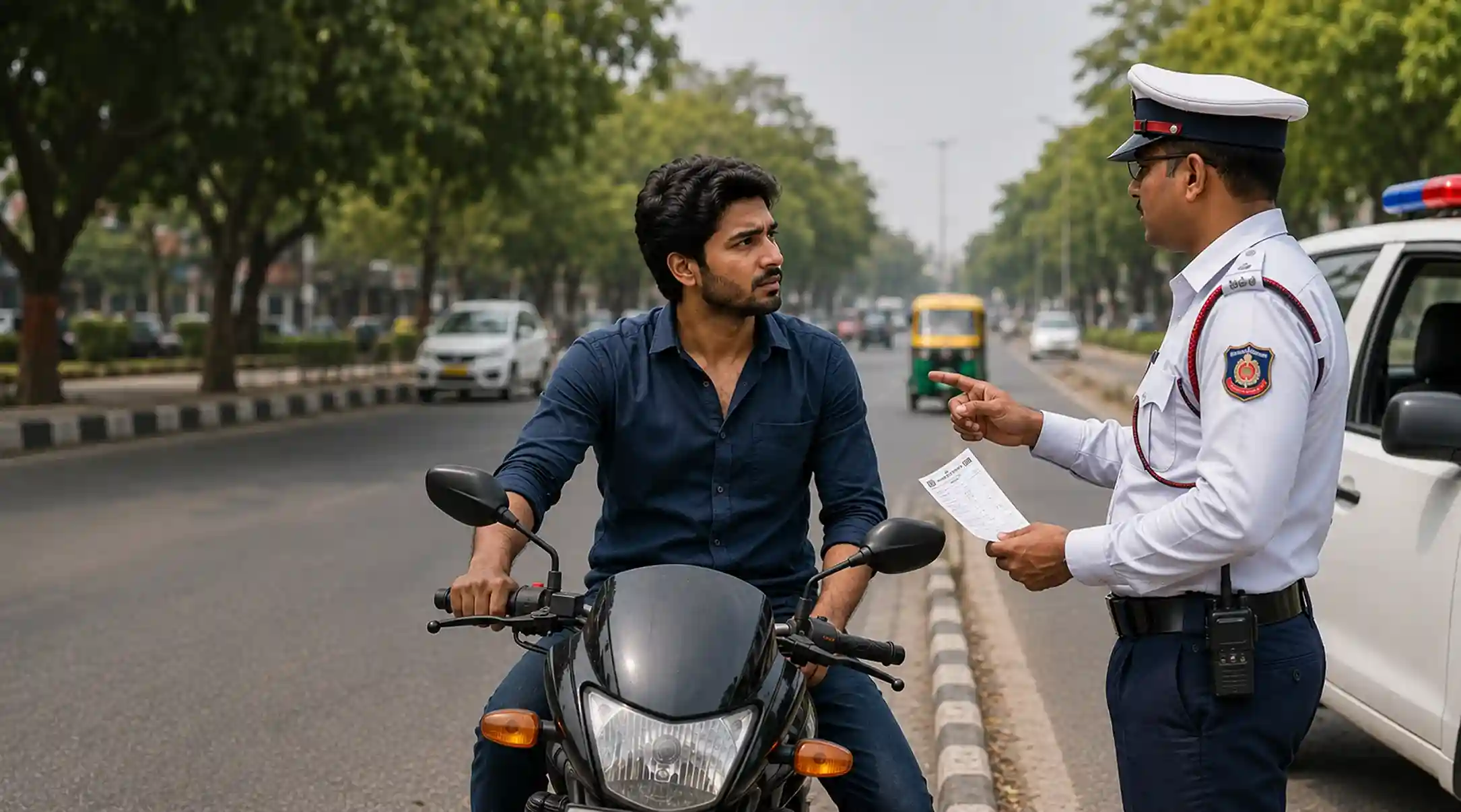
Challan For Riding Without a Helmet in India
Challan For Riding Without a Helmet in India
Driving a two-wheeler in India offers unmatched convenience, but it also comes with a crucial responsibility: road safety. Traffic authorities across India have adopted stricter enforcement of safety regulations. Among these, wearing a helmet remains the most essential requirement
Failing to follow this basic rule not only increases the risk of serious injury but also results in issuing a challan for not wearing a helmet. This guide will help you understand the rules related to challan for helmet violations and how to stay compliant.
The Motor Vehicles Act, 1988, which was significantly amended in 2019, mandates that every person riding a two-wheeler must wear protective headgear.
According to Section 129 of the Act, the helmet must be of a specific thickness (usually 20-25 mm) made with high-quality foam and must carry the ISI (Indian Standards Institute) mark.
Not wearing a helmet results in a challan for helmet violations. Helmets play a critical role in reducing the risk of severe head injuries and fatalities in road accidents, making them essential for rider safety.
Traffic data from Noida shows that out of nearly 28.9 lakh total challans issued in Noida in 2025, over 14 lakh were for helmet violations, accounting for almost 50% of cases. This reflects that riding without helmet challan in UP is among the most common traffic violations.
In 2026, most states have standardised the fine for riding without a helmet across the country.
The following table provides a comprehensive list of the challan for helmet violations across Indian states and union territories.
| State | Fine Amount |
|---|---|
| Andhra Pradesh | ₹200 |
| Arunachal Pradesh | ₹1000 |
| Assam | ₹1000 |
| Bihar | ₹1000 |
| Chhattisgarh | ₹1000 |
| Delhi | ₹1000 |
| Goa | ₹500 |
| Gujarat | ₹500 |
| Haryana | ₹1000 |
| Himachal Pradesh | ₹1500 |
| Jammu & Kashmir | ₹1000 |
| Jharkhand | ₹1000 |
| Karnataka | ₹500 |
| Kerala | ₹1000 |
| Madhya Pradesh | ₹100 |
| Maharashtra | ₹1000 |
| Manipur | ₹1000 |
| Meghalaya | ₹1000 |
| Mizoram | ₹1000 |
| Nagaland | ₹1000 |
| Odisha | ₹1000 |
| Punjab | ₹1000 |
| Rajasthan | ₹1000 |
| Sikkim | ₹1000 |
| Tamil Nadu | ₹1000 |
| Telangana | ₹200 |
| Tripura | ₹100 |
| Uttarakhand | ₹1000 |
| Uttar Pradesh | ₹1000 |
| West Bengal | ₹1000 |
*Fine amount may differ based on the updates or state.
Riding without a helmet leads to more than just a financial penalty. According to recent road safety data, two-wheeler accidents account for nearly 45% of total road fatalities in India. A high-quality, ISI-certified helmet reduces the risk of severe head injuries. Here is what happens when you ignore this critical safety rule:
Accident Risk: Not wearing a helmet increases the chances of serious head injuries and fatalities in a road accident.
Heavy Fine: You may receive a challan for not wearing helmet and it typically goes up to ₹1000 across most Indian states.
Driving Licence Suspension: Traffic authorities can suspend your driving licence for up to 3 months for violating helmet rules.
Court Case: If you do not pay your challan within the given time, the matter may be transferred to court for further action.
Paying a helmet challan is simple and can be done either online or offline. Most users prefer digital methods, as they are faster and more convenient.
Paying your eChallan online through Park+ is quick and hassle-free, allowing you to clear fines without visiting any office. It also helps you complete an online challan check and payment in just a few steps:
If you prefer offline payment, you can visit the nearest traffic police station or RTO office. Carry your challan copy (if available) along with basic documents like your driving licence and vehicle details.
At the station, the officer will verify your challan, inform you about the pending amount, and collect the fine. Once the payment is completed, you will receive an official receipt as proof. Always keep this receipt safe for future reference.
Avoid fines and stay safe with these simple tips:
Wearing a helmet is a simple habit that protects your life and helps you avoid unnecessary fines and legal trouble. Follow the rules, stay updated with your challan status, and ride responsibly for a safer journey. By staying compliant and alert, you not only avoid a challan but also contribute to safer roads for everyone.