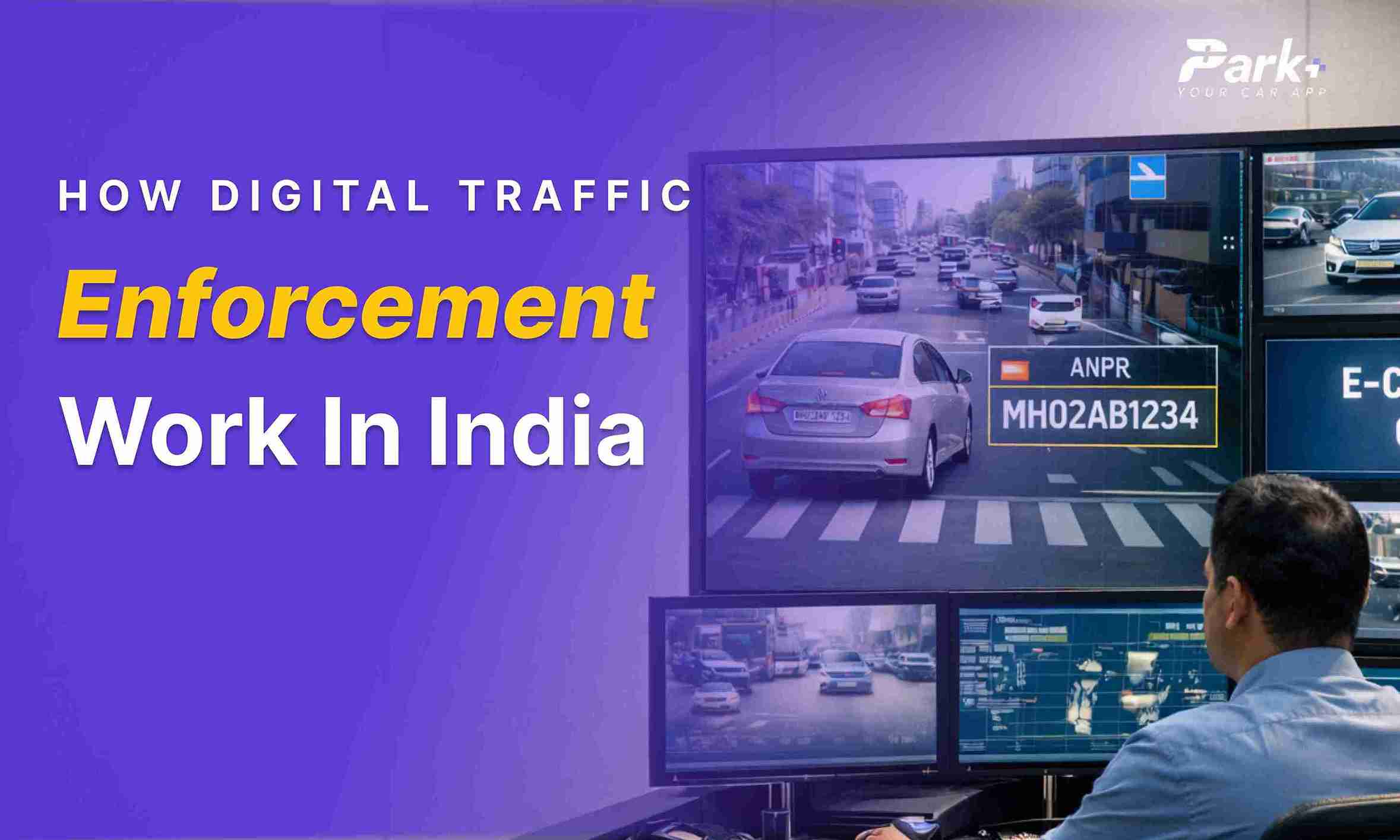
How Digital Traffic Enforcement Works in India?
How Digital Traffic Enforcement Works in India?
Road safety enforcement in India has undergone a significant digital transformation. Not long ago, a traffic challan meant being stopped by a police officer and handed a handwritten penalty slip. Today, enforcement is largely automated and technology-driven.
High-speed ANPR (Automatic Number Plate Recognition) cameras now monitor vehicles in real time, detect violations instantly and generate an e challan without physical intervention. If you have noticed a camera flash at a signal or received an SMS about a violation, your vehicle was likely captured by this digital system.
Understanding how it works and conducting a timely challan check is essential for every responsible motorist.
ANPR stands for Automatic Number Plate Recognition. These advanced cameras are designed to identify and read vehicle registration numbers in real time.
Here is how ANPR cameras function:
ANPR cameras are commonly installed at traffic signals, highways, toll plazas and busy urban intersections. They operate continuously and form the backbone of modern challan traffic monitoring systems. Because the process is automated, enforcement becomes more consistent and less prone to human error.
The issuance of an e challan follows a structured digital workflow:
Violation Detection: A vehicle commits an offence such as jumping a red light or exceeding the speed limit.
Number Plate Capture: ANPR cameras record the registration number.
Database Verification: Vehicle ownership details are retrieved from government databases.
Traffic Challan Issued: A digital challan is then digitally generated.
Notification Sent: The registered owner receives an SMS alert.
Challan Check by Owner: The owner performs an online challan check to confirm and pay the penalty.
This automated process ensures that a traffic challan can be issued even without a traffic officer being physically present.
The digital challan traffic system offers several important advantages:
Though the drivers always receive an SMS immediately after a violation occurs, but in some cases, due to technical errors, outdated mobile numbers linked to the RTO database, or network issues, can lead to failure in sending notifications.
For this reason, it is advisable to carry out a proactive challan check at least once a month.
Once an ANPR system records a violation, a digital challan is generated and linked to your vehicle registration details. It is important to verify and settle the penalty promptly to avoid additional charges or legal complications.
You can use:
Park+
Parivahan portal
Park+ offers a simpler and faster way to perform an online challan check. The process is designed for convenience and quick access.
Follow these steps:
Step 1. Open the Park+ app or website.
Step 2. Go to the ‘E-challan’ section.
Step 3. Enter your vehicle registration number.
Step 4. Click on ‘Check Challan’.
Step 5. Check all the pending challans instantly.
The Parivahan eChallan portal is the official government platform for checking and paying traffic penalties.
Follow these steps:
Step 1.Visit the Parivahan eChallan website.
Step 2.Navigate to the challan enquiry section available on the homepage.
Step 3.Enter either of the following vehicle registration number, DL, Challan number.
Step 4.Complete the verification process.
Step 5.Click on the “Get Details” and to get challan details.
After completing the challan check, payment can be made securely using different methods. Settling a pending e challan without delay helps maintain a clean driving record and prevents further complications.
Follow these steps:
Step 1. Open the Park+ app or website.
Step 2. Perform the steps to review the challan details.
Step 3. Choose a preferred payment method and complete the payment.
Follow these steps:
Step 1.Visit the Parivahan e-Challan website.
Step 2.Check pending challans and select the challan for payment.
Step 3.Proceed to choose the payment method.
Step 4.Complete the transaction and a digital receipt will be generated for your records.
ANPR cameras are not just for speeding. Their utility has expanded to cover a wide array of motoring offences:
Despite its advantages, the system is not without limitations. Occasionally, incorrect number plate recognition can result in a wrong traffic challan. Technical glitches, outdated vehicle ownership records, or unclear plate images may also cause errors.
Some drivers express concerns regarding privacy and large-scale digital surveillance. However, the primary objective remains traffic regulation and road safety. Conducting a regular online challan check helps detect and address any inaccuracies promptly.
Yes, ANPR cameras monitor traffic 24/7 and automatically capture violations like speeding, red-light jumping, or driving in restricted lanes.
While you typically have 60 days to settle a fine, it is best to pay within the first 15 days.
Yes, it can. Insurance providers often assess your driving history during policy renewal.
A pending e-challan can negatively affect your vehicle’s resale process. Buyers often check the vehicle’s history before completing a purchase, and an unpaid traffic challan may raise concerns about legal compliance.