Leapmotor EVs Coming to India: T03 and C10 Models Expected Soon
The Chinese EV manufacturer Leapmotor, which is backed by Stellantis, is preparing to enter its first Indian market with its models in late 2025. The compact hatchback, T03, and the mid-size SUV C10 are both expected to be the first entrants into India, which will feature impressive ranges, modern technology, and competitive performance.
Beginning models will probably be assembled from the "knock-down" or SKD (semi-knock-down) kits rather than fully imported into the high-tariff environment of India.
Stellantis has added its official papers to the list of reports confirming the entry of Leapmotor, the Chinese electric vehicle manufacturer in which it holds a significant stake, into the Indian market sometime soon.
According to a Reuters report, the first Leapmotor models could reach Indian shores as early as the end of this year. Here's what we know about this new EV brand and the models Indian consumers can expect.
Headquartered in Hangzhou, Zhejiang Province, China, Leapmotor, or Zhejiang Leapmotor Technology, is a startup company that excited quite some buzz in 2023, when Stellantis - owner of оther brands like Jeep, Citroën, and Fiat - picked up a 21% stake for around €1.5 billion.
Further into the evolution of this partnership began in 2024: Leapmotor International, a joint venture now led by Stellantis (51%), would take care of the brand's development outside China.
Leapmotor's entry announcement in India fits Stellantis's global plan of consolidating its position in the EV market. With an estimated launch in late 2025, Leapmotor will find itself amid an increasingly challenging landscape of EVs in India.
Leapmotor T03
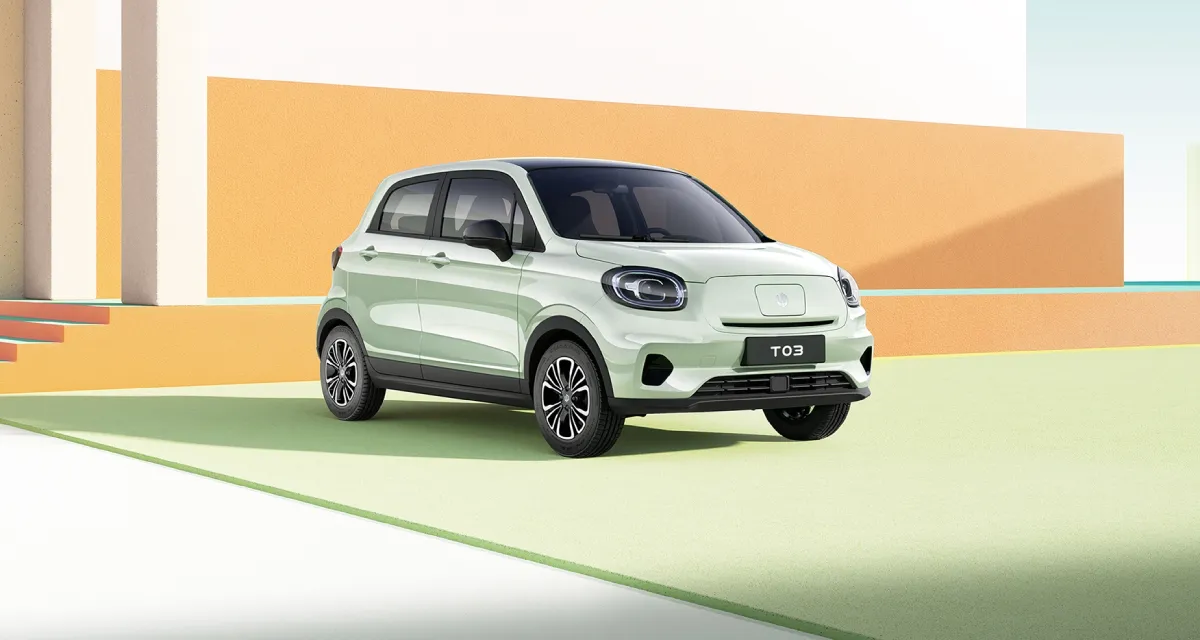
The T03 is a compact electric city car rival to the Tata Tiago.ev. It sports a 70 kW (94 hp) front-mounted permanent-magnet synchronous motor that powers a torque utes itsof 158 Nm. Power comes from a 37.3-kWh LFP battery pack, enabling a WLTP-certified range of 265 km.
In terms of performance, the T03 can accelerate from 0 to 100 km/h in 12.7 seconds, while the maximum speed is 130 km/h. Though these figures seem understated, they are adequate for the urban driving conditions this car was designed to follow.
The interiors offer a premium feeling with a panoramic sunroof, an 8-inch digital instrument panel, and a 10-inch touchscreen infotainment system. It also sports 15-inch alloy wheels and an electronic parking brake for a competitive feature set in its segment.
While the T03 would naturally confront EVs like the Tata Tiago.ev, it could find itself priced at a premium, at least in the beginning, due to limited localization. How Stellantis prices this model may well prove paramount for a successful run in the price-sensitive Indian market.
The C10 is Leapmotor's foray into the mid-size SUV domain. Measuring 4,739 mm long, 1,900 mm wide, and 1,680 mm tall, it has a commanding road presence along with decent interior space.
A powerful rear-mounted electric motor of 160 kW (215 hp) is in charge of the C10, which is designed to produce 320 Nm of torque. On a single charge, the massive 69.9 kWh battery pack allows a claimed WLTP range of 424 km. Performance is good with a 0-100 km/h time of 7.5 seconds and a top speed of 170 km/h.
The C10 enjoys premium features, including 20-inch alloy wheels, a power tailgate, and flush-fitted door handles. Inside, passengers are treated to a panoramic sunroof, electrically adjustable and ventilated front seats, a 10.25-inch digital instrument cluster, and an immense 14.6-inch touchscreen infotainment system.
One feature captivating attention is the V2L bi-directional charging, allowing the vehicle to power external devices.
The markets, however, have the option of an EREV, with India likely to be offered only the fully electric variant.
Because Leapmotor is not yet firmly implanted as a luxury or premium brand in India, that could justify significantly higher prices arising from full importation, assembly in India is considered viable economically. The Stellantis local assembly of these vehicles would allow better pricing strategies in the Indian market.
Full localizing timelines remain in ambiguity, but if the brand gains acceptance in India, it would appear reasonable for Stellantis to gradually increase the local content for these vehicles. This gradual manufacturing exploration fits into Stellantis' broader Indian strategy and setup with integrated plants for their existing brands.
The advent of Leapmotor in India coincides with a time when the EV market is heating up across segments. The T03 will compete against the established players like Tata Motors with its Tiago.ev and the impending launches from MG and Maruti-Suzuki in the compact space.
The C10, on the other hand, will have a more fledgling yet rapidly evolving space to fight in the mid-size electric SUV segment that is currently being played by the likes of the MG ZS EV and Hyundai Kona Electric, with more competitors around the corner.
Most likely, Leapmotor's success will therefore depend on how effectively Stellantis will capitalize on its existing dealer network and aftersales infrastructure to support this new brand.
Also Read: