India's SUV Market to Transform in December 2025 Due to Significant Debuts
Major SUV debuts in India are anticipated in December 2025, including the first mass-market EV from Maruti and the brand-new Seltos from Kia.
Tata is redesigning its Harrier and Safari with gasoline engines, indicating a change in approach.
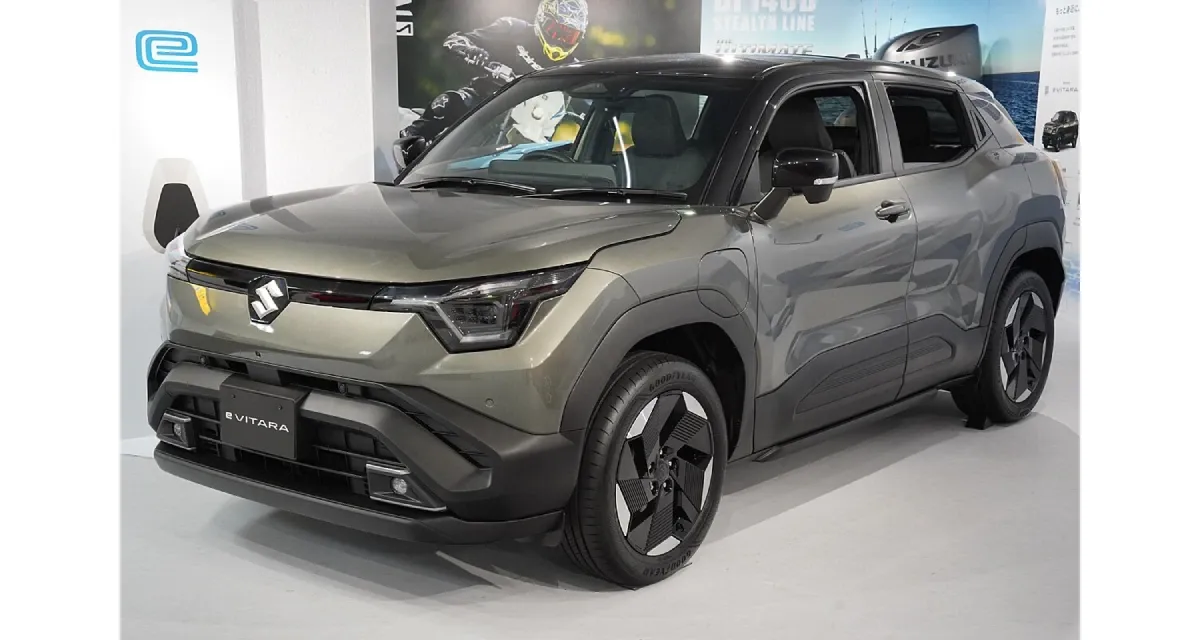
On December 2, 2025, Maruti Suzuki intends to introduce its e-Vitara, a major foray into the EV SUV market.
Based on Maruti's HEARTECT-e EV architecture, it is anticipated to be powered by two battery options: 49 kWh and 61 kWh.
In the Indian EV market, the stated range of roughly 500 km is competitive.
The e-Vitara is expected to have robust safety features, such as four airbags, huge digital screens, and level-2 ADAS.
It is a strong challenger for the mass market EV market in India, with price estimates ranging from ₹17 to ₹22.5 lakh.
The second-generation Seltos will be introduced globally by Kia on December 10, 2025, in Korea.
The entirely redesigned Seltos (codenamed SP3i) has a more upright, boxier stance that draws inspiration from larger Kia SUVs.
In terms of technology, there will probably be a powerful hybrid drivetrain that combines an electric motor and a 1.5-liter gasoline engine.
The classic engine lineup (1.5-liter gasoline, turbo-petrol, and diesel) may still be available despite the redesign, but with more sophisticated choices.
According to several sources, the launch in India is anticipated in early 2026.
In addition to Maruti and Kia, Tata Motors is also taking significant action:
Tata intends to switch from their present diesel-only lineup to petrol versions of the Safari and Harrier on December 9, 2025.
The 1.5-liter turbocharged direct-injection gasoline engine that powers these SUVs is anticipated to produce about 170 horsepower and 280 Nm of torque.
The e-Vitara might greatly increase EV adoption in India thanks to its well-known brand name, locally produced goods, and promising range. Maruti has the potential to revolutionize the mass-market EV sector if it plays its cards correctly in terms of pricing, after-sales, and charging infrastructure.
Kia is enhancing its Seltos lineup with added amenities, hybrid technology, and a more refined design to appeal to consumers seeking contemporary efficiency without transitioning to all-electric vehicles.
Tata's decision to switch to petrol for the Harrier and Safari demonstrates how traditional automakers are diversifying their powertrains—EV, hybrid, and petrol—to meet a range of customer demands.
Also read: