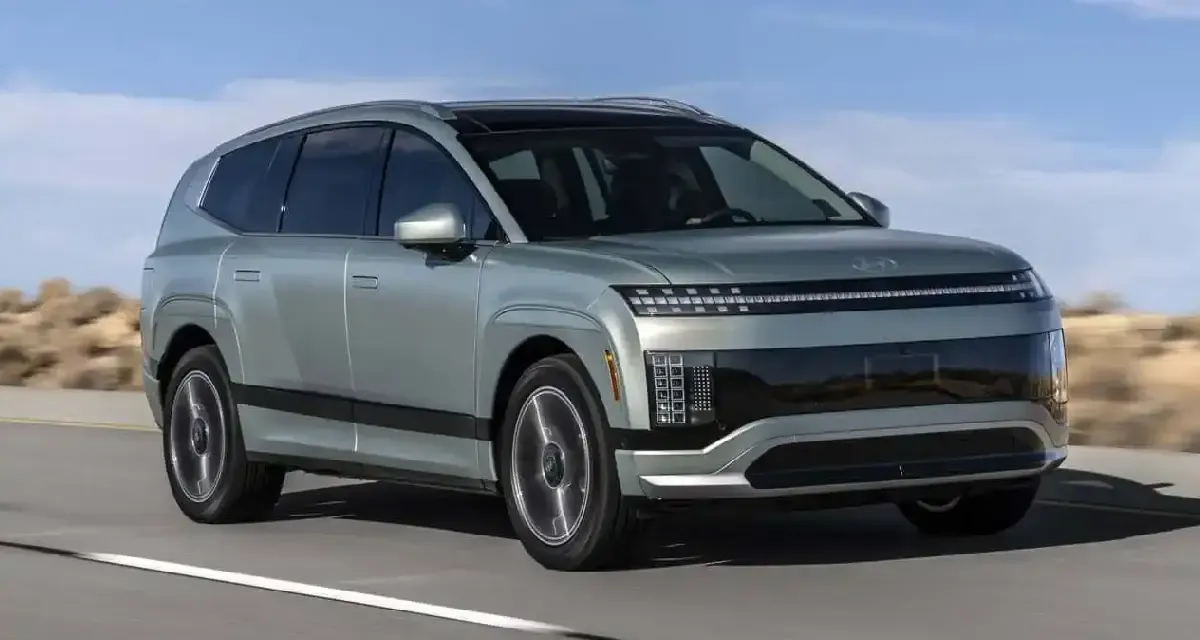
26 New Models Planned By Hyundai With Venue And Ioniq 9
To consolidate its hold in the Indian automobile market, Hyundai Motor India is all set to roll out 26 new models in the coming few years, in what will be a bold attempt on its part to strengthen its position in the market.
Its plan of having the entire strategy in place involves a combination of internal combustion engine (ICE) cars, battery electric vehicles (EVs), hybrid engines, etc, and the company expects to finish it within 9-10 years (by FY2029-30).
This product offensive would include all regions, including small hatchbacks, SUVS, to luxury products such as the new generation cars and facelifts and special editions.
Some of the confirmed models in this lineup include:
Next-gen Hyundai Venue
Hyundai Tucson facelift
All-new Hyundai Ioniq 9 EV
Possibly the futuristic Staria MPV
Such models will boast new powertrains, connected car technology and the new design philosophy of Hyundai.
The Ioniq 9 specifically will probably be an upscale EV, and the facelifted Tucson may see ADAS upgrades and add the possibility of hybrid variants.
This expansion will be made majorly with the help of Hyundai's Talegaon manufacturing plant recently acquired near Pune.
The production of the engines has already reached a start and mass assembly is very soon scheduled to set-in. It is believed that this plant will have a huge role in the manufacturing of both ICE and electric models.
Among the 26 models 6 models will be EVs and Hyundai India will also enter the hybrid segment, a first time in India, as a strategy to attract the eco consumer market. There are also EV versions of popular models such as the i20 and Exter that will supposedly be developed.
Notably, the luxury sub-brand Genesis is of interest to Hyundai as it actively considers entering the market in India. In case it is greenlit, it may welcome models rivalrous against the brands like Audi, BMW and Mercedes-Benz.
By such an aggressive rollout strategy, Hyundai aims to become a market leader in numerous segments. Not only the range of EVs, but also the range of improved ICEs leaves Hyundai capable of remaining relevant in a shifting automotive environment, one that is quickly shifting toward cleaner and smarter mobility solutions.
Also Read: