Government Plans New FASTag for Special Vehicles Under MLFF System
India's toll collection system could soon see another major change. As the government prepares to roll out the Multi-Lane Free Flow (MLFF) tolling system, it is reportedly working on a special FASTag for toll-exempt vehicles.
The proposed FASTag will help identify vehicles that are legally exempt from paying toll charges, including defence, police, paramilitary and emergency service vehicles. This will become increasingly important as India moves towards a barrier-free tolling system where vehicles can pass through tolling points without stopping.
Key Highlights :
The government is planning a special FASTag for toll-exempt vehicles
Expected to cover defence, police, ambulance and other authorised vehicles
Designed for the upcoming MLFF tolling system
Could help prevent incorrect toll charges and e-challans
MLFF rollout is targeted by 2027
The proposed special FASTag is closely linked to India's transition towards the Multi-Lane Free Flow (MLFF) tolling system.
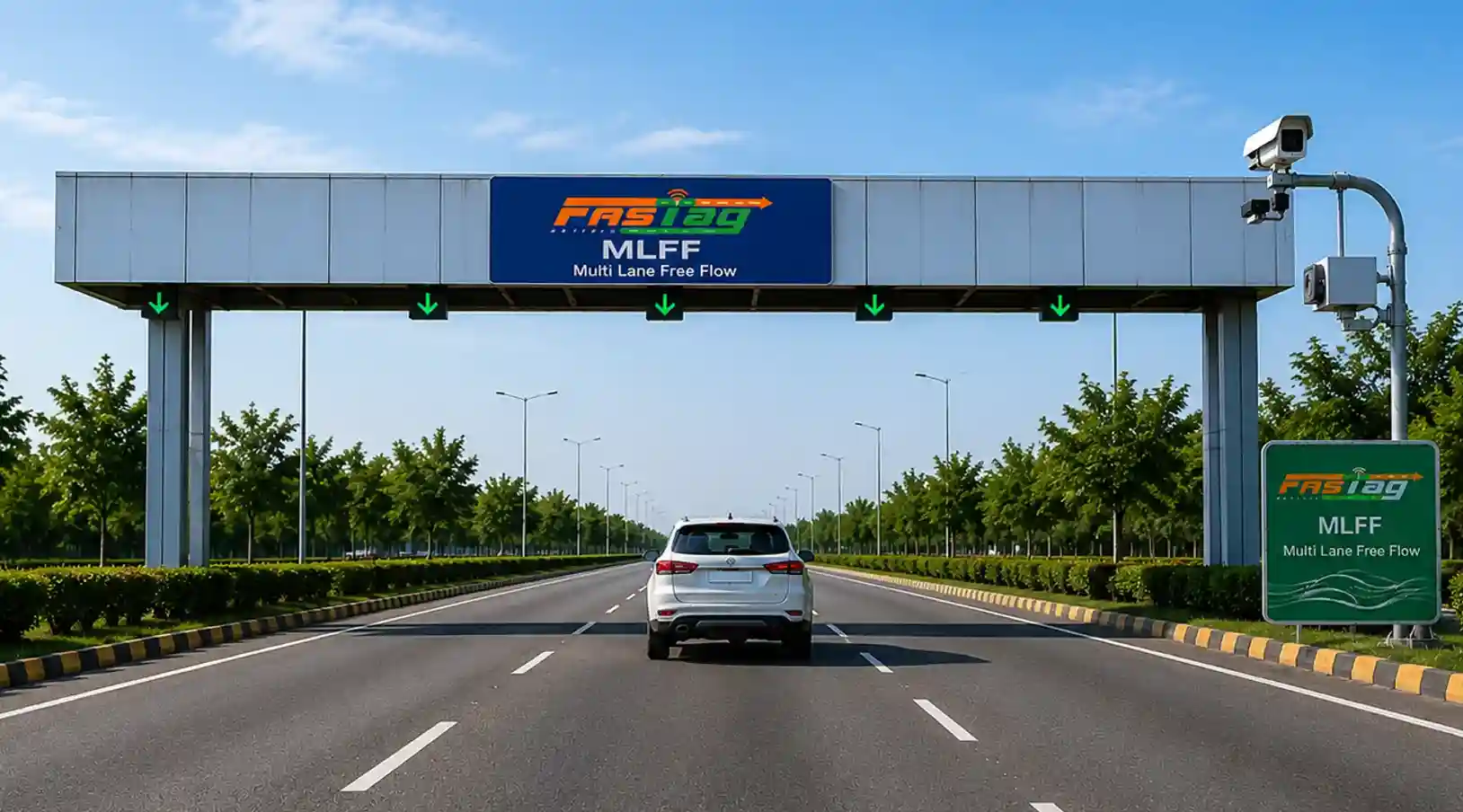
Unlike traditional toll plazas, MLFF does not require vehicles to stop or slow down. Instead, overhead gantries equipped with advanced technology automatically identify vehicles and process toll payments while they continue driving at normal highway speeds.
The system relies on:
FASTag-based RFID technology
AI-powered monitoring systems
Automatic Number Plate Recognition (ANPR) cameras
Digital payment infrastructure
This barrier-free model is expected to significantly improve highway efficiency and reduce congestion across the country.
Benefits of MLFF tolling
The shift towards MLFF tolling could bring several advantages for both motorists and highway authorities:
Faster travel times
Reduced waiting at toll points
Lower fuel consumption
Reduced vehicle emissions
Improved traffic flow
Better logistics efficiency for commercial vehicles
For toll-exempt vehicles, the introduction of a dedicated FASTag category would ensure uninterrupted movement during emergencies and official duties.
The new FASTag category is expected to be reserved for vehicles that are already exempt from paying toll charges under existing rules.
These may include:
Executive magistrates
Armed forces vehicles
Police vehicles
Paramilitary force vehicles
Firefighting vehicles
Ambulances and emergency response vehicles
Once introduced, these vehicles could be recognised automatically by the tolling system without requiring manual verification at toll plazas.
The upcoming MLFF tolling system is significantly different from traditional toll plazas. Instead of physical barriers and toll booths, the system relies on advanced technologies such as:
Artificial Intelligence (AI)
Automatic Number Plate Recognition (ANPR)
Digital vehicle identification
Satellite-assisted tracking systems
These technologies allow vehicles to travel at highway speeds while toll charges are calculated and collected automatically. Without a dedicated identification system, exempt vehicles could be mistakenly treated as regular road users and charged toll fees.
Today, toll operators can manually verify exempt vehicles at physical toll plazas. Once toll booths are removed, that option will no longer exist. Without a dedicated identification system, toll-exempt vehicles could be treated like regular road users. This could lead to incorrect toll deductions or even wrongful e-challans being generated automatically.
A separate FASTag category would help the system instantly identify eligible vehicles and allow them to pass without any toll deduction.
For most vehicle owners, there are unlikely to be any changes.
Standard FASTags will continue to be used for toll payments, while the special FASTag category is expected to be limited to authorised exempt vehicles.
The primary objective is to make sure the automated MLFF system can accurately distinguish between toll-paying and toll-exempt users.
While the proposal is still under development, it highlights the government's broader push towards barrier-free tolling. If implemented, the special FASTag could help ensure that toll-exempt vehicles continue to move seamlessly as India's highways transition to a fully digital toll collection system.
With millions of vehicles using national highways every day, traditional toll plazas are becoming increasingly difficult to manage. Even with FASTag-enabled toll collection, vehicles often need to slow down or queue at toll booths, leading to traffic congestion, fuel wastage, and longer travel times.
To address these challenges, the government is preparing to introduce the Multi-Lane Free Flow (MLFF) tolling system, which will allow vehicles to pass through tolling points without stopping. Pilot projects for MLFF are already underway on select highway stretches. The government aims to gradually expand the technology across the national highway network before completing the wider transition by 2027.
The scale of India's toll network highlights why this transition is becoming necessary.
| Metric | Details & Projections |
|---|---|
| Toll Collection (FY26 up to Dec) | ₹50,345 Crore |
| Full MLFF Transition Timeline | Targeted completion by 2027 |
| Core Detection Technologies | RFID, AI Gantry Cameras and ANPR |
The proposed special FASTag for toll-exempt vehicles is an important part of this modernisation effort, ensuring that emergency services, defence vehicles, and other eligible vehicles can continue to travel without unnecessary delays or incorrect toll charges.