Seat Belt Challan in India: What Happens for Not Wearing a Seat Belt
Seat Belt Challan in India: What Happens for Not Wearing a Seat Belt
Road safety is no longer optional; it is a legal requirement strictly enforced across India. After the Motor Vehicles (Amendment) Act, a seat belt challan has become one of the most common penalties for drivers. Whether you are driving in city traffic or on highways, not wearing a seat belt can lead to a significant seat belt challan amount along with possible legal issues.
Understanding the current rules, the seat belt challan amount, and simple ways to pay an e-challan online is essential for every vehicle owner to stay compliant and avoid penalties.
A seat belt challan is a traffic penalty issued when a driver or passenger fails to wear a seat belt while driving. Under Section 194B of the Motor Vehicles Act, it is mandatory for the driver and all passengers to be securely belted. The primary goal of this penalty is to reduce road fatalities. Statistics show that wearing a seat belt reduces the risk of death by 45% and the risk of serious injury by 50% during a collision.
Today, enforcement is not just physical; smart AI cameras and ANPR (Automatic Number Plate Recognition) systems automatically detect violators, leading to a digital online challan sent directly to your registered mobile number.
The standard seat belt challan price across India is generally fixed, though it can vary slightly based on state-specific notifications.
Primary Fine: As per the Central Motor Vehicles Act, the fine for not wearing a seat belt is ₹1,000.
Repeat Offences: While the standard seat belt challan amount is ₹1,000 in most states, repeat violations can attract higher penalties. In states like Delhi, Maharashtra, and Gujarat, the fine may increase up to ₹2,000 for repeated offences, along with stricter enforcement measures.
Child Safety: Driving with a child under 14 years who is not secured by a seat belt or a child restraint system also attracts a fine of ₹1,000.
While the central law sets a baseline, individual states have the authority to manage their traffic penalties. Here is a look at the seat belt challan rates in major regions as of 2026:
| State/UT | First Offence Fine | Repeat Offence Fine |
|---|---|---|
| Delhi | ₹1000 | ₹2000 |
| Maharashtra | ₹1000 | ₹2000 |
| Karnataka | ₹1000 | ₹2000 |
| Tamil Nadu | ₹1000 | ₹1000 |
| Uttar Pradesh | ₹1000 | ₹1000 |
| Gujarat | ₹1000 | ₹2000 |
| West Bengal | ₹1000 | ₹1500 |
| Rajasthan | ₹1000 | ₹2000 |
| Telangana | ₹1000 | ₹2000 |
| Kerala | ₹1000 | ₹1500 |
One of the most commonly overlooked rules is related to the rear seat belt challan. For a long time, passengers in the back seat were often seen as exempt, but this has changed with stricter enforcement and increased road safety awareness.
Under Rule 138(3) of the Central Motor Vehicles Rules, every person in a vehicle equipped with seat belts is required to wear one. If a rear passenger is found without a seat belt, a rear seat belt challan of ₹1,000 can be issued. Modern vehicles now include rear seat belt reminder systems, which alert passengers to buckle up and help avoid both penalties and safety risks.
The process of issuing a seat belt challan has transitioned from manual to digital. Currently, there are two primary ways a fine is generated:
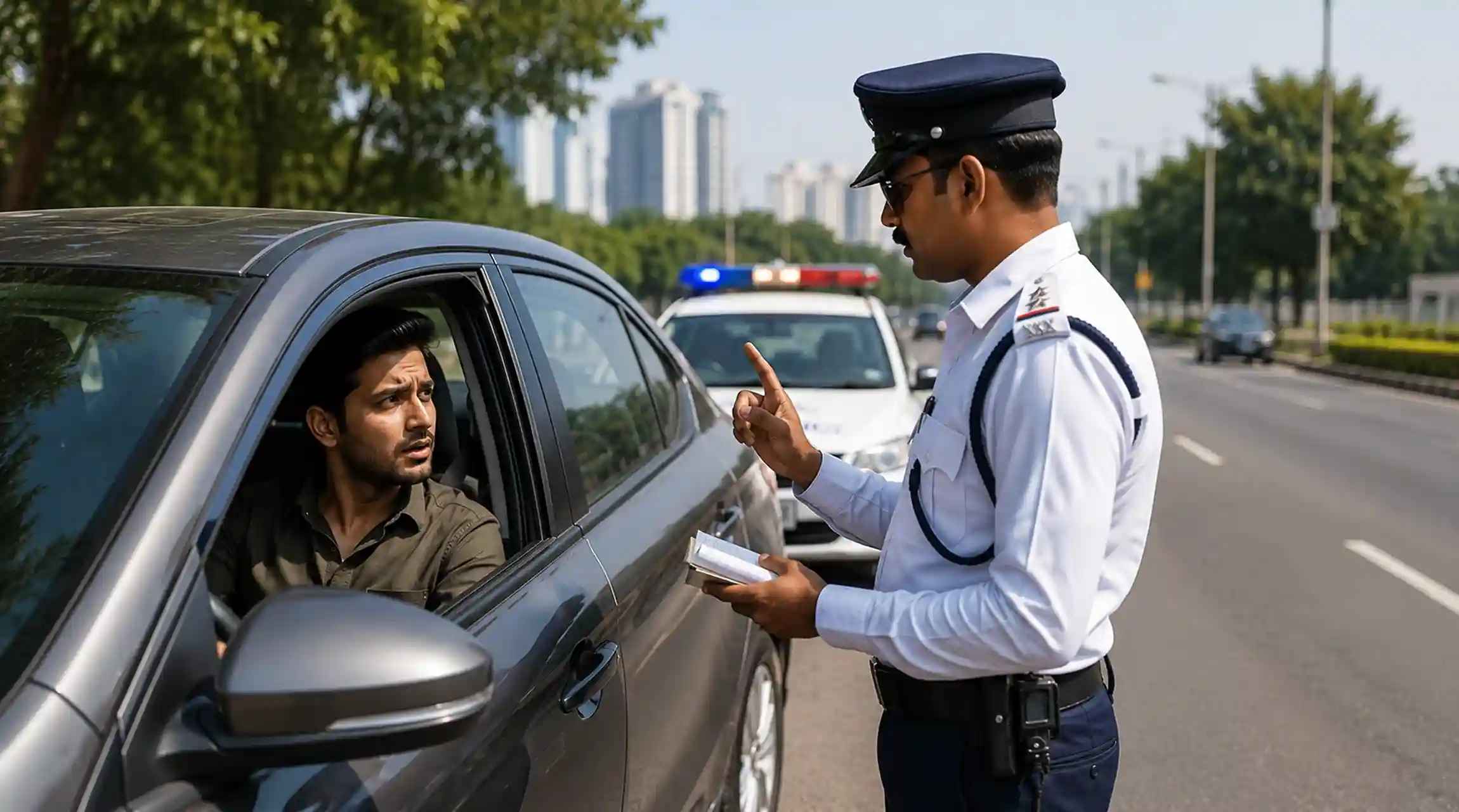
On-the-Spot Challan: A traffic police officer stops your vehicle, identifies the violation, and issues a physical or digital receipt.
E-Challan: This is the most common method in 2026. Surveillance cameras installed at intersections capture images of the driver or passengers without seat belts. The e challan is then generated automatically against the vehicle's registration number.
To see if you have any pending fines, you can perform an online challan check and do the offline method through the following steps:
Paying your eChallan online through Park+ is quick and hassle-free, allowing you to clear fines without visiting any office. It also helps you complete an online challan check and payment in just a few steps
Steps to check your challan status:
Step 1: Open Park+ and go to the ‘E-Challan’ section.
Step 2: Enter your vehicle number and click on ‘Check Challan’.
Step 3: Review the list of pending challans and select to settle it.
Step 4: Click on ‘Pay Now’ and complete the payment.
Step 5: Download the payment receipt for future reference.
Visit the nearest traffic police station or RTO office with your vehicle details and driving licence. The officer will verify your challan and inform you of the seat belt challan amount. After payment, you will receive an official receipt, which should be kept for future reference.
If you are pulled over for a seat belt challan, the officer may ask for additional documentation to verify your vehicle’s compliance. Ensure you have digital or physical copies of:
Not wearing a seatbelt can lead to serious safety risks and legal consequences. It not only increases the chances of injury during an accident but also results in penalties under traffic laws.
Understanding these consequences helps drivers stay compliant and prioritise safety.
Avoiding a seat belt challan is simple if you follow basic safety rules and stay alert while driving. These small habits not only help you avoid fines but also ensure safety for everyone in the vehicle.
Wearing a seat belt is one of the simplest ways to ensure safety while driving and avoid unnecessary penalties. By following traffic rules, performing regular online challan checks, and ensuring all passengers are buckled up, drivers can maintain a clean driving record and contribute to safer roads across India.
The standard seat belt challan amount in most states is ₹1,000 for not wearing a seat belt while driving.
Yes, not wearing a seat belt may affect your insurance claim, as insurers can reduce or reject compensation if safety rules were violated during the accident.
India currently has no nationwide point system for seat belt violations, but repeated offences can lead to higher fines and stricter penalties.
Yes, you can pay your seat belt challan online through Park+ by entering your vehicle number, selecting the pending challan and completing the payment digitally.
Yes, rear passengers can also be fined. A rear seat belt challan is issued if back-seat passengers are not wearing seat belts.
Unpaid challans may lead to additional penalties, court notices, or legal complications during vehicle-related services.