Helmet Laws in India: Fines and Safety Tips for Riders
If you prefer to use a two-wheeler for your daily commute, it is important to remember that in India, it is illegal to ride one without a helmet. Yes, you heard it right—it is illegal!
We do understand that, to overcome the bustling streets of India, two-wheelers can be a huge saviour, but with great freedom comes great responsibility. Also, it is one of the easiest ways to stay safe!
Let’s break down for you why helmets matter, what happens if you skip one, and how to pick the right one.
In India, driving a two-wheeler without a Helmet is a Big No!
According to the Motor Vehicles Act, 1988, both the rider and the pillion (the person sitting behind) have to wear helmets. The rule that was enforced under Section 129 is all about keeping you safe. Helmets protect your head in accidents, which are sadly not very common on India’s busy roads.
If you’re caught riding without a helmet, here’s what could happen:
Fines for riding without a helmet differ across India, and an E challan online can be issued for it.
Here’s a breakdown of what you might face in various states and union territories:
| State / UT | Fine for Rider (Rs.) | Notes |
|---|---|---|
| Andhra Pradesh | 1000 | Among the lowest fines |
| Arunachal Pradesh | 1,000 | Standard fine |
| Assam | 1,000 | Standard fine |
| Bihar | 1,000 | Standard fine |
| Chhattisgarh | 1,000 | Standard fine |
| Delhi | 1,000 | Strictly enforced in the capital |
| Goa | 500 (1st), 1,500 (subsequent) | Higher for repeat offenders |
| Gujarat | 500 (1st), DL suspension (subsequent) | License at risk for repeat offenders |
| Haryana | 1,000 (1st), 300 (subsequent) | Lower for subsequent offenses |
| Himachal Pradesh | 1,500 | Highest fine listed |
| Jammu & Kashmir | 1,000 | Standard fine |
| Jharkhand | 1,000 | Standard fine |
| Karnataka | 500 | Lower than central fine |
| Kerala | 1,000 | Standard fine |
| Madhya Pradesh | 100 (1st), 300 (subsequent) | Progressive fines |
| Maharashtra | 1,000 | Standard fine |
| Manipur | 1,000 | Standard fine |
| Meghalaya | 1,000 | Standard fine |
| Mizoram | 1,000 | Standard fine |
| Nagaland | 1,000 | Standard fine |
| Odisha | 1,000 | Standard fine |
| Punjab | 1,000 | Applies to non-turbaned riders too |
| Rajasthan | 1,000 | Standard fine |
| Sikkim | 1,000 | Standard fine |
| Tamil Nadu | 1,000 | Standard fine |
| Telangana | 200 | Low fine, like Andhra Pradesh |
| Tripura | 100 | Lowest fine listed |
| Uttarakhand | 1,000 (1st), 2,000 (subsequent) | Higher for repeat offenders |
| Uttar Pradesh | 1,000 | Standard fine |
| West Bengal | 1,000 | Standard fine |
Note: Fines can change, so check with local traffic authorities for the latest penalties.
Helmets aren’t just about avoiding a challan—they’re about staying alive. Two-wheeler accidents are a major issue in India, with thousands of deaths every year. In 2022, 44% of road fatalities involved two-wheelers, many due to head injuries.
Helmets can make a huge difference, cutting the risk of serious injury by 74% and death by 42%. Whether you’re the rider or the pillion, a helmet is your best defense.
Also Read:- How to Identify e challan fraud
Picking the right helmet is key to staying safe and comfy. Here’s what to look for:
Also Read:- How to Check & Pay Challan
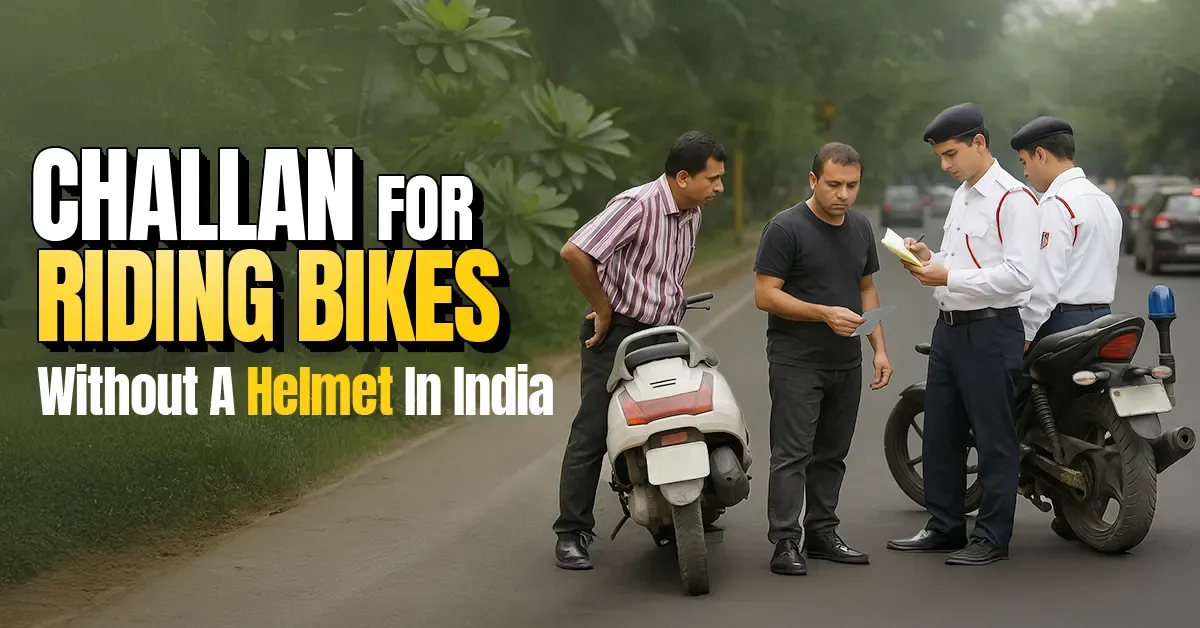
If traffic police spot you without a helmet, here’s the drill: they’ll pull you over, maybe take your keys, and ask for your license, bike registration, and insurance papers. After checking everything, they’ll issue a challan with the fine amount. It’s a hassle and it hits your wallet—so why not just wear a helmet?
Overall, wearing a helmet won’t cost you anything, but not wearing one can surely cost you your life! Therefore, it keeps you safe, saves you from fines, and shows you’re serious about road safety. Also, make sure to pick a quality, ISI-certified helmet that fits well, and make it a habit every time you ride.